![[personal profile]](https://www.dreamwidth.org/img/silk/identity/user.png) tcampbell1000 posting in
tcampbell1000 posting in ![[community profile]](https://www.dreamwidth.org/img/silk/identity/community.png) scans_daily
scans_dailyThe Krakoa era of the X-Men saw many former villains become heroes or antiheroes, but a few X-characters went the other way. Included in that number was Henry "Hank" McCoy, otherwise known as the Beast.
McCoy was once a kindhearted intellectual who radiated amity and cheer. He had dark moods now and then, and he could get "bestial" in combat, but he was often sunny, frequently funny, and always compassionate.

Today, he's a raving mad scientist, innovating scheme after scheme to strike at the mutant nation's enemies...and always, it seems, picking the most brutal option available.

After realizing his fellow mutants would never approve of his tactics, he kept them in the dark as long as he could, then took to the seas.
His latest idea is to "crush the mutants into a cosmic vault for safekeeping" so he can strike wildly at unmutated humans, even kill all of them if "need be," without any mutant collateral damage. Then he'll bring the mutants back...maybe. It depends on whether the cruelty is the means or the end, at this point. He says it’s the means, but he hasn't seemed too honest with himself since his heel turn began.
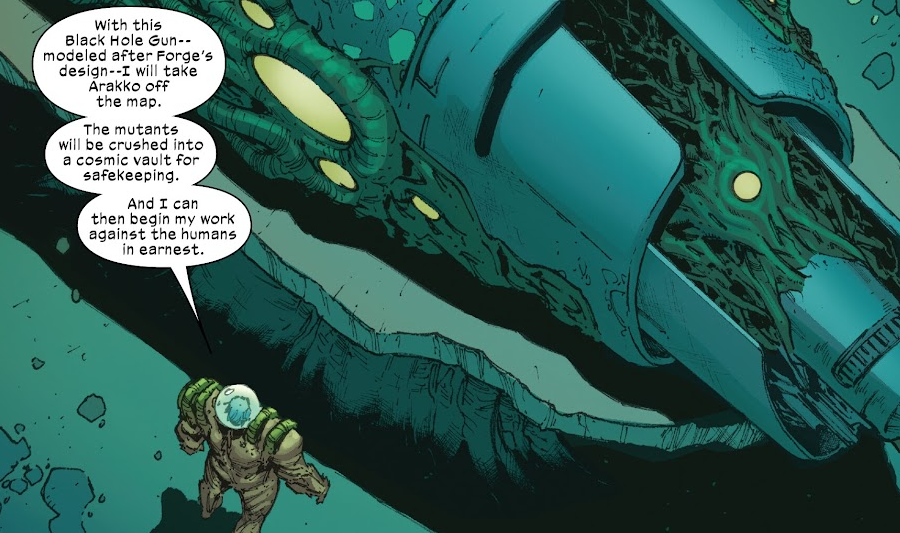
That heel turn will probably reach its conclusion in X-Force #50, due out in a couple of weeks. The creators overseeing this change--primarily writer Benjamin Percy--have argued in interviews that it's not such a big shift after all. More like an extrapolation of a story that started years ago. I want to investigate the claim that this is a consistent portrayal of the character.
Percy is fond of having the characters themselves cite Beast's crimes that precede the Krakoa era. "MGH. Threnody. The Legacy virus. Joining the Illuminati. Betraying the X-Men for the Inhumans."

Let's unpack all that, shall we?
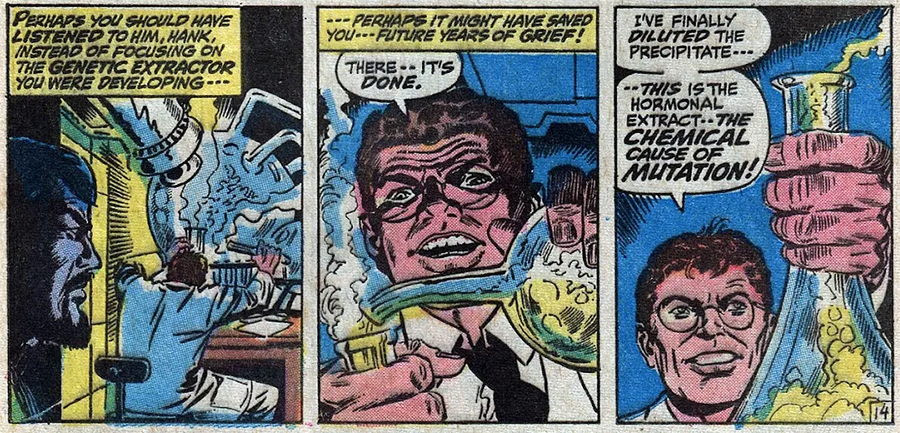
Hank McCoy has certainly made his share of dumbass mistakes. The first of these with serious consequences came in Amazing Adventures (vol. 2, 1970) #11. Hank manages to extract a hormone, "the chemical cause of mutation," that should grant temporary superpowers. He drinks it himself even though he already is a mutant, then fails to take the antidote in time. And that’s why he’s blue and furry now, not just built weirdly.
Why does he do this? There's some business about a jealous professor trying to steal McCoy's research, but the fevered narrative captions admit that McCoy's real motive for taking it was
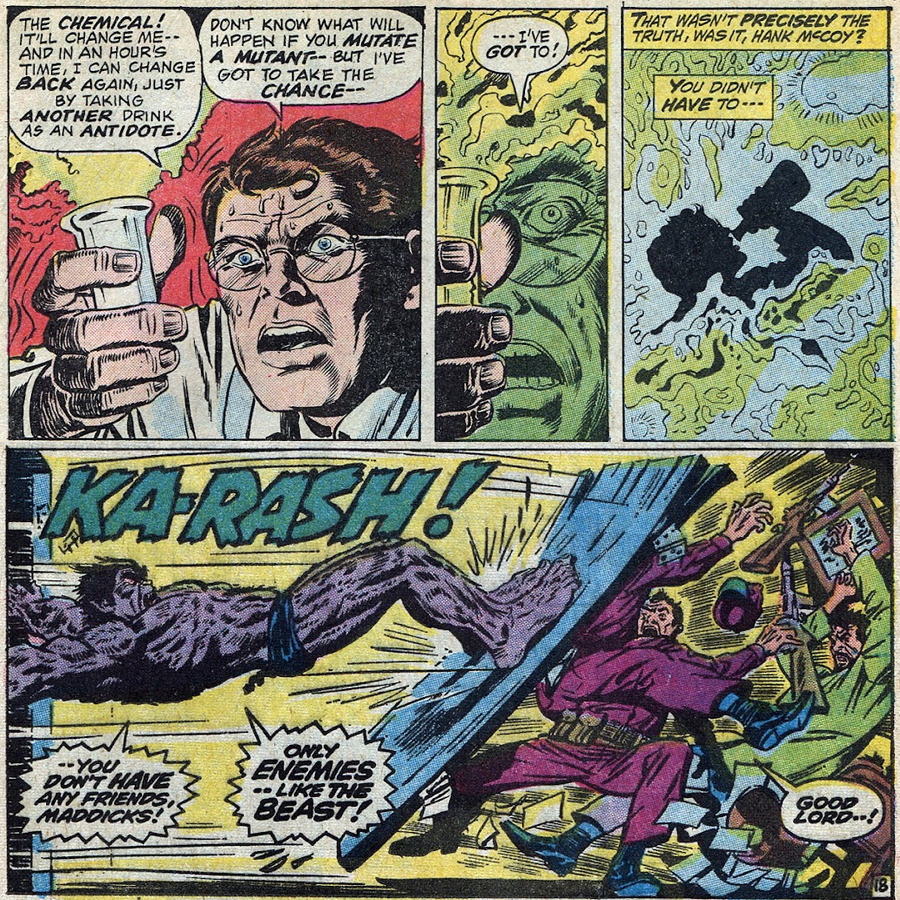
At first, Hank seemed in danger of becoming a beast in nature as well as appearance. (He flirted with a "bestial" attitude in early X-Men comics, too, before Stan Lee settled on a voice for him that was less Ben Grimm, more Reed Richards.) But his educated mind soon overcame his angst and animal urges, and he became a more comical figure during long stints with the Avengers and Defenders.
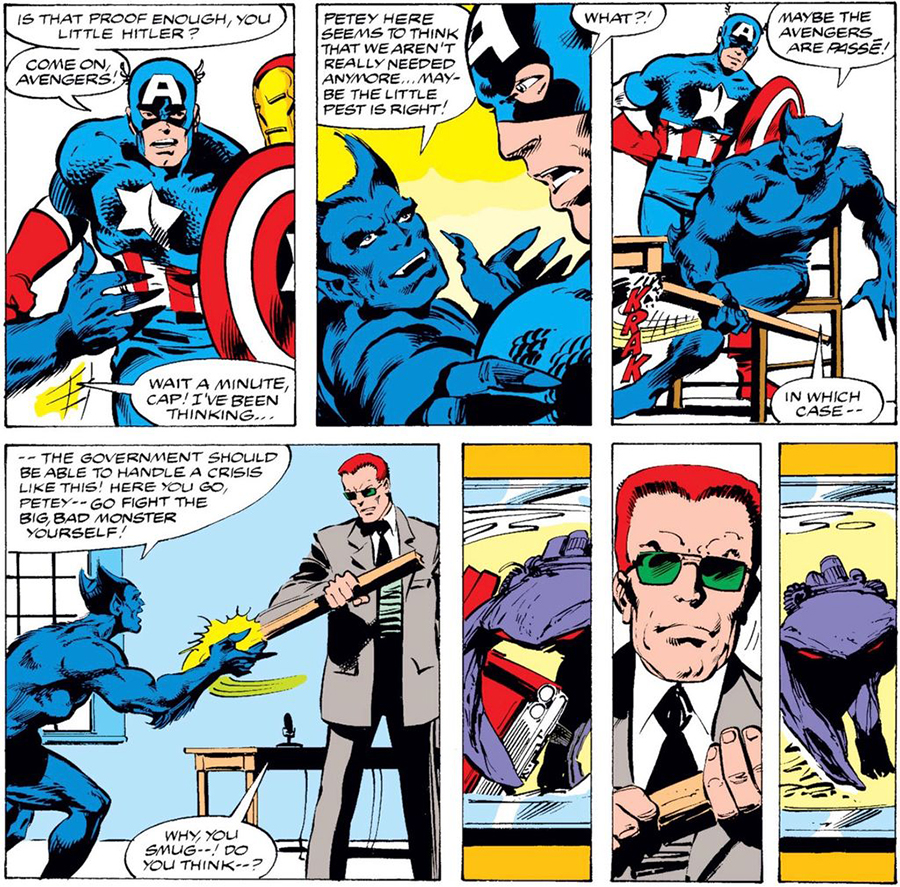
Years later, less scrupulous scientists used Hank's research to make MGH, a compound that indeed grants short-term superpowers--but includes side effects Hank would never have approved, such as addiction, aggression, and the enslavement of mutants to produce the substance. But blaming Hank for this is like blaming Einstein for the A-bomb or Alexander Graham Bell for phone spam. Sure, he was somewhere on the chain of causality that led to it, but far enough back that no reasonable person could claim he should've foreseen it.
(There’s also some evidence that a version of MGH was around before Hank’s research, but I’ll let others debate that wiki entry.)
But that's not Hank's greatest crime. Let's move on to the Legacy virus, the plague Stryfe brought back from the future. It killed hundreds of mutants and was even starting to kill humans before...
Hank cured it.
Wait, what?
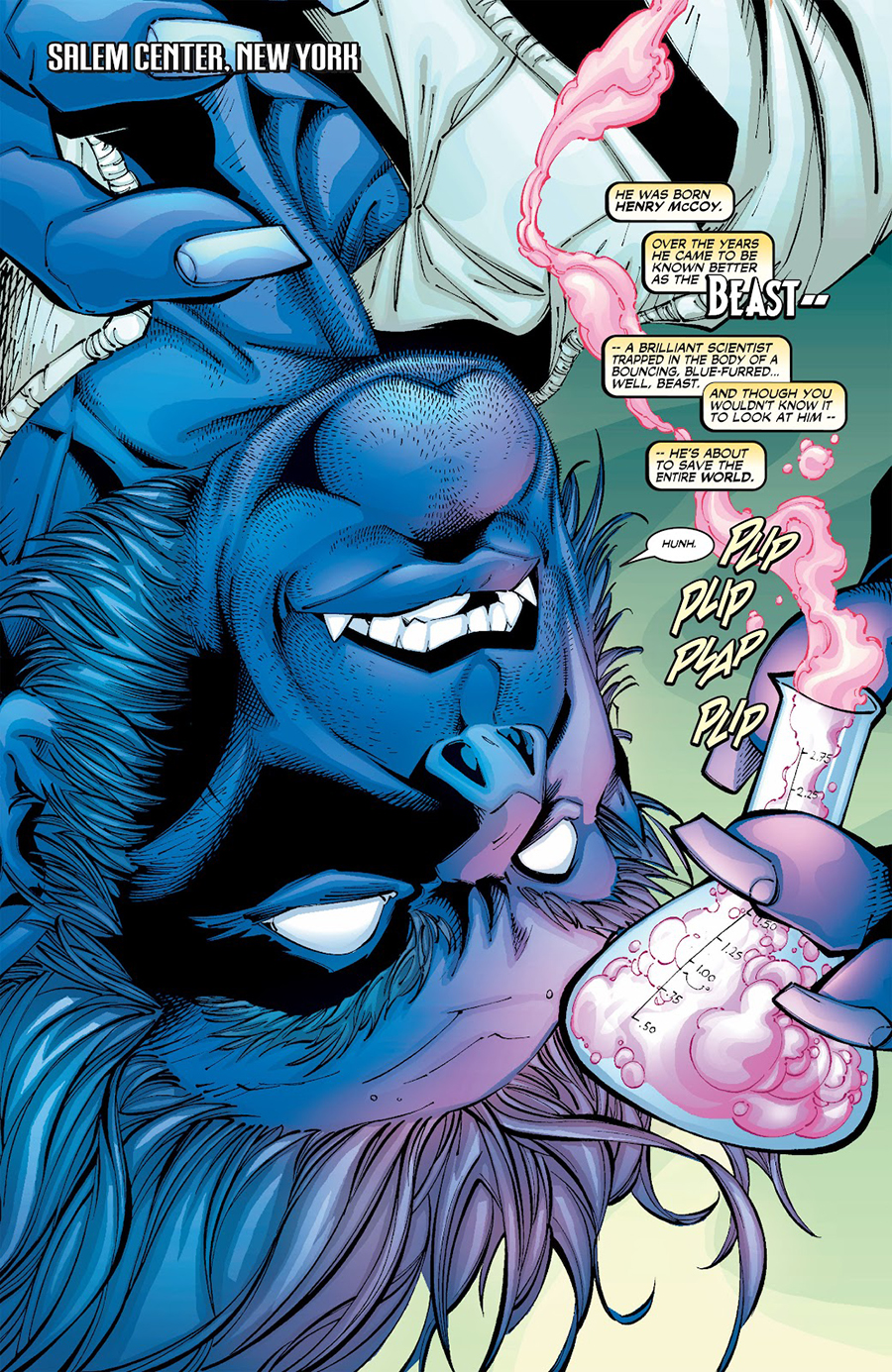
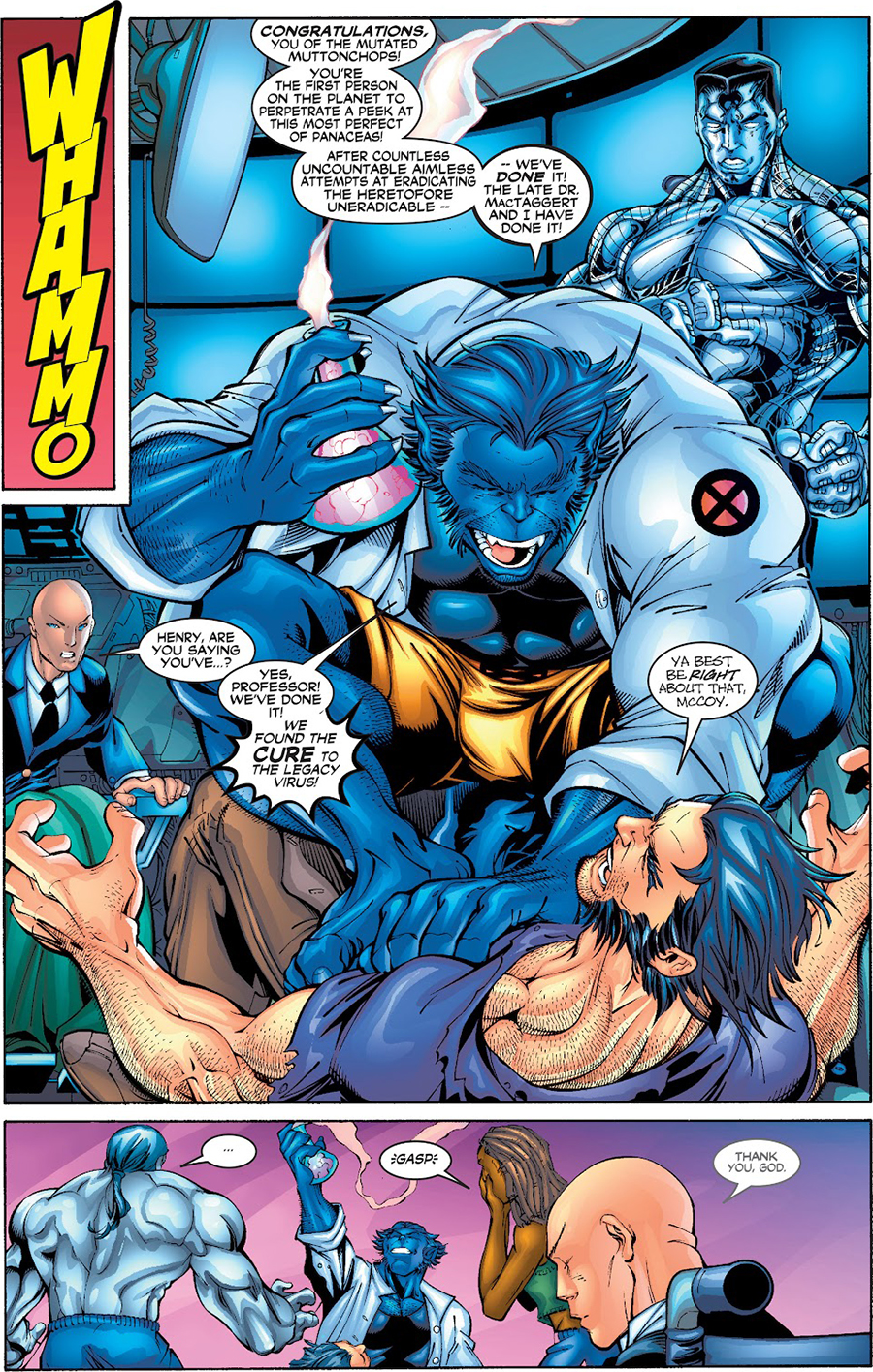
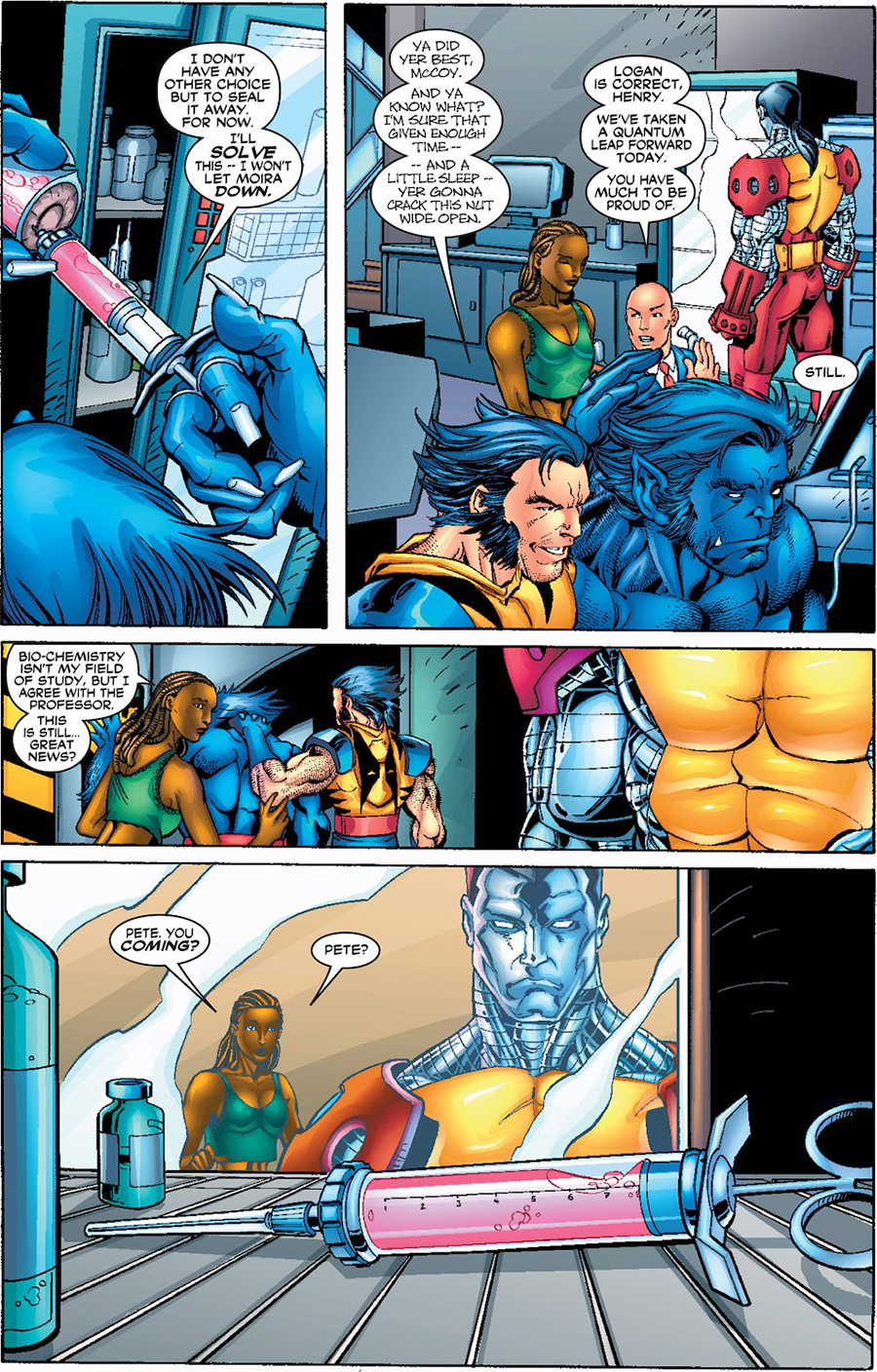
Okay, okay, it's not quite that cut-and-dried. Hank's cure used research from the then-dead Moira McTaggert. It also would have been fatal to its patient zero, and while Hank was working on an alternative, Colossus sacrificed his life to implement it. This was back when an X-Death could take whole years to get overturned. So Hank doesn't get solo credit.
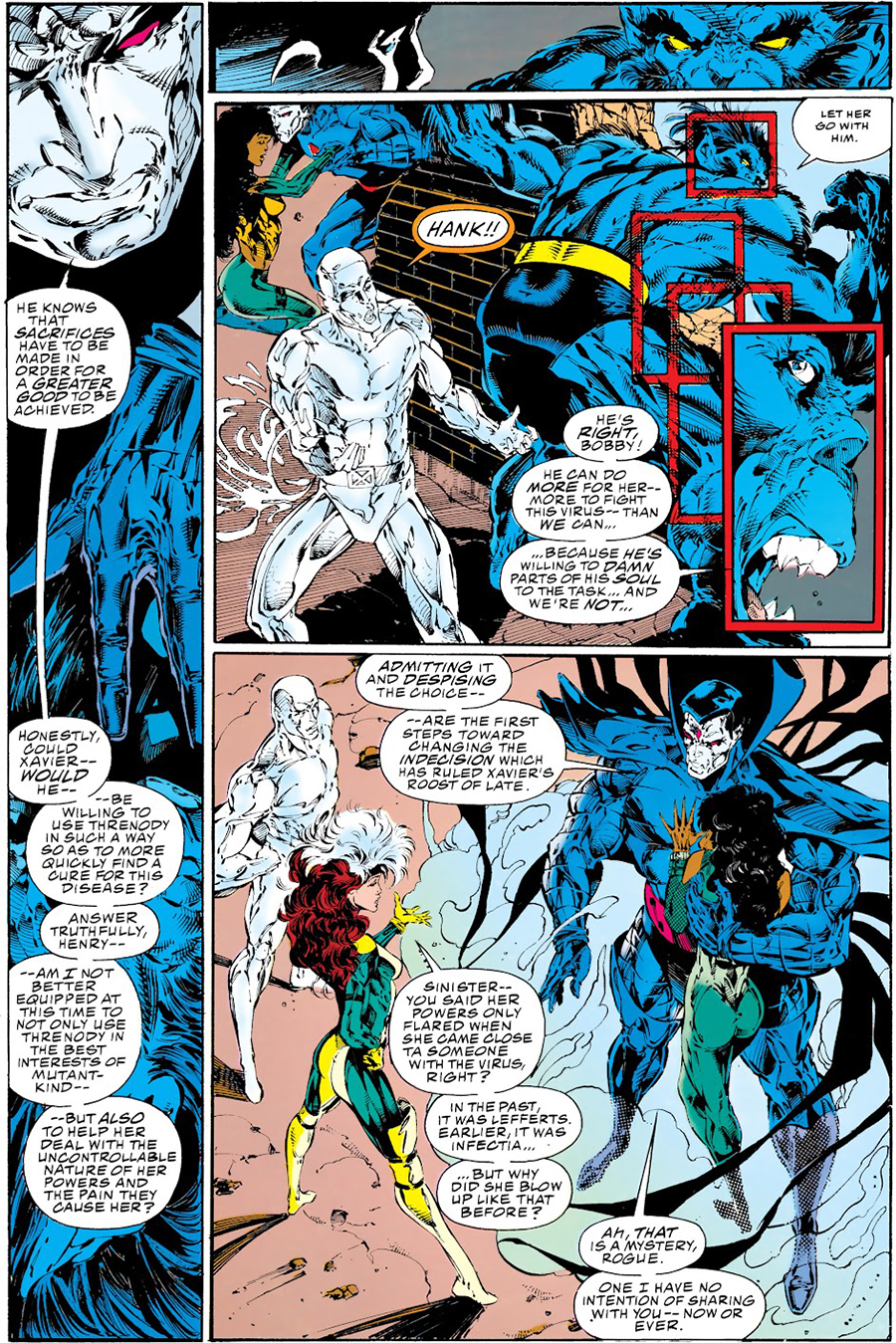
Also, to stop the virus, Hank made the questionable call to release the disturbed mutant Threnody into the care of Mister Sinister.
Then, in a balancing act of charity, he risked infection to let another sufferer get a look at the sunrise...
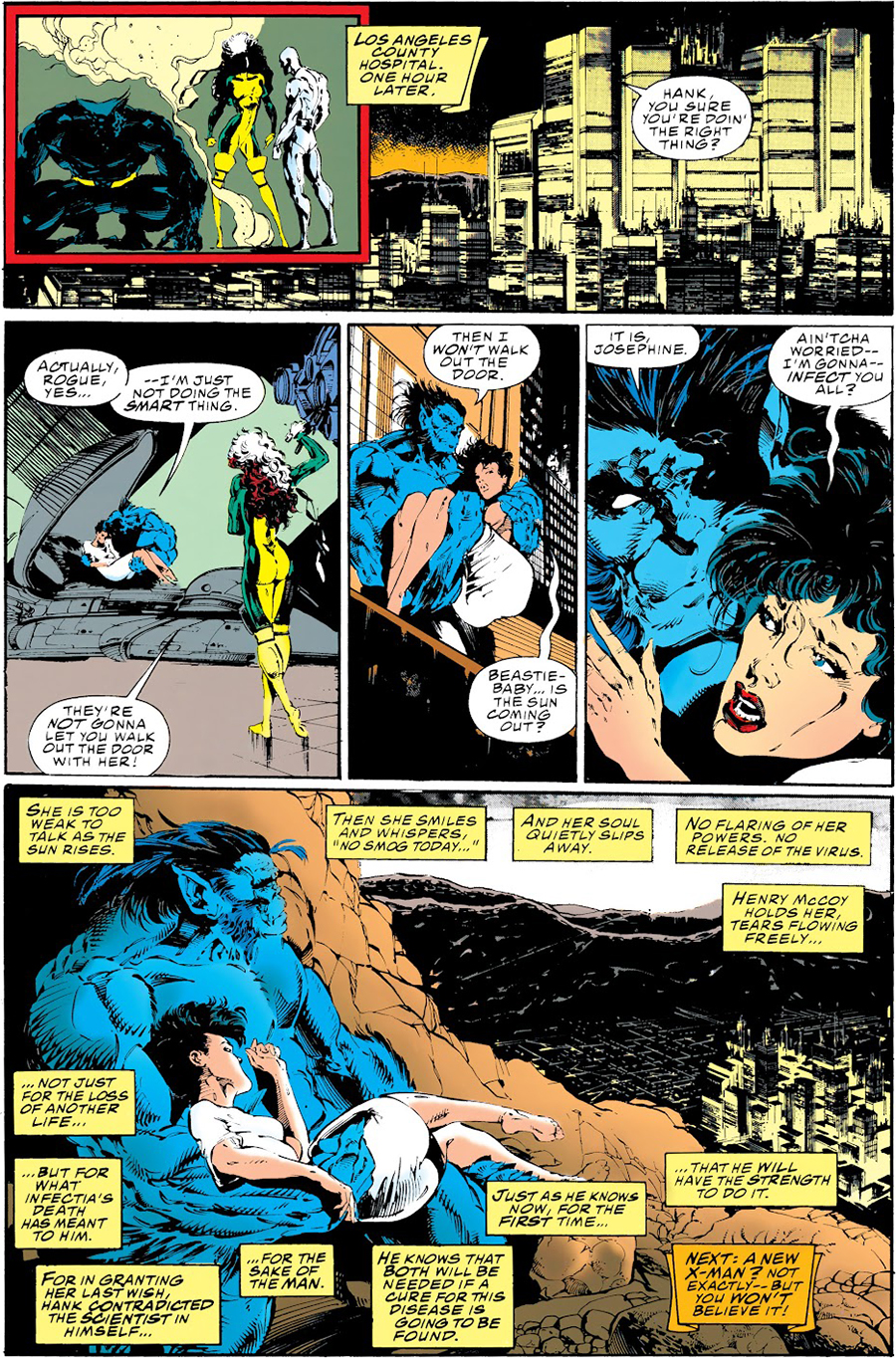
Which released the human-infecting version of the virus. That's a whoopsie for sure, but a whoopsie that comes from Hank's compassion, not his lack of it.
(I can’t find the story that confirmed that last detail, but Marvel’s website says it happened, so let's take it as read.)
Then there was the version of the virus that Beast used against Skrull invaders…because Cyclops ordered him to…before Cyclops even asked whether it was curable…uh…hmmm.
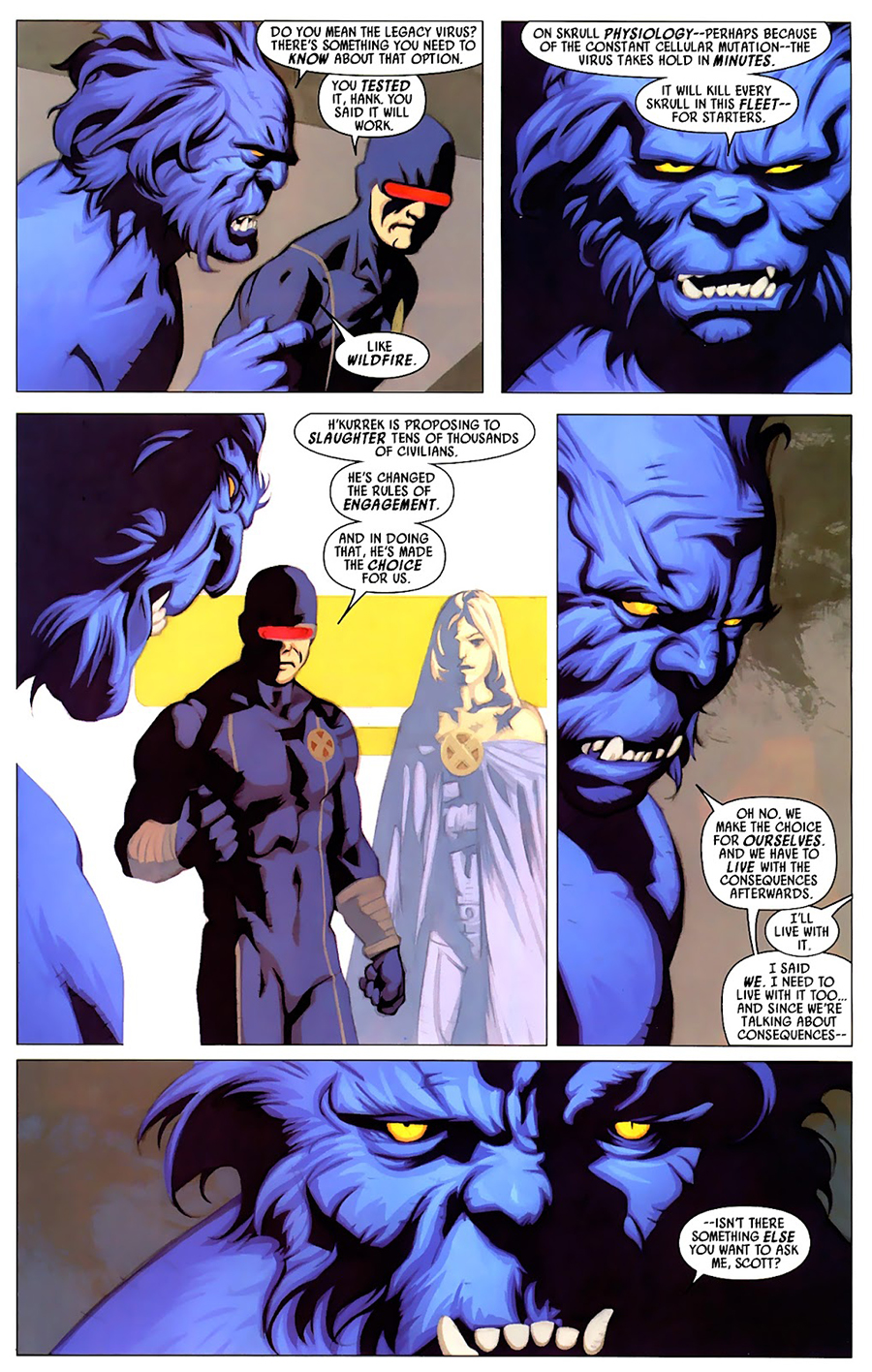
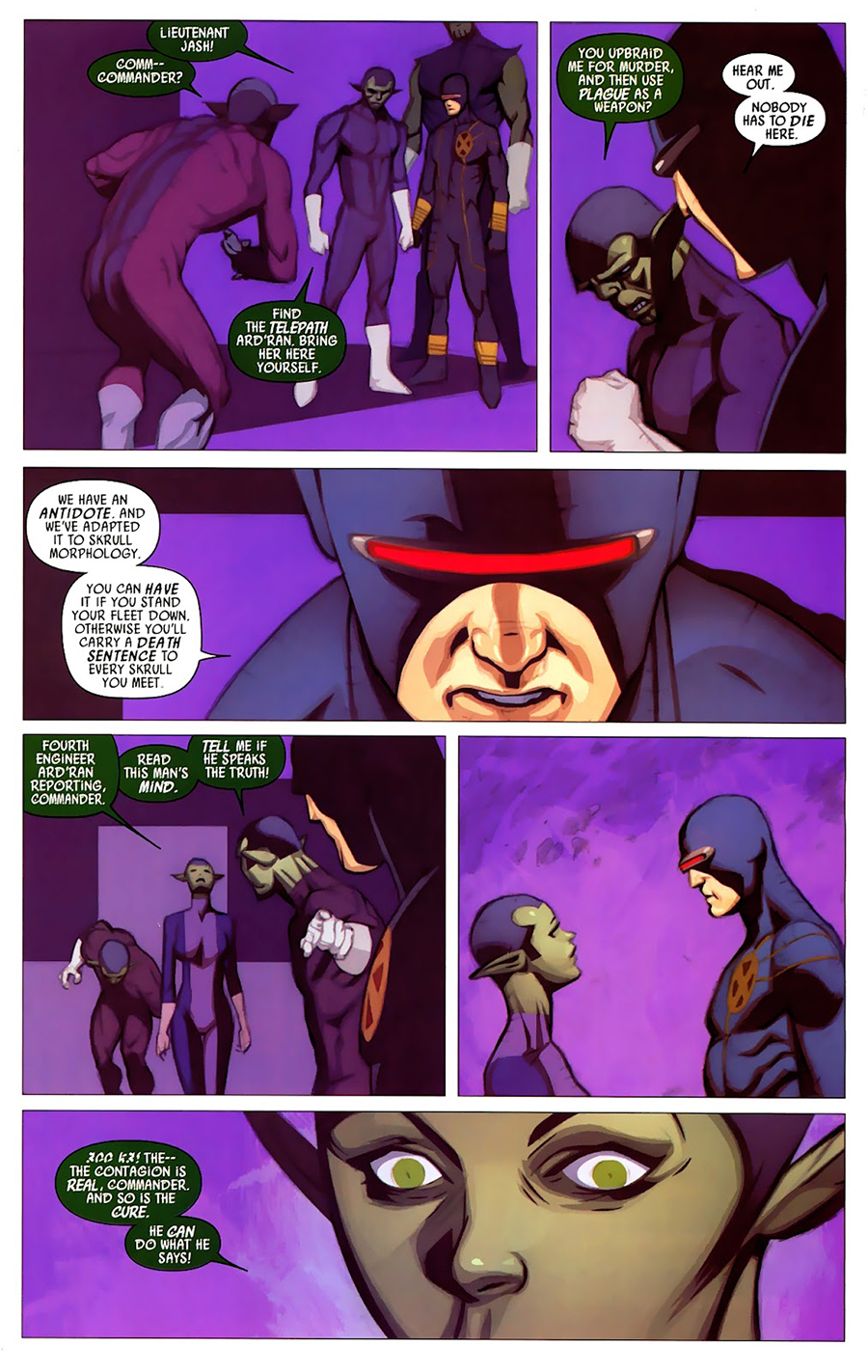
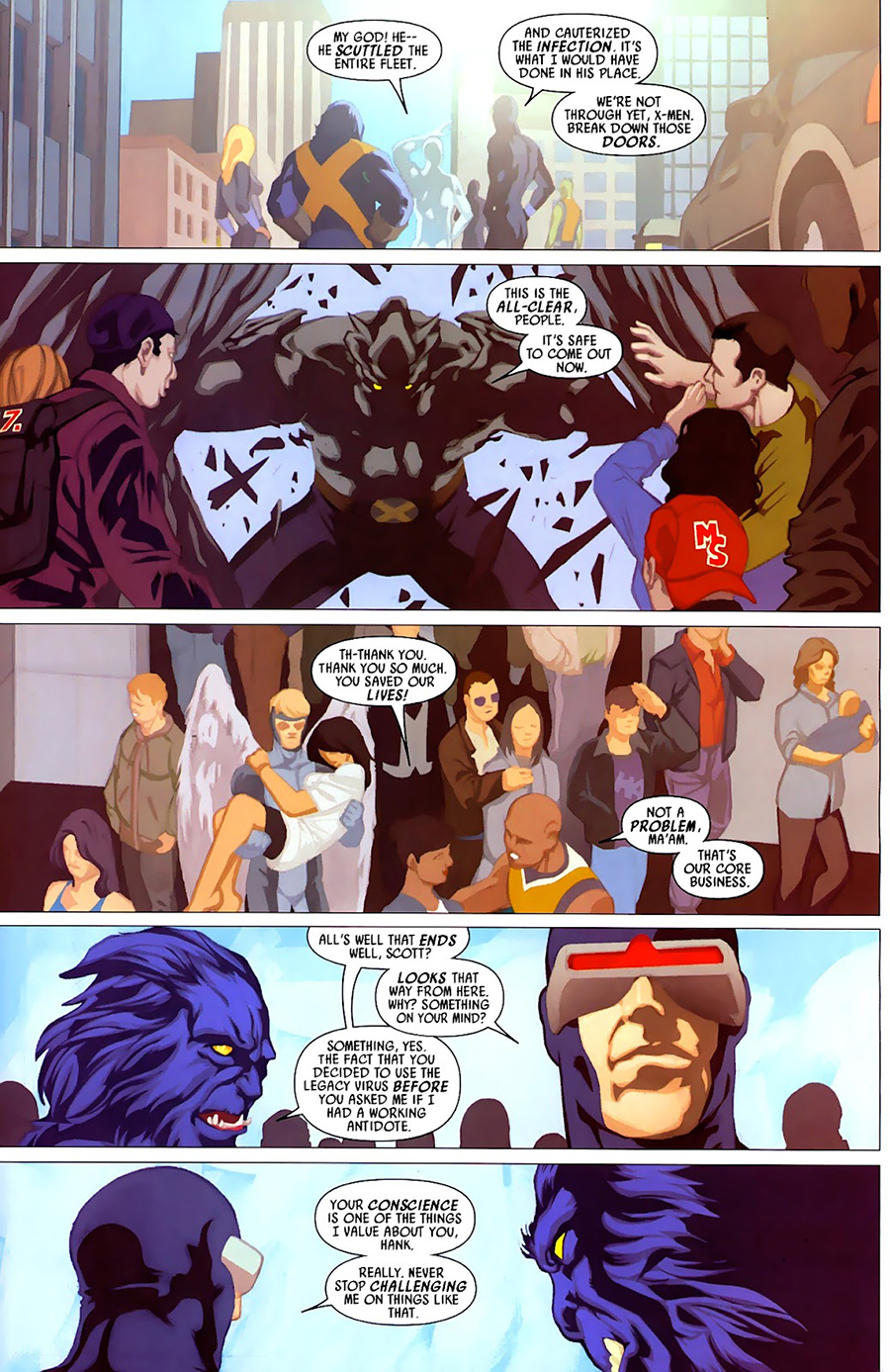
Hank doesn't even look like the most war-criminal-esque X-Man in those scenes, does he? But the way Percy’s characters connect his name to "the Legacy virus," you'd think he created the damn thing!
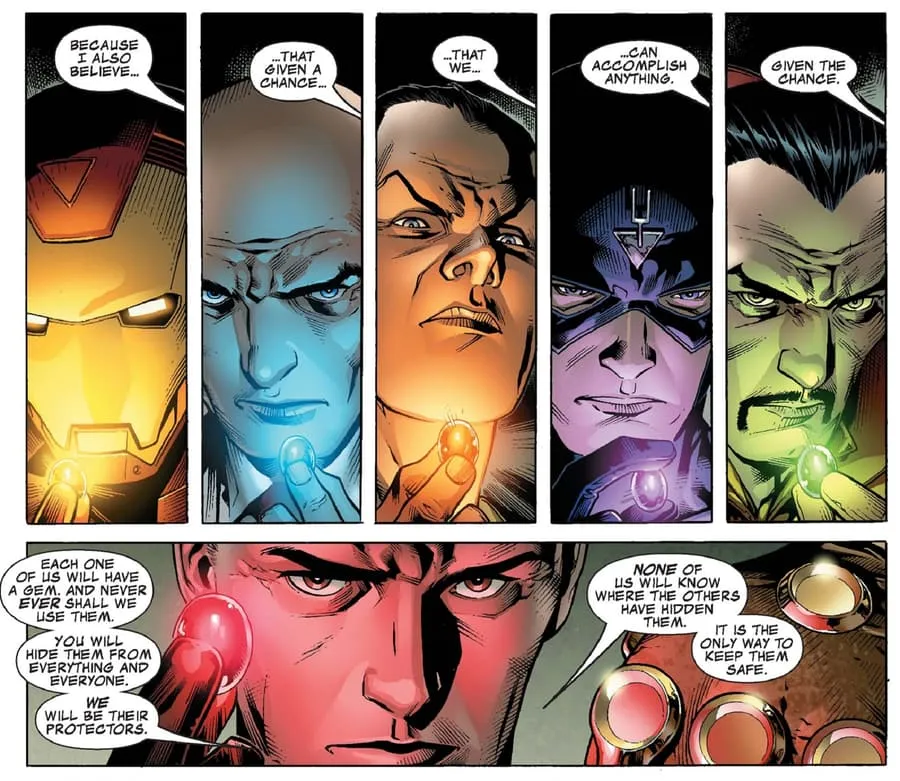
The "Illuminati" argument is even more of a reach. Marvel's Illuminati doesn’t have the cleanest of hands, but their longest-standing mutant member wasn't Beast. It was Charles Xavier, who escaped any criticism for his involvement by dying.
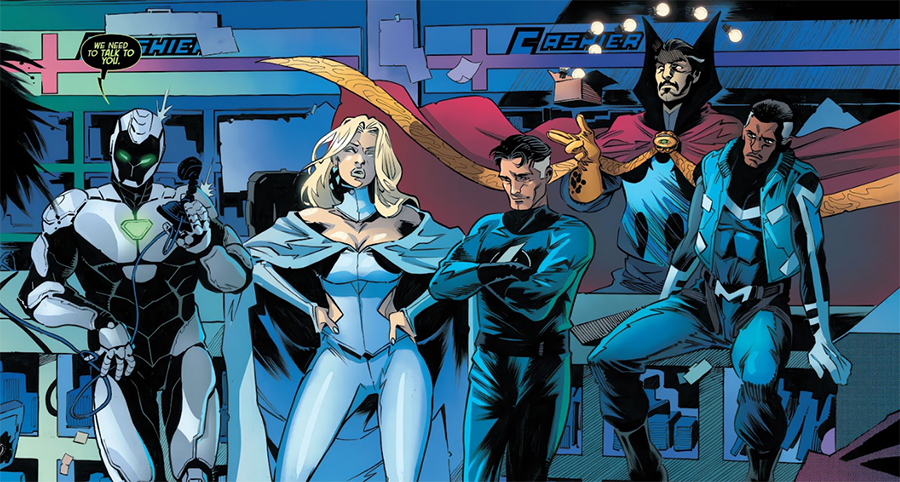
And if post-Krakoa X-Men think hanging with the Illuminati is a crime, then someone should tell Emma Frost, who appears to be fraternizing with them as I write this.
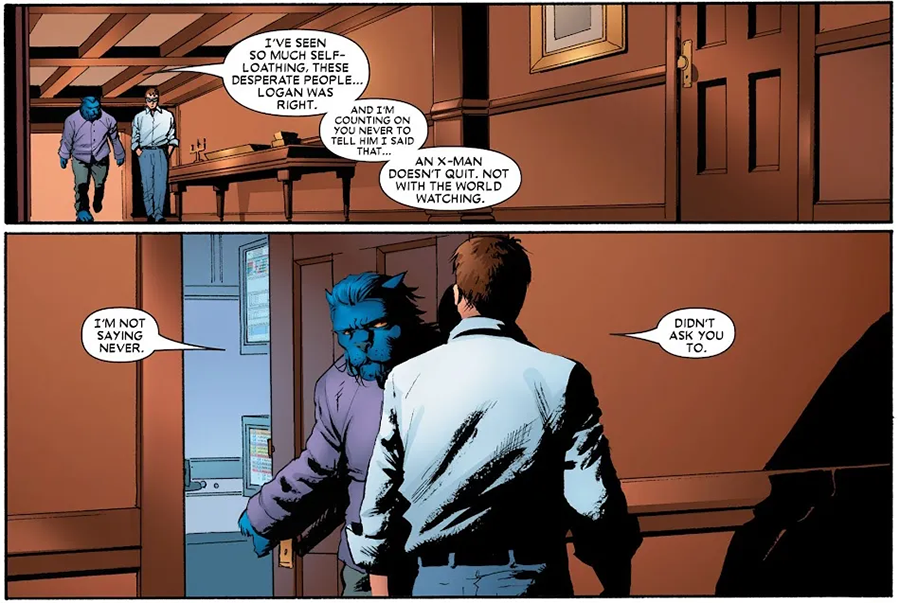
What about stuff that the earlier summaries have failed to mention? There's a little more controversy in Hank's history. There's the story where he considers "curing" his mutation, becoming an ex-mutant like Rogue did in the movies. But this threatens the cause of mutant rights:
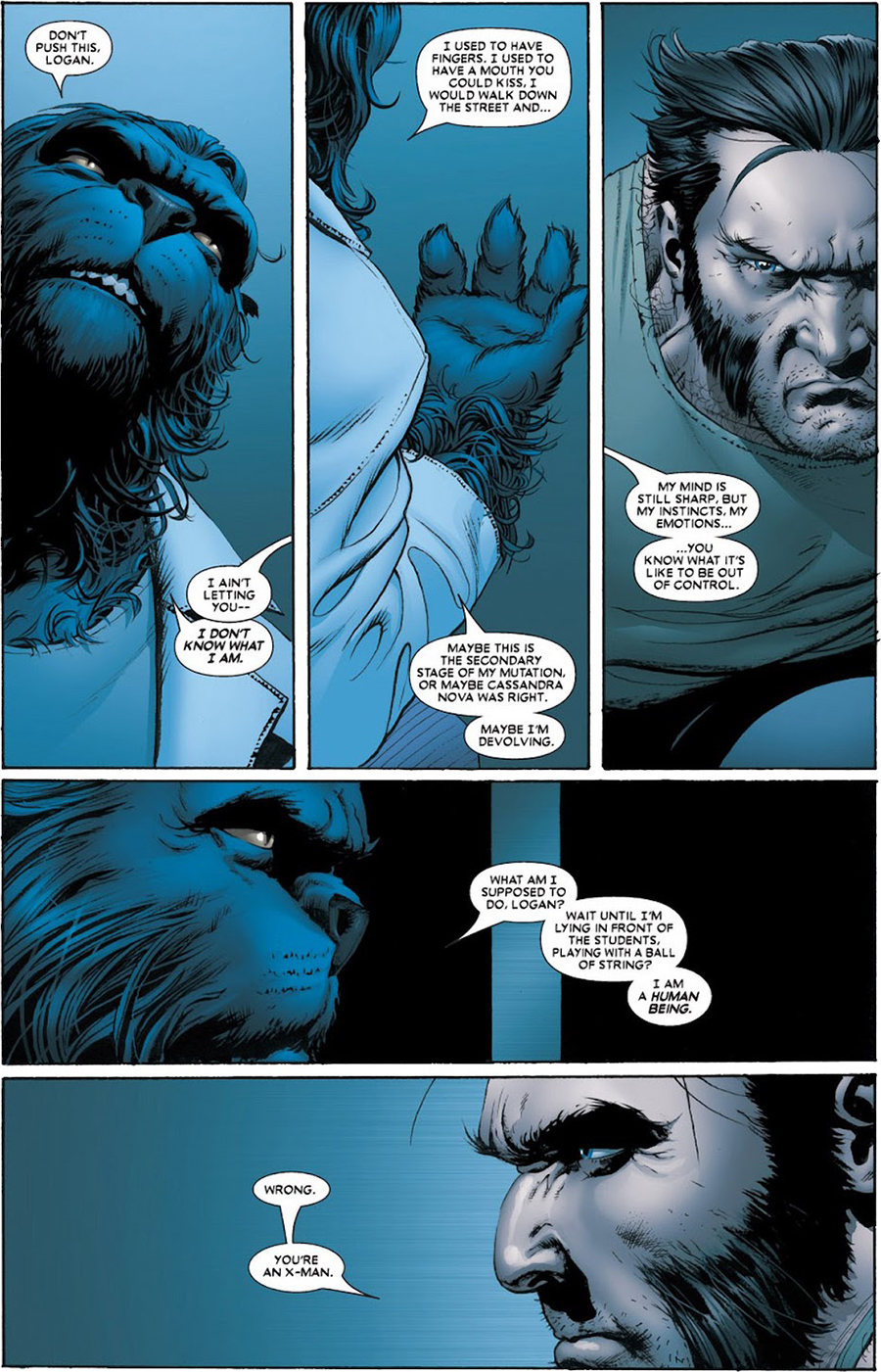
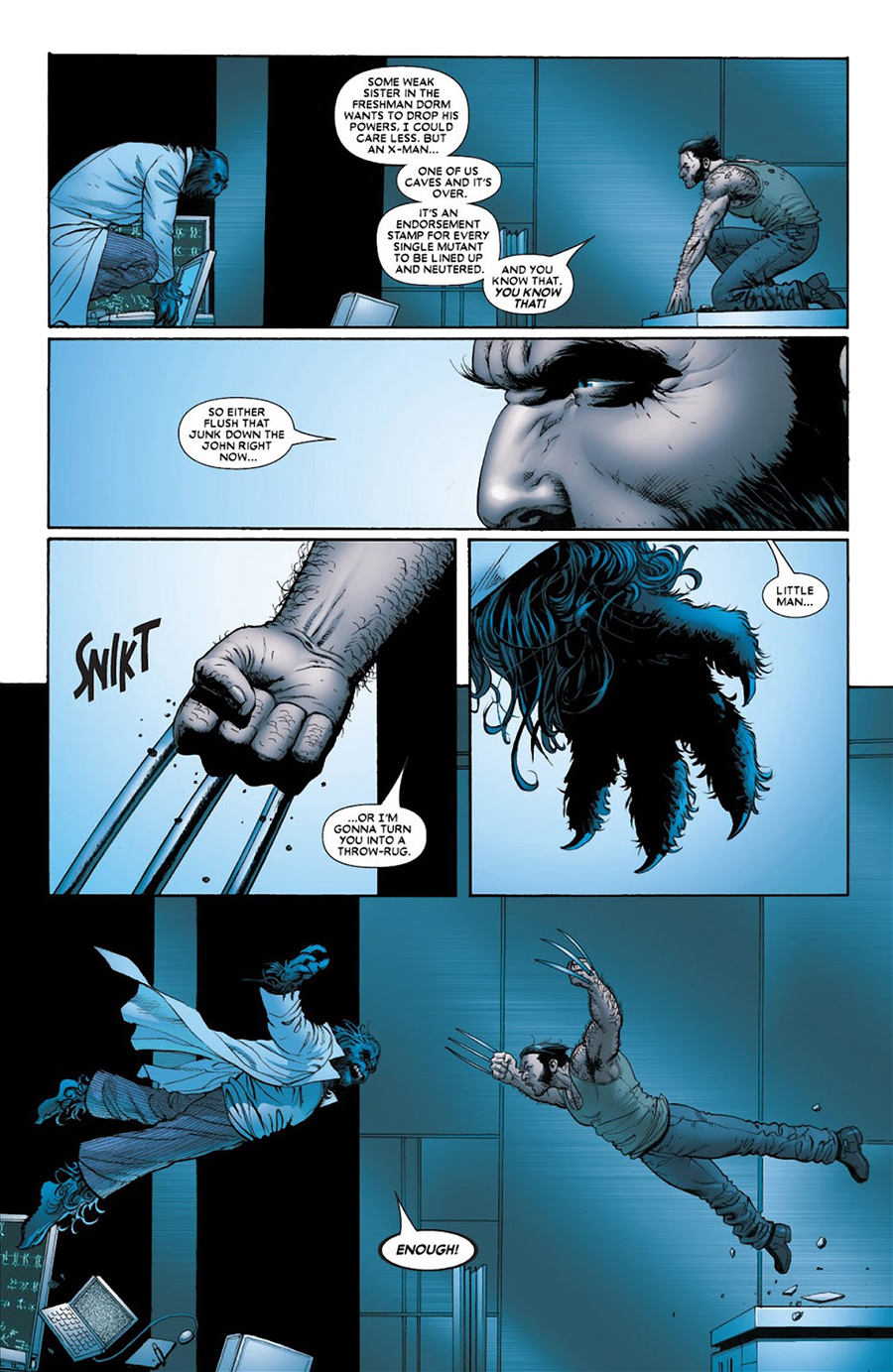
Wolverine's got some sound arguments in that excerpt, but...so does Hank. That’s some harrowing body horror he’s going through there, and he’s got no idea what’s next. Aging is hard enough when you're going through the changes everyone else goes through. Hank refuses the cure for the cause. I'm not sure I could do the same.
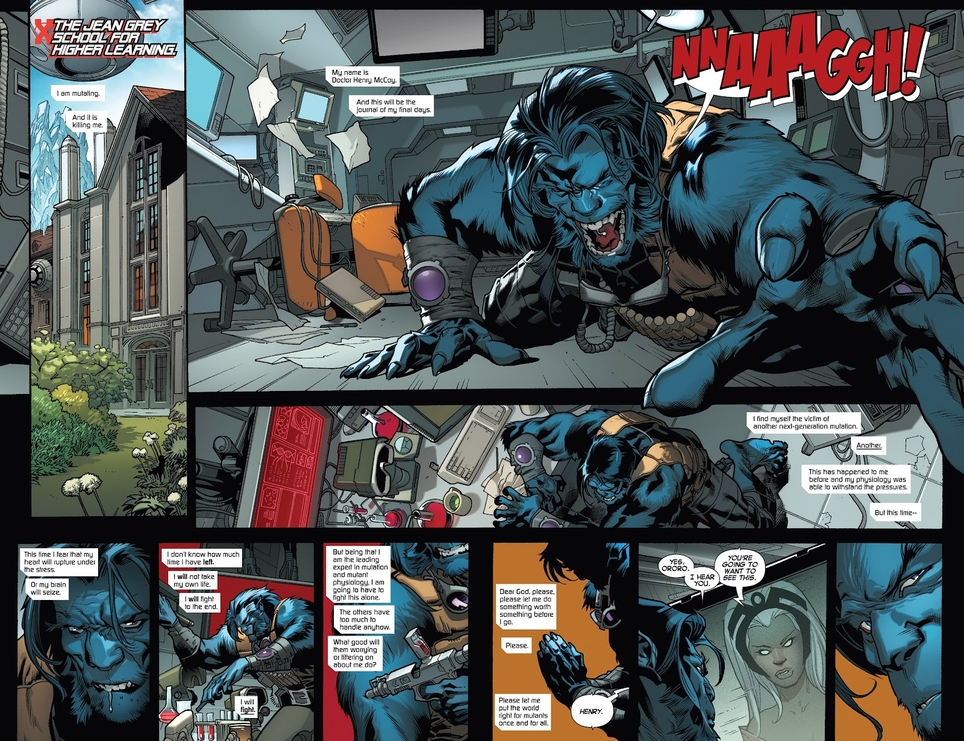
And then, of course, there was the time-traveling All-New X-Men, which began with the X-Men Balkanized, Cyclops leading the more militant faction, and Hank about to die from his continuing mutations. Hank brings the earliest X-Men from the past into the present, hoping this might shame the present-day Cyclops away from that course and/or revise the past to prevent it.
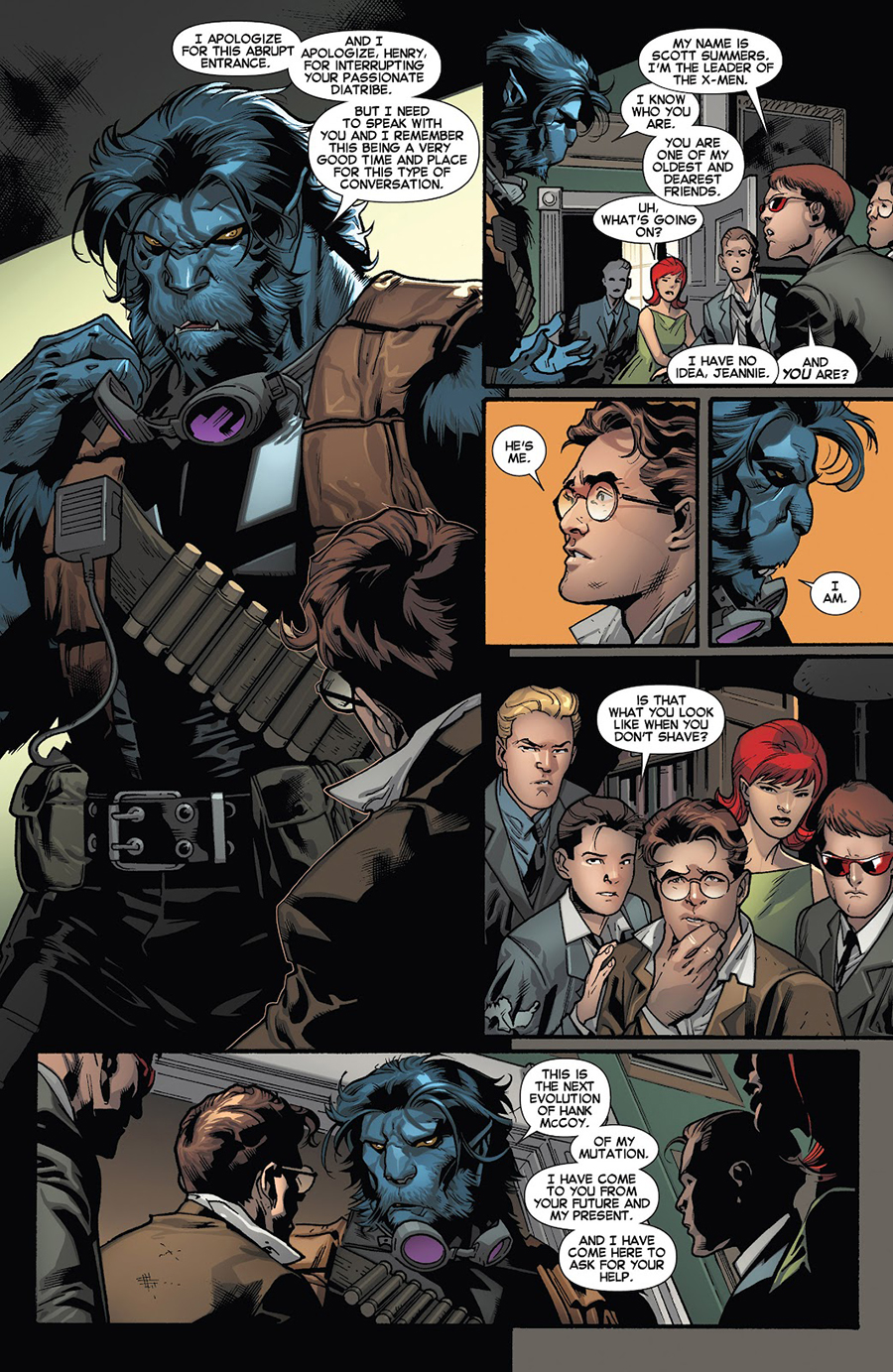
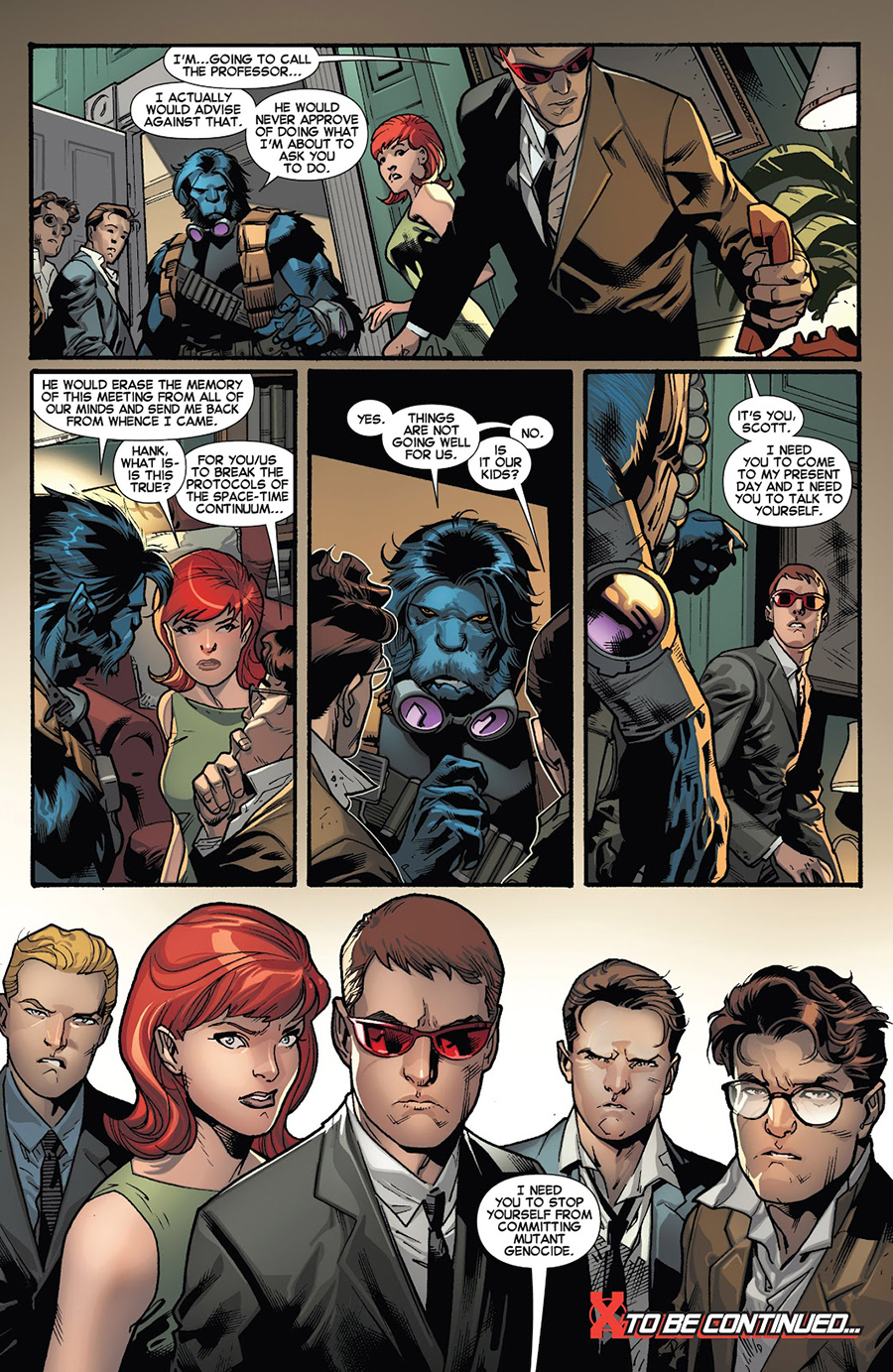
This is hardly the first time the X-Men have tried to get a mulligan via time travel ("Days of Future Past," anyone? Cable? Bishop?). And Hank’s half-baked plan may have even worked. Cyclops is indeed deeply rattled when he first meets the younger X-Men, and he does choose the path of peace (in Uncanny X-Men #600). Would he have done so anyway? Hard to be sure.
Still, this is a plan with huge risks to the timestream, one made with no one else’s knowledge or approval. And though it was the desperate act of a dying man, Hank ended up not dying after all and having to defend it. The resulting “trial” is the only X-Men plot I could find where pre-Krakoa Beast sounds a bit like his post-Krakoa self: hostile, intractable, and furious at being challenged (Uncanny X-Men #600, again).

But this seems to have been little more than a passing fit of temper. In other scenes not long before or after the “trial,” Hank acts reflective, regretful, and willing to accept fault (Battle of the Atom TPB, Extermination #5).
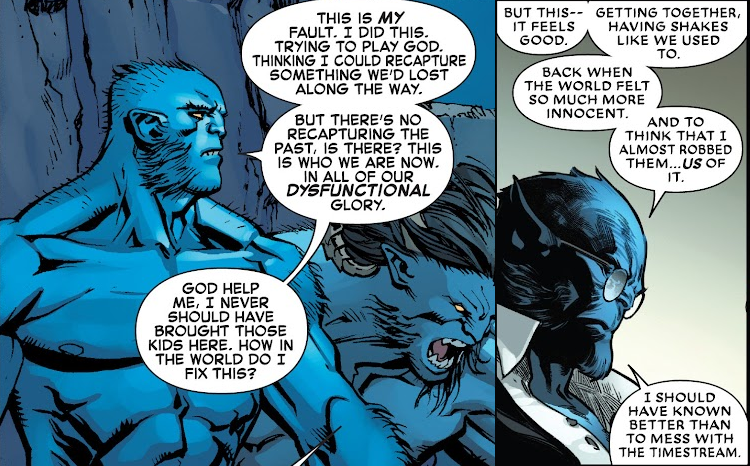
So that leaves Inhumans vs. X-Men, which seemed to be the story that turned a lot of X-fans against Hank. I have to admit, I'd avoided reading this one up to now, so I was curious. What does he do here that deserves censure?
Does he fight the X-Men to defend Atillan? Does he accompany an X-team but send the Inhumans a signal that leads to their capture? Does he blab state secrets? Does he go on a message board and admit that Jack Kirby's designs for the Inhumans were ten times better than his perfunctory, five-minutes-till-deadline X-Men uniforms?
Nope, none of that.
Mutants and Inhumans are biologically incompatible: the Terrigen mists that awaken Inhumans' powers kill mutants. Hank and his Inhuman assistant work for eight months to find a peaceful solution to this problem. They only succeed in learning that Terrigen is about to make the Earth uninhabitable for mutantkind. He informs his friends in the X-Men of his findings first, intending to tell the Inhumans soon after. They respond with war, which Hank considers tantamount to suicide, but when he tries to refuse, his teammates make him a political prisoner.


But hey, at least they get him some medical attention for those electrical burns they gave him before throwing him into the gulag. That's how you know they're the good guys.
All right, all right. You can second-guess Hank here a little bit. He's wrong about an Inhuman-X-Men fight being certain doom for the X-Men, and he's probably dumbass naive to think he could go back to his lab in Inhuman territory and just sit out the war.
His biggest mistake, though, seems to have been reporting his findings to his “friends” first. Because when Medusa, leader of the Inhumans, is informed of those findings, she destroys the Terrigen almost immediately. If Hank had been allowed to speak to her earlier, there would have been no fight.

THIS RACE WAR COULD HAVE BEEN AN E-MAIL.
So that's Hank McCoy, pre-Krakoa. A smart guy who sometimes makes foolish choices. Willing to risk death...and a fate worse than death...to help the mutant cause. At the same time, not exclusively pro-mutant: he'd take risks for non-mutants, too. In fact, he's compassionate, warm, and sensitive to anyone by default.
And for a little while post-Krakoa, Hank still acts like that guy. In his first appearance in the current X-Force run, issue #1, he's almost too gentle for his own good.

In issue #4, he's still humble enough to admit that fellow thinkers are seeing things he's missing.

And in #5, he's curbing his team's violence, urging them to stick to Krakoa's "kill no human" law.

At the end of that issue, he does get a bit rough, but still seems pretty much like himself, wanting to understand the situation he and his team are facing.

Perhaps this scene is meant to be the trigger that turns Hank away from the path of reason and compassion. But it's hard to imagine that this would be enough to wreck the morals of the man we've seen elsewhere. What does he even learn here? That humans are jealous of mutant power? That mercenaries take money from causes without believing in them? Were we meant to believe he didn't understand those things before?
And yet, X-Force #6 shows us an almost completely different Hank. Far from urging his team not to kill, he starts urging them to kill and does some off-the-books killing of his own. He's taken to describing himself as a conductor and his teammates as mere "instruments."


What's worse, his humility has vanished, leading him to create almost as many threats to Krakoa as he suppresses.

Making mistakes is totally in character for Dr. Hank McCoy. But insisting he doesn't isn't. "I'm never wrong"? That's Victor von Doom talk. Even as recently as IvX, Hank admitted being wrong was all part of the scientific process.

What also seems to have come out of nowhere is his coldness. After the sea change in his personality, Hank would try "relating" to his colleagues, but with an air of annoyance, as if he could barely bother going through the motions of friendship. There is no precedent for that, not in any of his alleged or actual worst moments.

Neither is there precedent for his “mutants first, last, and only” philosophy. X-Force has always been about suppressing mutantdom’s enemies with, well, force. It's been called "the mutant CIA." But Hank was the first X-Man to join the Avengers, he was the one who didn’t fight the Inhumans, and he considered giving up being a mutant altogether. If the creators were looking for a fervent nationalist with a penchant for shady doings like the CIA's, they should have kept looking.
Recent installments have brought back Hank's earlier self as a clone to oppose his current self. (This echoes Hank's move of bringing back the young X-Men, admittedly without the sticky time-travel issues.)

But the dialogue hasn't dropped the idea that the two Beasts are one and the same.

If the "savage Beast" lurked within the hero Beast's breast, we never saw his emergence. It didn't start before Krakoa unless you count the moodiness during his "trial" that was quickly abandoned after. There was no visible event that caused the change, and there were no stages of development. He just...came into being between X-Force #5 and #6.
It's true that his actions became more colorful after that, going from tweaks of enemy weapons to calculated assassinations to Rick and Morty-style cloning supervillainy. But these developments didn't seem to be evidence of Hank's continued moral decline so much as Hank always doing as much as he could get away with. (And then trying to do just a bit more than that.) He traded on his old self’s reputation as a thoughtful non-savage until he couldn’t anymore.

Percy may be trying to make a point that nationalism is a hell of a drug...that doing CIA wetworks would make a "beast" out of anybody, given enough time. But again, no time was given here. Hank just started acting like an amoral monster between issues, without anything specific about X-Force prodding or tempting him into it. This isn't a decline and fall, it's a switch flip.
And the corruption angle clashes with the constant insistence, from Hank and others, that this Hank is the same guy as he always was, just with the filters removed, as if prior versions of him would've been just as vicious if he hadn't been constrained by the norms of society. "Ugh, remember when he BETRAYED US TO THE INHUMANS by trying to STOP THE WAR HE THOUGHT WOULD KILL US ALL? Or how about that LEGACY VIRUS, huh? He REALLY showed his ugly true colors there!" This feels less like an expression of some point about the character and more like a meta-conspiracy to gaslight reluctant readers into submission.

Or maybe there's another explanation.
Maybe Hank's gone back to his first dumbass idea and experimented on himself. Maybe he worried he wasn't ruthless enough to serve Krakoa as he was. Maybe sometime between X-Force #5 and #6, he modified his own brain, instilling a relentless, almost biological drive to protect the greatest number of mutants at all costs. And maybe he didn't anticipate that "all costs" would include his emotional attachments, all other morality, and his self-aware wit.
That'd be pretty dumbass of him, all right.
But "dumbass" is a lot more in line with Hank's history than "easily corruptible" or "secretly horrible at his core and just waiting for the right time to show it."


no subject
Date: 2024-03-14 04:51 pm (UTC)no subject
Date: 2024-03-14 05:39 pm (UTC)no subject
Date: 2024-03-14 06:45 pm (UTC)Or if it was a side effect of his later mutations, like in X-Treme where Sage jumpstarted his next form, or when time-traveling young Beast helped him mutate into a different “fixed” form…
Point is, there are a lot of places where one might point and say “this is where he suffered a sort of brain damage which affected his morality and personality and ethics…”
Or maybe, given the example of Dark Beast from a timeline where he had no decent moral compass, he’s always had the capacity to go bad, more so than others.
It’s just that Percy is bad at subtle storytelling.
no subject
Date: 2024-03-14 06:58 pm (UTC)no subject
Date: 2024-03-14 10:22 pm (UTC)(AoA didn't become a full-fledged AU in its own right until afterwards when it was revealed it survived as a timeline.)
Anyway, that's my Ted talk on why Dark Beast reflects a genuine potential state within Hank McCoy to become a completely amoral scientist given the right lack of moral influences.
As for Creed... *shrug* I got nothin'. Apparently he started out bad but developed moral reservations about Apocalypse's level of villainy and... Maybe 616 Creed could be a decent person under the right circumstances.
But then again, the AoA just proves that everyone is one dystopia away from adopting facial tattoos as a fashion choice.
no subject
Date: 2024-03-15 05:26 pm (UTC)At any rate, I'm sure Hank had the potential to go bad early enough in his development, and I'd be willing to concede he might've had that potential even on Krakoa. Dude had picked up some psychic scars, after all. It's just that his actual heel turn was so clumsy and ham-handed and full of sock-puppetry. "Hank has ALWAYS been like this!" exclaims Logan. "This arc is brilliant," he adds, unprompted.
Creed actually did turn good in our universe for a time due to Axis, the event that turned bad into good and good into bad. So maybe something like that, only more permanent?
no subject
Date: 2024-03-15 06:43 pm (UTC)no subject
Date: 2024-03-14 07:18 pm (UTC)If Percy wanted more ammunition for his, er, argument, he could've gone with the time Beast teamed up with Dark Beast to try and undo M-Day.
Oh, wait. Beast was appalled with his counterpart the whole time, and beat him up the minute he tried experimenting on one of Cannonball's siblings.
Ah, well.
As for the Illuminati, Beast joined up during the Hickman Avengers, when they were going around hiding the Incursions from everybody so they could destroy alternate Earths.
Except most if not all of the time those Earths were either destroyed by another party, or totally lifeless. The one time they were actually faced with destroying another, actually inhabited Earth... they couldn't do it, and then turned on Namor when he went ahead and did it.
The most Beast did during this time that was exclusively his own was... giving Black Swan some books to read, and much later on suckering Sunspot and Cannonball in stopping Old Man Rogers's revenge-tantrum.
The bastard.
It's a tendency among quite a lot of writers to say their version of a character is really how they've always been.
But most of them don't try and cite continuity that disproves their assertion.
At least not without rewriting old scenes so it looks like that's what happened.
no subject
Date: 2024-03-14 09:28 pm (UTC)That's the most hilarious and terrible thing I've read in weeks.
Thank you.
no subject
Date: 2024-03-14 11:14 pm (UTC)Mod Note!
Date: 2024-03-15 12:03 am (UTC)Please edit this image to remove the reference.
Re: Mod Note!
Date: 2024-03-15 01:00 am (UTC)no subject
Date: 2024-03-15 02:43 am (UTC)But after witnessing the assassination of Professor X on Krakoa and being put in charge of X-Force, he decides that he can't be kind or silly anymore. This all makes sense.
Like, it's a decline because it happens slowly over years. We see it happening. The big push happens in the Krakoa era, but it does happen.
no subject
Date: 2024-03-15 12:53 pm (UTC)I don't think his kindness has seen such a decline, as you define it, because that side of him didn't disappear slowly over years and we didn't see it happening. It seems more to me like that just snapped out of existence between issues. Even in recent, controversial stories like All-New X-Men (his time-travel plot) and IvX, you can argue whether Hank made the right choices, but it's hard to argue he wasn't desperate to find a kind and gentle resolution for everyone, not just mutants. To avoid war and pain for all. Whereas now, he's blithe about causing an old friend untold suffering, and when it comes to human lives, he couldn't care less.
Much as I don't care for this version of Hank, I think we could have gotten a compelling story where a series of events jars him into the conclusion that his kindness would kill this new chance for mutantkind. He would then excise it, either by genetically manipulating himself or just going down a trail of rationalization. That could be well-written and properly upsetting. But it's a story we never got, and I can't pretend we did.
no subject
Date: 2024-03-15 02:07 pm (UTC)Like, sure, Cyclops ALSO does some heinous stuff. AvX kills his character, but then at the end of AvX, Hank tries to hide from him the fact that mutants are back. Scott learns this and is immediately "I did bad shit, I know that, but it worked, so I would do it all again." But Hank doesn't even seem to care, he only wants to yell at Scott. Heck, that's why he brings in the O5, to wag them at Scott.
I would argue that Hank's self righteous grows throughout the Bendis run and he gets less and less kind to Scott and those who follow Scott until Krakoa.
no subject
Date: 2024-03-15 05:08 pm (UTC)And it's hard for me to take Hank's beef with Scott as a signpost in a general moral decline when at least half the X-cast felt pretty much the same way about it as Hank did. In fact, "wagging" the original X-Men at Scott, for all the problems with it, did presuppose that Scott still had a better nature worth reaching. That's more consideration than Logan was giving him at that point, that's for sure.
(I wouldn't say that withholding the info from Scott when he was incarcerated was Hank's BEST moment, but considering that Scott reacted to it with "This makes me retroactively right about everything," I can't really demerit that one either.)
no subject
Date: 2024-03-16 03:53 am (UTC)This pretty much all stems from the fact that Hank and Xavier have much more in common than any of his other students, which is why Xavier chose him to be part of the Illuminati:
Without Xavier around, Beast does these terrible things because he's trying to figure out how to save people and yet almost always makes it worse. Not to use Secret Empire, but Beast was one of the leaders of New Tian:
And this is all with Xavier dead. When Xavier comes back, that's the turning point, that's when Beast really changes. In fact, when Beast meets Xavier again in Astonishing X-Men Annual #1, he persuades them to go stop Lucifer mind controlling a town and Beast ends up under Lucifer's control...until they pull him out:
Because Lucifer wasn't just mind controlling a town, he was just making it free of bigotry and hatred. And when Angel kills Lucifer (like Xavier knew he would), all of the townsfolk under his control die along with him. Sure, Xavier erases all their memories of this (aside from Jean), but it's clear that this affects Beast.
And the next time we see Beast, he's in the Age of X-Man. In the Age of X-Man, most people who are heroic are still heroic...except for Beast:
Sure, this is in Nate's reality warp, but pretty much all the other characters are just variations of themselves. There's a reason Beast is like this.
In any case, as soon as Xavier puts Beast in charge of X-Force, that's when things go really wrong for Hank, because now he has Xavier's implicit permission to do anything he wants to help mutantkind. X-Force has a blank slate. Beast can do whatever he wants and Xavier approves.
no subject
Date: 2024-03-16 01:26 pm (UTC)I think those three panels I excerpted cover the essence of that "trial" scene pretty well: everyone gathers to say "Hank, you have a mad science addiction" and Hank is like "HOW DARE, FUCK YOU!" This would be a solid signpost toward Hank's fall...if any other X-stories had led up to it or followed naturally from it. As I said below, this seems to have been one of Bendis' characterizations that Marvel ignored rather than trying to continue or explain away. You could argue that the current X-Force picks up where it left off, but that doesn't really make sense. The thrust of X-Men #600 is that nobody trusts Hank anymore, while in succeeding stories, everyone extends Hank a lot of trust. They do so in the newest X-Force too, until his actions exhaust it.
For the Illuminati stuff, I'm gonna resort to quoting myself: The grim calculus of Hickman's Illuminati ended up besmirching a lot of "hero" characters, but it seems unfair to demand Hank be called to account for that, when none of the others seem likely to be. Like, it'd be fair to hold a grudge against Doctor Strange and Mister Fantastic for their actions there, even if they were all facing some dire choices. But in their current books, their Hickman-era transgressions clearly aren't keeping them up nights. You pretty much have to choose to let that story go in order to enjoy their current adventures.
I see nothing wrong or out of character with Beast's actions in the Secret Empire excerpt. He seems measured, thoughtful, and arguing for the perspective of those not himself. I don't remember exactly what was up with New Tian (cripes, how many mutant nations have we been through now), but opposing HYDRA doesn't seem too bad.
That Astonishing story just gives Hank some trauma that then gets immediately erased. There are other instances of Hank's trauma that were not erased in the original post, and those seem more relevant to his character arc. And jeez, show me an X-Man who hasn't had some moments of trauma or altered behavior due to mind control.
When it comes to alternate versions of Hank, words cannot easily convey the depths of my disinterest. I don't care how many of these there are because (1) there are just as many evil alternate Supermen, (2) the only essential truth they convey is "Hank, under some imaginable circumstances, might be darkened," and that's not really much of a revelation. That applies to most heroes, maybe all of them.
I never meant to argue that the Hank I knew and liked best was absolutely incorruptible. My issue is that it's like the old "Step 3: Profit" meme.
Step 1: Hank is an idealist who's not out to hurt anybody and trying to help as much as he can
Step 2: ?????
Step 3: EVIL!
That's excusable when you're dealing with some alternate-reality or alternate-future version; nobody expects a Days of Future Past to detail all the steps that got the world from A to B. But when dealing with the present day, you can't skip step 2.
You may feel that the stuff above includes a step 2 somewhere; I'd argue that those examples are outliers that Marvel ignores except when convenient (#600, Illuminati) or not particularly relevant to moral decline (the rest of it). It sure does show that Hank's had a pretty depressing decade, though.
no subject
Date: 2024-03-16 03:02 pm (UTC)Man, Secret Empire is a bad story.
In any case, I believe I've shown plenty of places that easily slot into the number 2 and you just ignore them because they are inconvenient. If that's the case, then this argument will go nowhere.
no subject
Date: 2024-03-19 02:30 am (UTC)no subject
Date: 2024-03-15 03:23 am (UTC)no subject
Date: 2024-03-15 04:02 am (UTC)Thanks for putting this post together!
no subject
Date: 2024-03-15 05:07 am (UTC)Still, Beast has long gone down a road of increasingly awful acts. He didn't start 100% evil and it was a process, but I think you mapped that path well.
Handing over Threnody to Mister Sinister and justifying it by saying Mister Sinister's lack of ethical boundaries is the exact sort of monstrous that leads to the sorts of choices he makes in X-Force. It is a monstrous act and Beast is complicit in every crime that Sinister did to Threnody because he gave Thronody to him with the knowledge and expectation that Mister Sinister would commit horrible crimes. Beast trying to keep his own hands clean doesn't absolve him of that, nor does the fact that he's nice to a dying victim of the Legacy Virus. It proves that he's not 100% evil and still has many positive qualities, but it does prove that he's willing to make moral compromises for the greater good
And, of course, the Illuminati is a massive blow against him. If we want to talk about Beast's willingness to commit war crimes for the greater good, his time in that is a major example of how Beast has worsened and continued down the path of moral compromise and committing monstrosity. Xavier and Emma's inclusion in the Illuminati doesn't absolve him - Xavier's famously criticized for his hypocracies and his own moral compromises, while Emma, as much as I love her as a character, has never been a moral exemplar and can probably tell you exactly which ring of hell she deserves to be sentenced to. And, of course, Beast was in the Illuminati at its worst. Emma Frost helped Death go into witness protection and defended her from her abusive ex. Beast built planet destroying superweapons as an expedient moral compromise. That was the whole point of New Avengers
Then, of course, his arrogant 'I know what's right and I won't be judged' outbursts in the end of Bendis' run. The whole 'I know what's right so I won't be judged for my irresponsible actions'. I still remember all the comments back during Bendis' time about how they wished Beast could go back to the good person he used to be instead of the irresponsible person committing greater crimes than those he judged...
The fact is, Beast has increasingly shifting in darker directions for two decades. And the fact that he still had a compassionate side doesn't absolve him of that or make those things not count. He sentenced Threnody to abusive experimentation at the hands of Sinister. He built war machines to destroy universes. He meddled recklessly with the timeline for his own ego. And then acted self righteous as he defended his own horrible actions because he was fine with those compromises. The fact that he showed compassion elsewhere, or that he judged Cyclops or others own moral compromises does not absolve him of his own compromises, but instead reveals him as a hypocrite who is incapable of holding himself to the standards he sets for others because he believes that when he does wrong, he does it for the right reason.
Beast has shown again and again he's willing to committing horrible acts if he believes he's doing the right thing, even if he'd judge the others for doing the same. It keeps happening, long before Percy. And that's not a bad thing - in the hands of a good writer, it is a compelling characterisation. Not a hero, but I'd rather a character be a compelling villain than a flat hero.
Percy's X-Force is bad, but making Beast a war criminal is not the problem. It is the natural result of putting the guy who, before Krakoa, consistently recklessly threw ethics aside to follow his own egotistical belief of what's right and committed great crimes because of it. Given how often Beast's character arc in recent years has involved reckless, unethical action, either with the timestream or destroying universes or handing Threnody to Mister Sinister, and given that none of Beast's compassionate moments, as compassionate as they were, involved actually seeking to absolve his own sins, it felt natural that making Beast in charge of the mutant CIA, an institution structurally designed to create war criminals, would lead to that exact thing.
I wish Percy's X-Force had been better, and not a repetitive, dramatically inert or overly labyrinthe mess (peacock mask or whoever that character was... Just terrible long term storytelling). But for twenty years, Beast's compassion has proven suspiciously absent when he thinks that this is the right moral compromise to make. And while Percy could've written Beast better, his mistake wasn't making Beast a war criminal. It was making Beast (and ost characters) so dramatically uncompelling
no subject
Date: 2024-03-15 12:25 pm (UTC)Sometimes I worry that all this analysis can disappear into a cloud of "depends on which comics you read and how you read them." In another discussion a while back, I said that you could argue most well-known heroes are psychopaths if all you look at is a list of their bottom-five worst moments, since they've appeared in thousands of stories by hundreds of creators, and those creators have had very different thresholds for what they considered "sympathetic behavior." (Steve Rogers might be an exception; Superman sure isn't.)
The grim calculus of Hickman's Illuminati ended up besmirching a lot of "hero" characters, but it seems unfair to demand Hank be called to account for that, when none of the others seem likely to be. Like, it'd be fair to hold a grudge against Doctor Strange and Mister Fantastic for their actions there, even if they were all facing some dire choices. But in their current books, their Hickman-era transgressions clearly aren't keeping them up nights. You pretty much have to choose to let that story go in order to enjoy their current adventures.
And yes, Bendis ended his run by writing Beast as "After all the timestream-meddling I've done for you, how DARE you point out my timestream-meddling!", but as I mentioned, everybody else working on the same arc wrote him as pretty much the opposite. Not to pick too much on Bendis, but there are other characterizations he did that Marvel's wisely ignored since, like "unrepetant rapist" Crusher Creel and whatever the heck THIS was:
Apart from Illuminati, I'd argue that Beast didn't really cross the line from "questionable" to "horrible" until the Krakoa days. Even the Threnody thing seems to have been done with her interests at heart: "He can do more for her-- more to fight this virus-- than we can." (This was underlined when he followed up with her five issues later; by then, he'd grown even more concerned about her welfare.) And I don't think his time-travel plan was initially motivated by ego, unless it's egotistical to want to avert a genocide as his last important act before his death. Even Bendis only had his ego kick in after the fact.
Ahhh, but it's time I let this go. For what it's worth, Marvel generally seems to share your take on the situation more than mine just now, so I hope its finale is to your taste!
no subject
Date: 2024-03-17 09:57 pm (UTC)Also not a fan of bringing back an older Beast to fix this, especially given just how far back Percy's has gone. I really hope that Past Beast doesn't stick around, because these sorts of erase history things never really work. Especially when you're erasing decades of stories. Eventually, someone is going to want to reference a Beast story and all of a sudden, Past Beast will get memories he shouldn't have
And you are right that every character has really awful moments that happened once because of the sheer weight of different characters and poorly conceived stuff. Which is why I prefer to take a general baseline approach instead of damning a character for one moment that happened once in an obscure comic. Consistency or 'Major' stories always matter more than some obscure thing. Though as I said, I've heard people complain about Beast not being a good guy anymore for years before Percy touched him. This has been a recurring pattern with Beast for a long time
With the Illuminati, I think there is a complicated thing about how that arc ended, where Hickman used Secret Wars as the Illuminati's redemption, which meant the big redemptive moment happened just to Reed and then Hickman left Marvel. But I also think that none of the characters in the Illuminati are truly off the hook - I think we are supposed to always remember that the Illuminati is something they are all capable of being. There's a reason when the recent Thanos series had to choose the X-Men's new representative to the Illuminati, Emma was chosen. Because to be in the Illuminati means that the hero is morally compromised. T'Challa in recent years has had a lot of comics that have deconstructed him and he's now exiled from Wakanda, because of the exact same faults that he had during New Avengers. Eve Ewing's fantastic current run has had him have to confront some of those same flaws. Meanwhile, the reason that, say, Tony Stark is not being judged like Hank is that Tony has currently committed to fighting Orchis and stopping a genocide. Beast is currently a war criminal. Tony, at least at this stage, appears to have learnt from his mistakes and his making good choices. No need to throw it in his face. But Hank has spent years and years and years consistently doing questionable things even before X-Force, and is now a bad guy. His history of bad behavior is more important at the moment
With your point about Threnody, that sounds like a good excuse for Hank to justify his horrible actions to himself, but it doesn't erase the action itself. He still sentenced her to all sorts of unethical experimentation at the hands of Sinister. People who do bad things often like to come up with a version of events that justify why they did it. Guilt can often be used as a tool to perform regret without actually doing the meaningful acts to better as a person - guilt only matters if you make the effort to fix the harm to the best of your ability and to do your best to ensure it doesn't happen again. Many villains who like to think they are heroes like to use guilt as a way to prove that they are still good even as they continue to act unethically.
I also disagree that because Hank thought he was trying to avert a genocide doesn't mean he was acting out of ego. There's no reason for those two things to be mutually exclusive. In fact, I believe it is because of that ego that he saw the only possible solution being something that reckless and dangerous. When thinking up options that he believed would prevent genocide, he chose the one that flattered his ego the most. He might think he reasoned things through properly, but his ego impacted the solution he devised. And so he did something exceptionally reckless and dangerous because other options weren't as flattering to him. I mean, even the idea of there being a genocide is egotistical. Cyclops chose active protest against injustice and discrimination. I mean, if there's one thing that both recent history and recent X-Men comics have proven, active resistance to racist power structures is better than milquetoast passivity that hopes that if mutants are friendly enough, humanity will eventually stop being racist. Beast catastrophizing Cyclops' actions does feel like it is rooted in ego - Beast being unwilling to accept different viewpoints
I do think Beast has a real ability to come up with justifications for his bad deeds that he doesn't extend to others. When he does something wrong, he has an excuse. But the fact that he has an excuse doesn't change the fact that he did it, it just shows he's good and telling a story to justify himself so he doesn't seem that bad. This is exactly the sort of personality that's really dangerous to put in charge of something like X-Force, because of the good old expression about 'When all you have is a hammer'. He's been given a set of hugely unethical tools and he has a personality that frequently finds ways to justify his own bad actions. AFter everything that happened in recent years, it isn't a surprise that Beast was the one who let X-Force truly corrupt him, while Jean quit X-Force almost immediately
no subject
Date: 2024-03-15 05:04 pm (UTC)no subject
Date: 2024-03-17 09:12 pm (UTC)60s Beast: Like most of the Lee/Kirby X-Men concepts, I think there’s an interesting idea (genius in the body of a brute) here that is sort of half-baked and wouldn’t get developed until later.
70-80s Beast: Speaking of half-baked, I subscribe to the theory that his time on the Defenders (and to a lesser extent, the Avengers) makes more sense if you assume he was high the whole time.
90s Beast: I think a lot of us imprinted on this Beast if only because of the cartoon. He feels like the finished version of what they were trying for in the Silver Age. He still isn’t perfect and I know I’d be personally hurt if none of my loved ones noticed my evil mirror-universe doppelganger had replaced me.
2000s Beast: I think Beast is smart enough to know that he peaked when he cured the Legacy Virus and he’s been chasing that ever since. So much of what he did shortly after that comes off has a cry for attention.
2010s Beast: Around this time, it seemed like Marvel really wanted to paint Cyclops as a villain but it never really worked because his actions seemed entirely rational given his circumstances. Meanwhile Beast stumbled backwards into quasi-villainy just because he consistently made the worst decisions; I don’t think any of it was done with evil intent but he was certainly a danger to himself and others who should have been stopped.
2020s Beast: This is a straight-up supervillain.
no subject
Date: 2024-03-18 07:24 pm (UTC)no subject
Date: 2024-03-18 08:45 pm (UTC)*Though, if we are going to relitigate AvX, he spends the first third of the story desperately hoping a literal Act of God will fix everything for mutants** and the rest of the story as a puppet of the Fire Chicken.
**Not exactly "rational" but certainly understandable.
no subject
Date: 2024-03-20 02:08 pm (UTC)But the story arc began with the Phoenix Force plowing through the galaxy and literally, actually destroying occupied worlds on its way to Earth*, all while Scott was telling the Avengers, "Look, this is a MUTANT problem" and refusing to work with them in any capacity. The response to the oncoming comet in Don't Look Up seems reasonable by comparison.
*(I am aware that the Phoenix Force has been portrayed in different ways over the years and sometimes been more controllable than other times, but that story opener cast it pretty unambiguously as "too hot to handle.")
After the Fire Chicken possessed the Five, they were almost in control of themselves at first, just long enough to make you think "Hey, maybe they CAN hold their flaming liquor," and then it got clear pretty quick that no, no they couldn't. This paralleled the original Phoenix arc where Jean seemed like herself until she started not to. Still, given that they had that prior example, it does seem like Cyke and co. bore some responsibility for their stance of "We can quit whenever we want, but why would we ever quit? THIS IS FINE."
At least you and I seem to agree that the Cyclops faction was cast in a villainous role by the end of AvX, regardless of when and to what extent they became puppets dancing on Fire Chicken strings. Some other fans identified so strongly with Cyclops that they blamed the Avengers for everything that happened in that series:
"How DARE Captain America insist that Cyclops work with him! Look, they never would've HAD to beat all those Avengers into submission and jail them if the Avengers weren't ARROGANTLY OPPOSING their benevolent dictatorship! Aha, see? The way the ending worked out PROVED Cyclops was right to do everything he did as a Phoenix and otherwise, even though it actually came about because of X-Men and Avengers working together like heroes are supposed to do! CYCLOPS WAS RIGHT!"
Maybe they still do. I can only go so many rounds in a discussion like that. That level of loyalty disturbs me, even when it's just for fictional characters. (Possibly the reason Hank has become so outrageously over-the-top eeeeevil is to forestall too many readers siding with him?)
I'll agree that post-AvX, Cyclops was aiding the marginalized and carrying on while feared and hated, and that these were redeeming features. The main reasons to be worried about him at that point were his then-recent traumas and his then-current militancy, talking in terms of a "mutant revolution" and treating his followers as conscripts. That talk stoked fears of war in the Wolverine faction. In the end, it turned out to be mostly just talk, rhetoric for a peaceful march on Washington, D.C. and firmer protections for mutants all over. Would it have turned out to be that if not for the events of All-New X-Men? I won't say for sure, but I think there's room to wonder.
no subject
Date: 2024-03-18 05:58 pm (UTC)no subject
Date: 2024-03-21 11:46 pm (UTC)