![[personal profile]](https://www.dreamwidth.org/img/silk/identity/user.png) tcampbell1000 posting in
tcampbell1000 posting in ![[community profile]](https://www.dreamwidth.org/img/silk/identity/community.png) scans_daily
scans_daily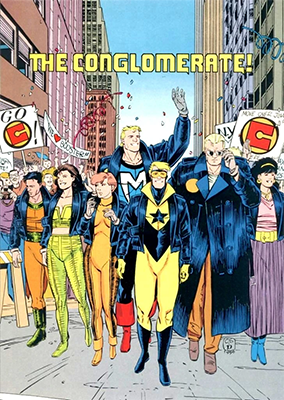
An extra JLI-adjacent feature inspired by your…yes, YOUR…comments on the Conglomerate in Justice League Quarterly #1!
My planned update for today will run Friday instead. I'm not changing the JLI series numbering because that's a huge hassle. (The series will end with 102.)
The Conglomerate as seen in JLQ #1 would appear once more in the JLI story “Breakdowns” and merit a quick cameo in Adventures of Superman #476, after which its members took some different paths. Excluding Booster Gold, the most active was Cynthia/G***y. She appeared on and off in Justice League Task Force for its duration and did a stretch Birds of Prey. Some stories have changed her ethnicity, maybe to make her look more like a genuine Romani and less “white girl poser.” No one has bothered to change her excruciating codename. From JLTF #1:
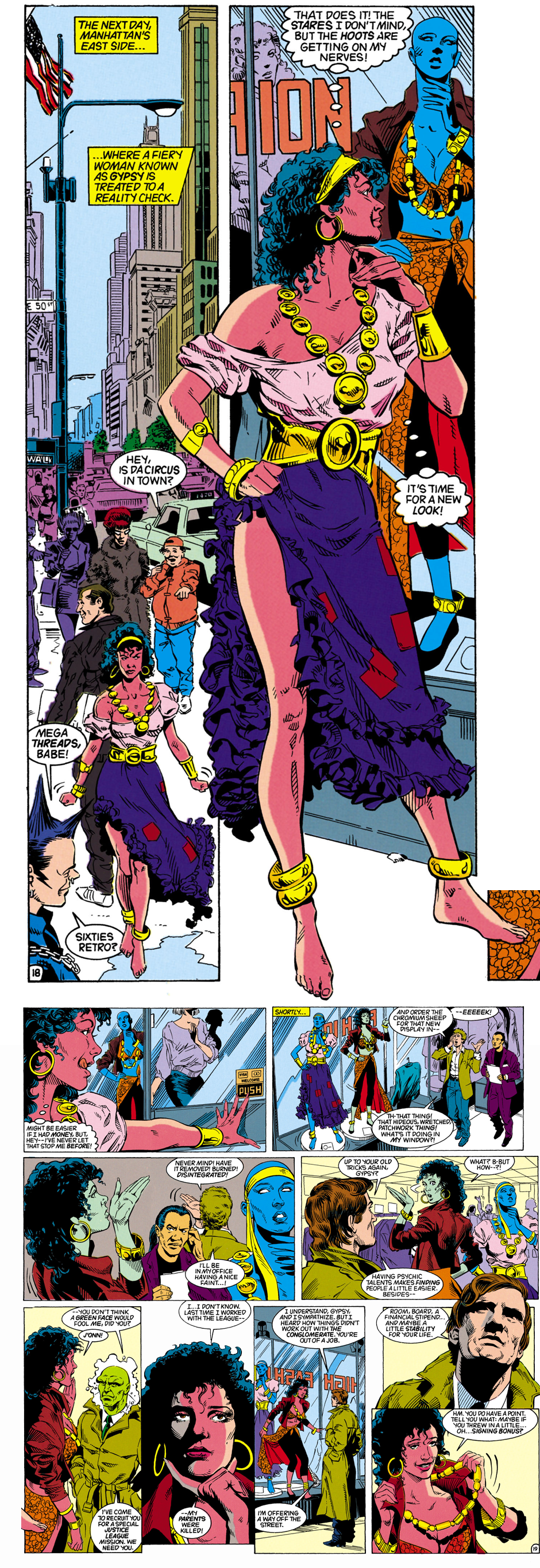
"Mega threads, babe! Sixties retro?" = the most successful pickup line in history. Now you know. Keep the secret.
In Birds of Prey #95, Cynthia gets another crack at a top-tier JLA enemy. (The Birds don't beat Prometheus, but they do well enough to achieve their more important goal.)
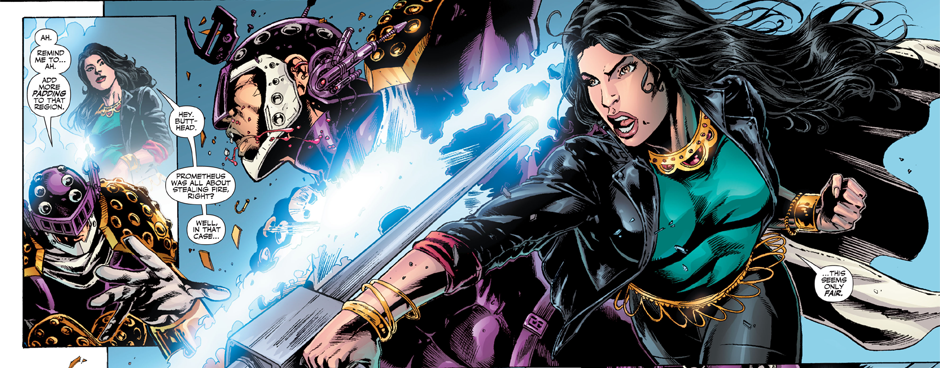
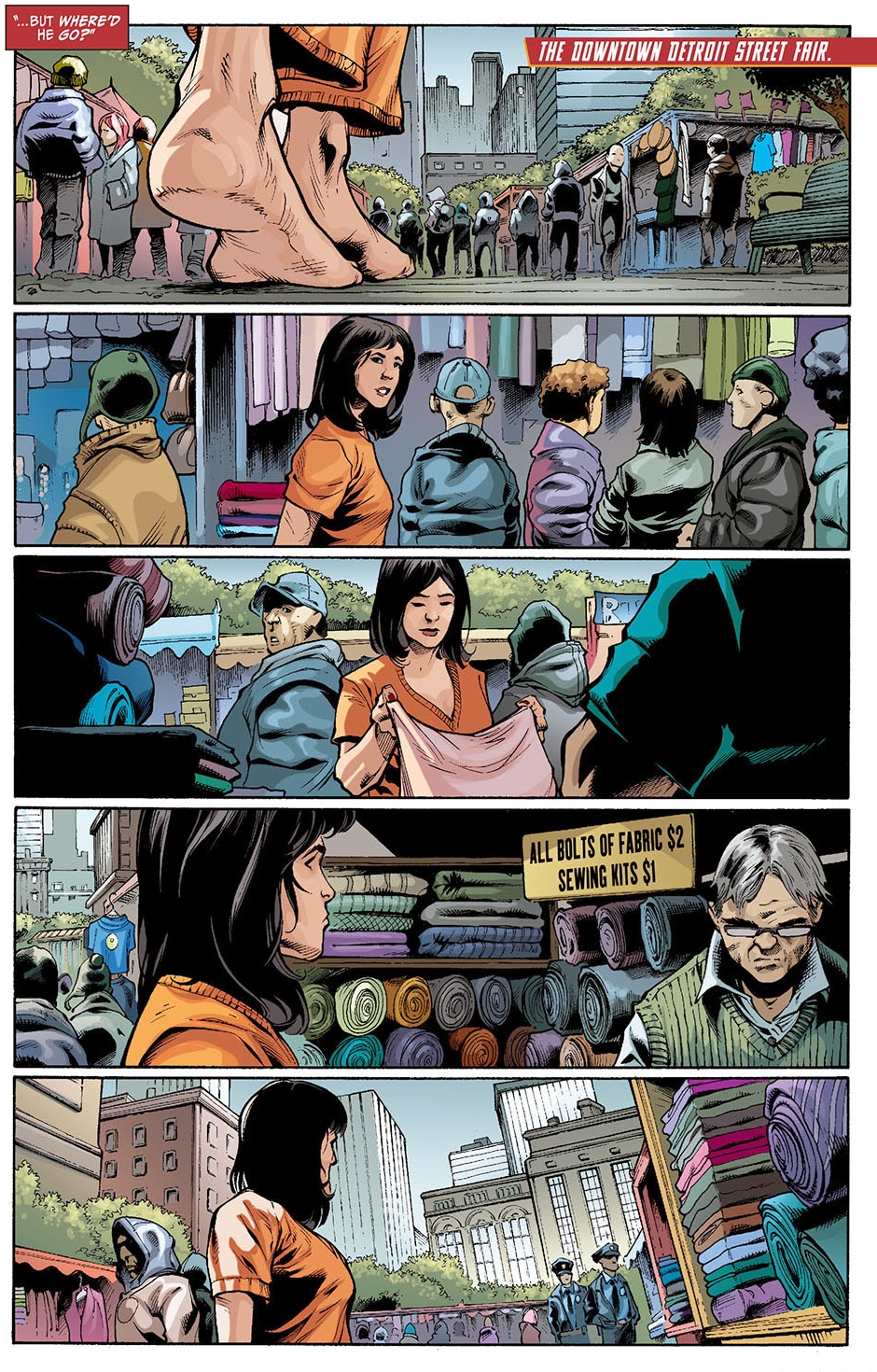
Still...that codename. DC even retained it when rebooting the character as two-n Cynnthia, an interdimensional fugitive for “The New 52’s” Vibe. She's well-rendered as a homeless hero, whereas the JLTF page above feels kind of condescending on that front. So call that one step back, one step forward, I guess (#3).
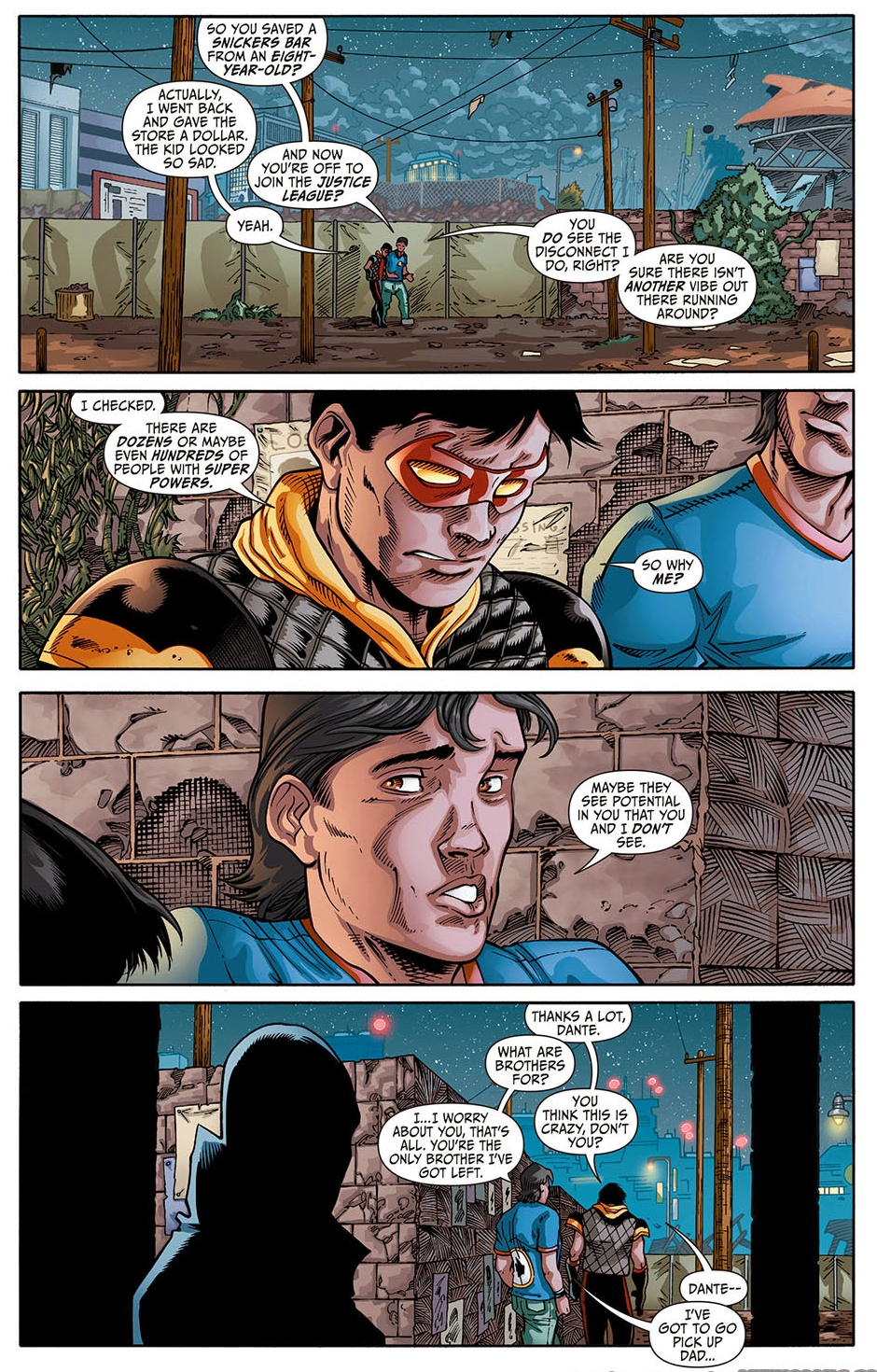
That series showed a different Vibe than the ones from the Detroit League (Cisco, not Paco, to echo The Flash TV series). This Vibe did also have a brother…named Dante, not Arnando (#2).
No one has used any version of Cynthia much in the last ten years, but her career is still impressive compared to any other Conglomerator except Booster.
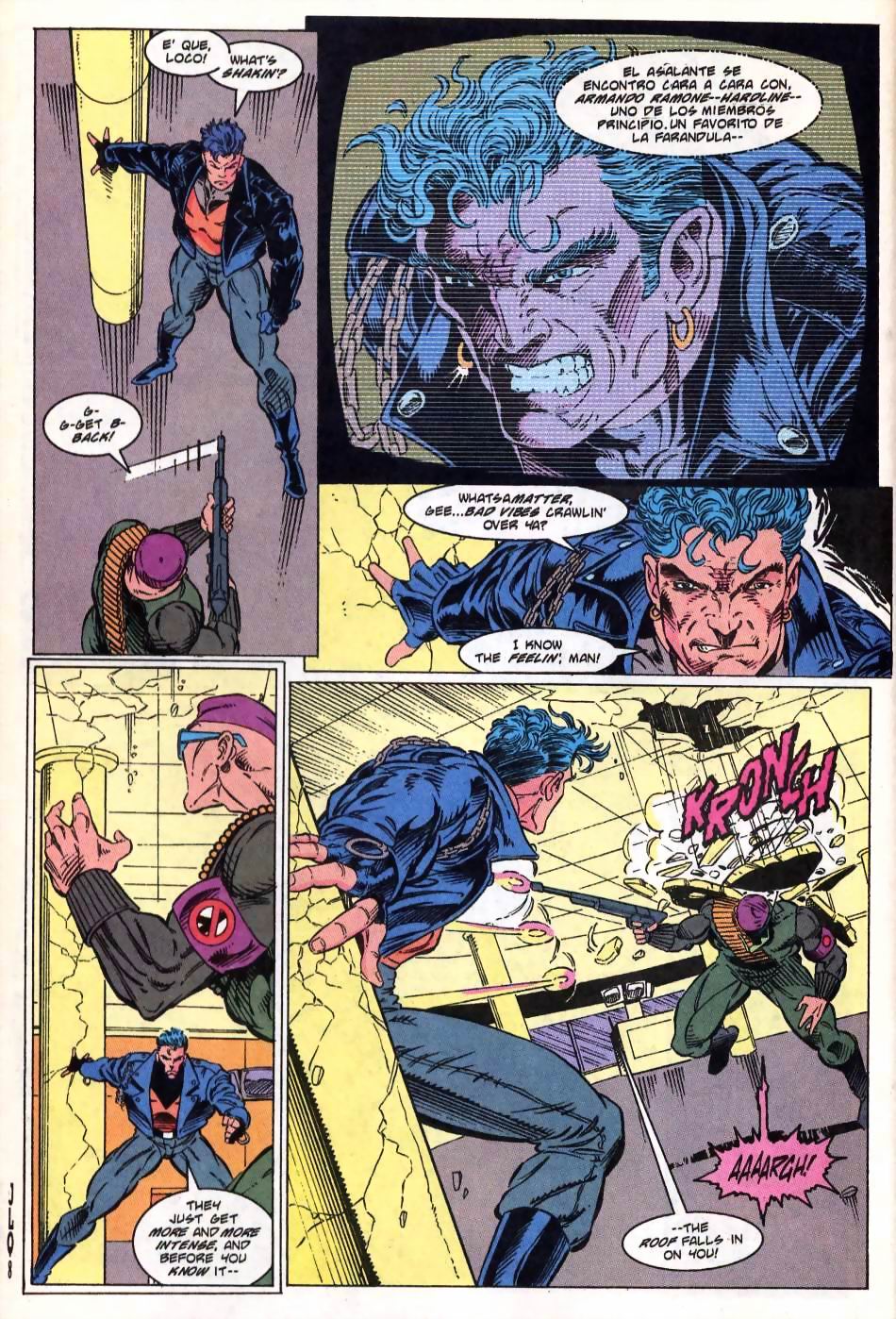
The Conglomerate disbanded and was replaced in JLQ #8 (I’ll cover that story later) but two of its old members returned in JLQ #12 (I’ll cover that one more here). Arnando was one of them, having now renamed himself Hardline in a fit of optimism about his future prospects. (See how EASY it could be, Cynthia?)
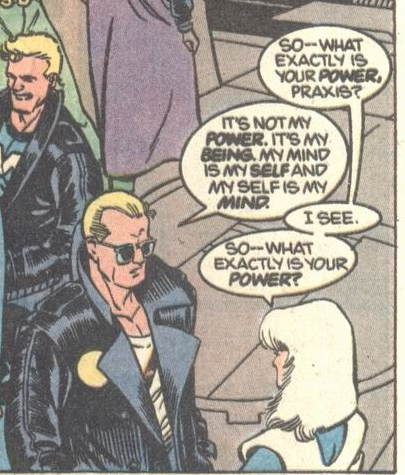
Jason Praxis, who just used his last name as his code name, first appeared as a detective in an ongoing arc in The Spectre v2 #24-29. At the end of that story, he gained a power from the now-dead guy whom he’d been hunting for killing his niece. That power at first seemed to be electricity control…
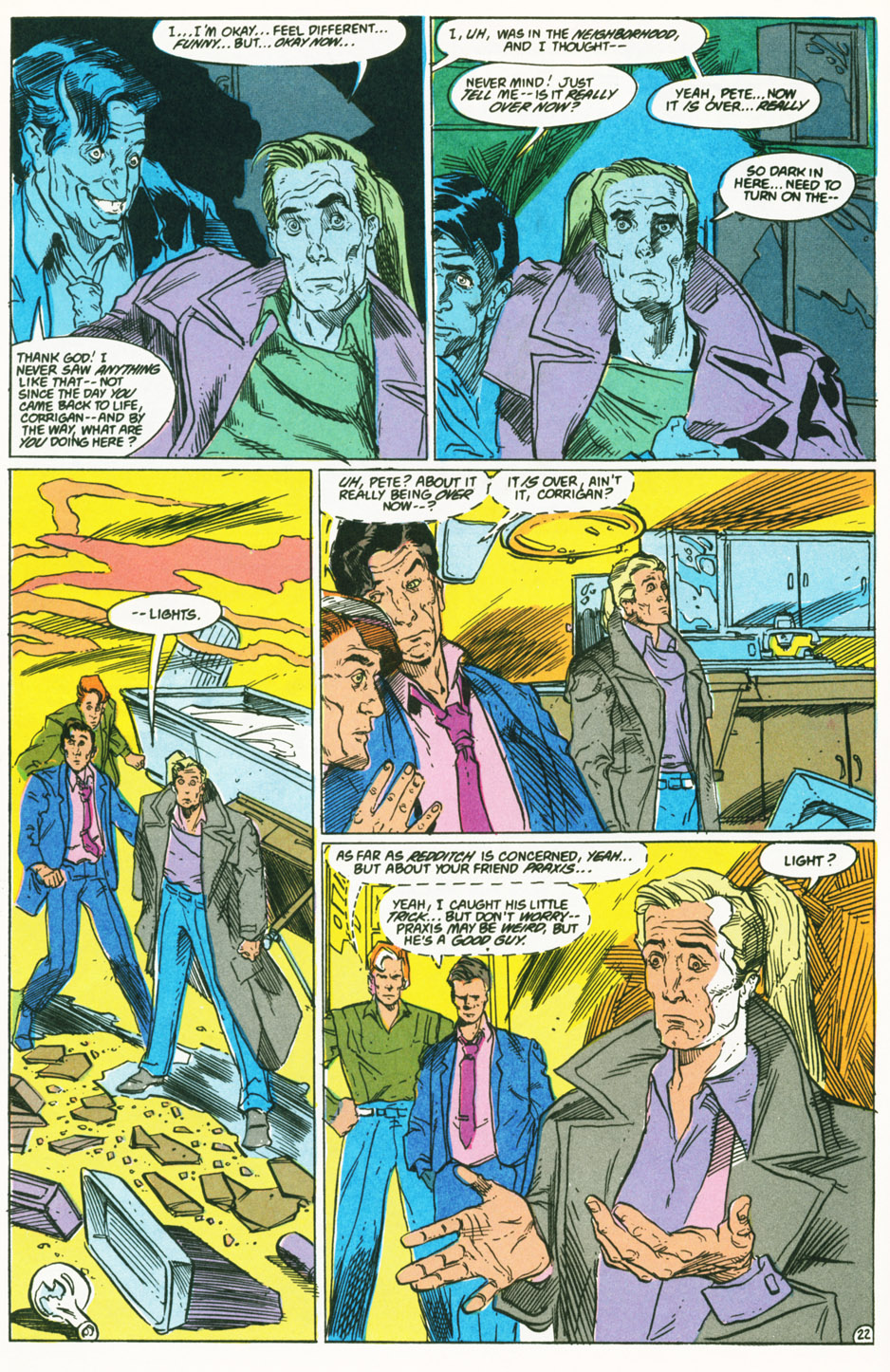
But that may have been misdirection. Of all the Conglomerate members, he was the only one whose deal wasn’t easy to summarize in an elevator pitch:
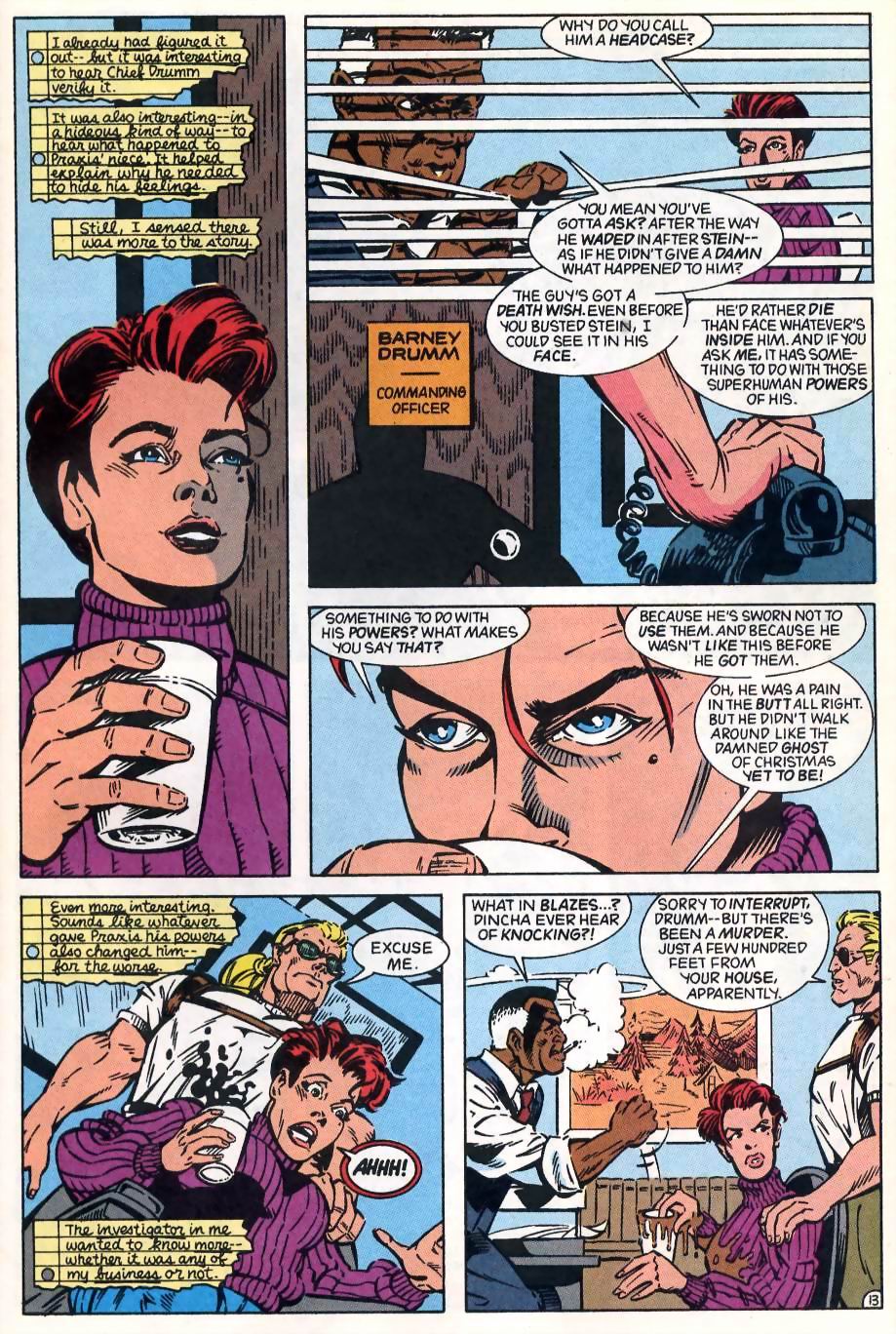
After his flirtation with the Conglomerate, he tried going back to police work but was tortured by the fact that his powers had come from his own niece’s killer. So much so that he rarely used them at all (Justice League Quarterly #11)…
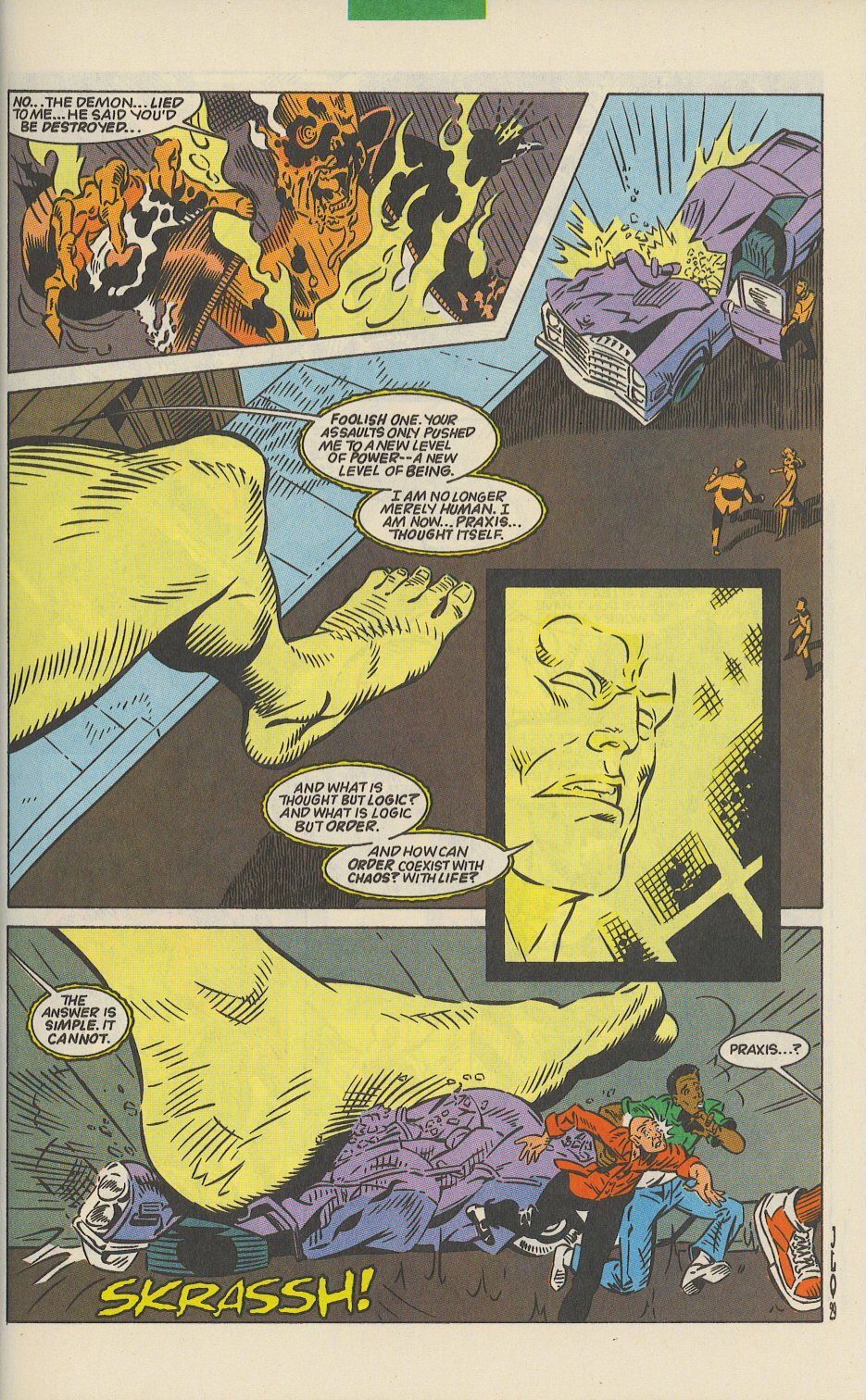
Until, while pursuing a magic user, he had a nervous breakdown and became a god bent on destroying all humanity for a handful of pages. As you do (#15).
The Justice League teamed up with his cop partner to convince him that killing all people because he felt guilty about profiting from the death of one person was PROBABLY A BAD IDEA. Michael Jan Friedman told his story over a year and change in JLQ #11-15. He’s had no notable appearances since.
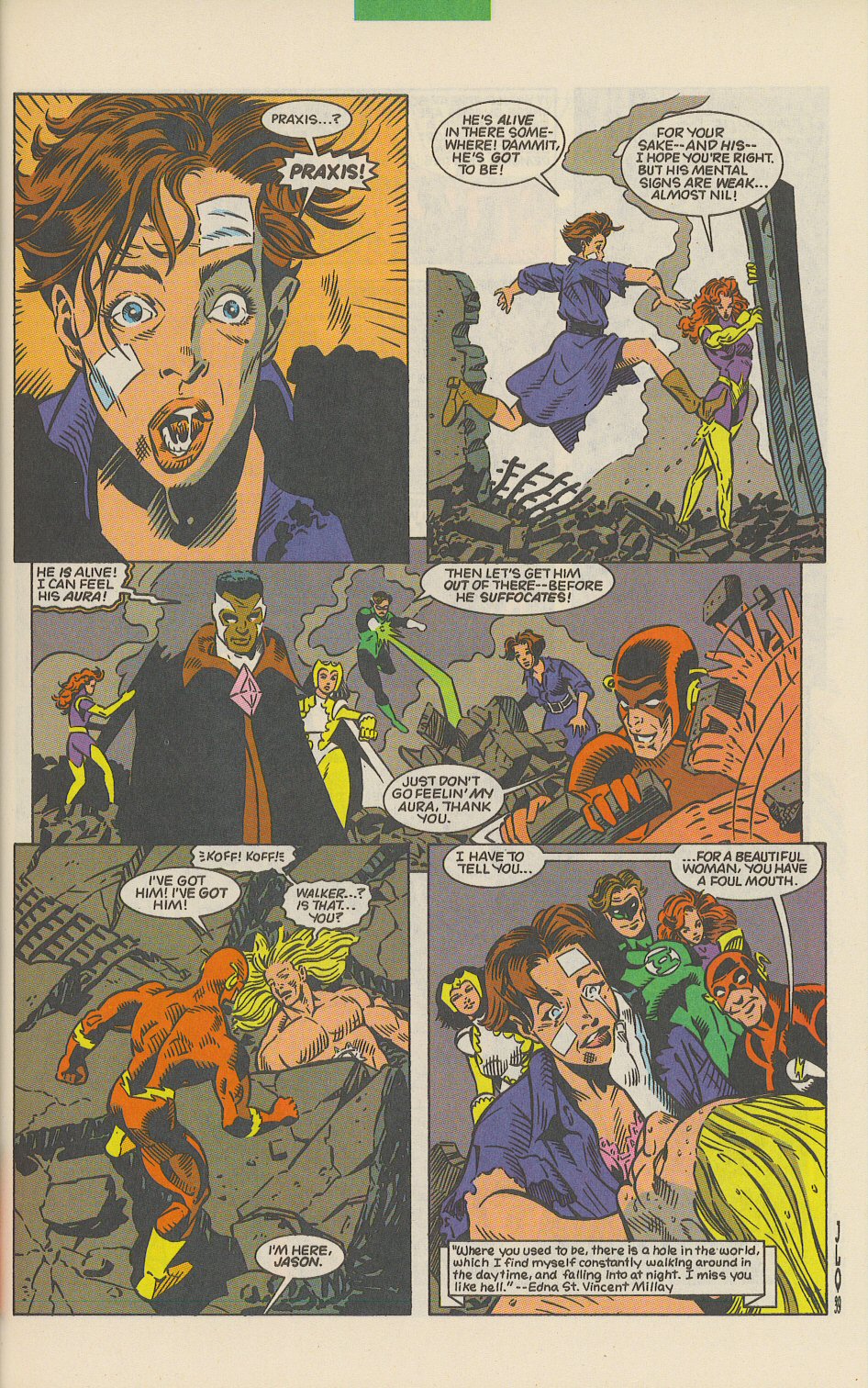
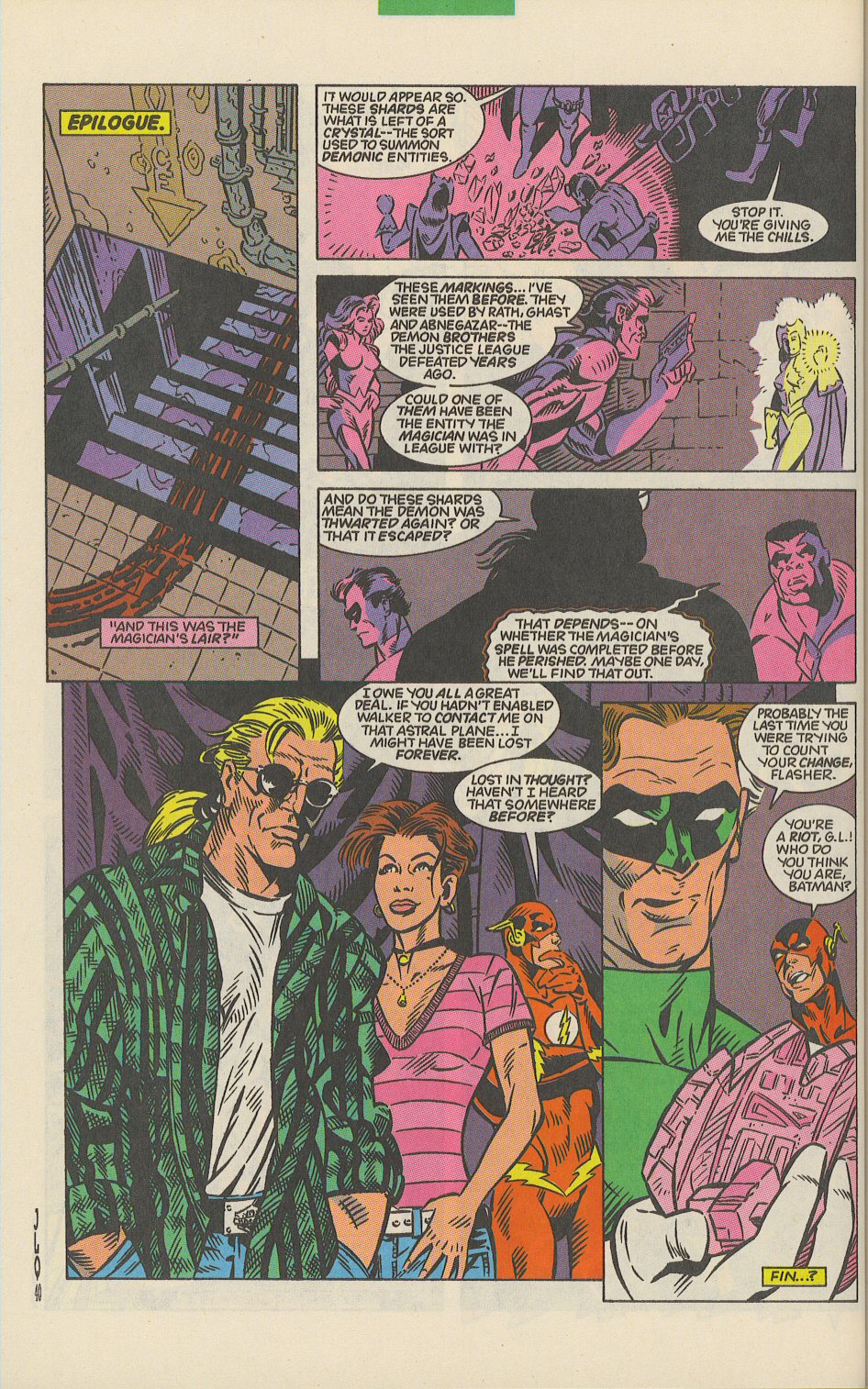
"Fin...?" Fin indeed. Also, "Oh, I guess you're my love interest now that it's time for me to stop being a weirdo."
Maxi-Man, Henry Hayes, got his start in Mister Miracle #9-10, as a jealous rival to the title character. His goofy persona was a front, masking pain: his wife and child walked out on him after he lost his job in advertising. After getting his powers from the gene bomb, he was determined to reclaim his self-worth.
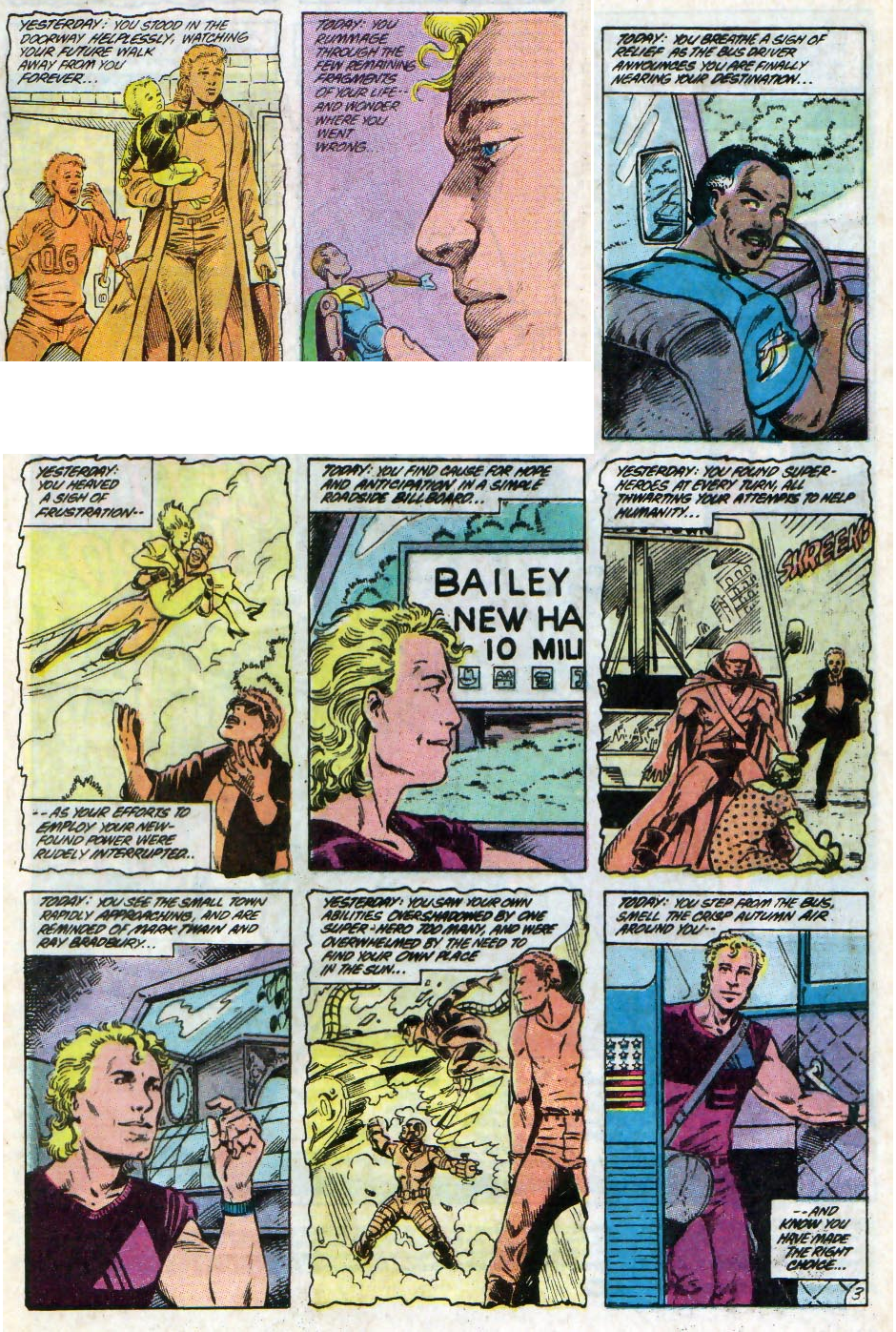
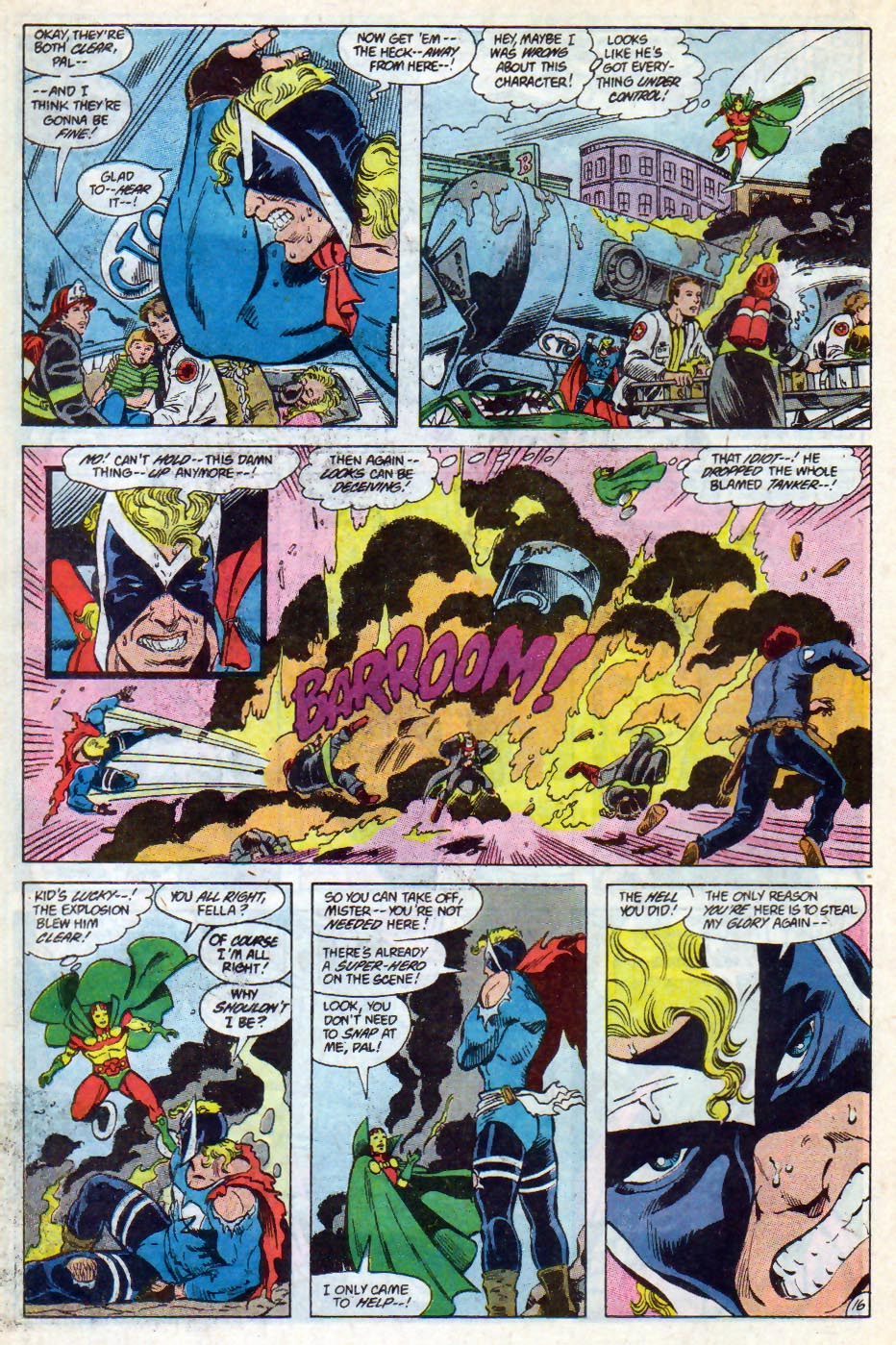
I do enjoy his "OH, COME ON!" body language as he gets scooped by Booster Gold--which is ironic, given that Gold will become his commander. Having him join the Conglomerate was clearly not the plan at first.
Another irony: Mister Miracle was starting to leave the superhero lyffe behind, and if Maxi-Man were a little better at his job, Miracle might've stepped aside and said, "It's your city to protect now. Have at." But he couldn’t in good conscience leave an irresponsible neophyte running around unchecked.
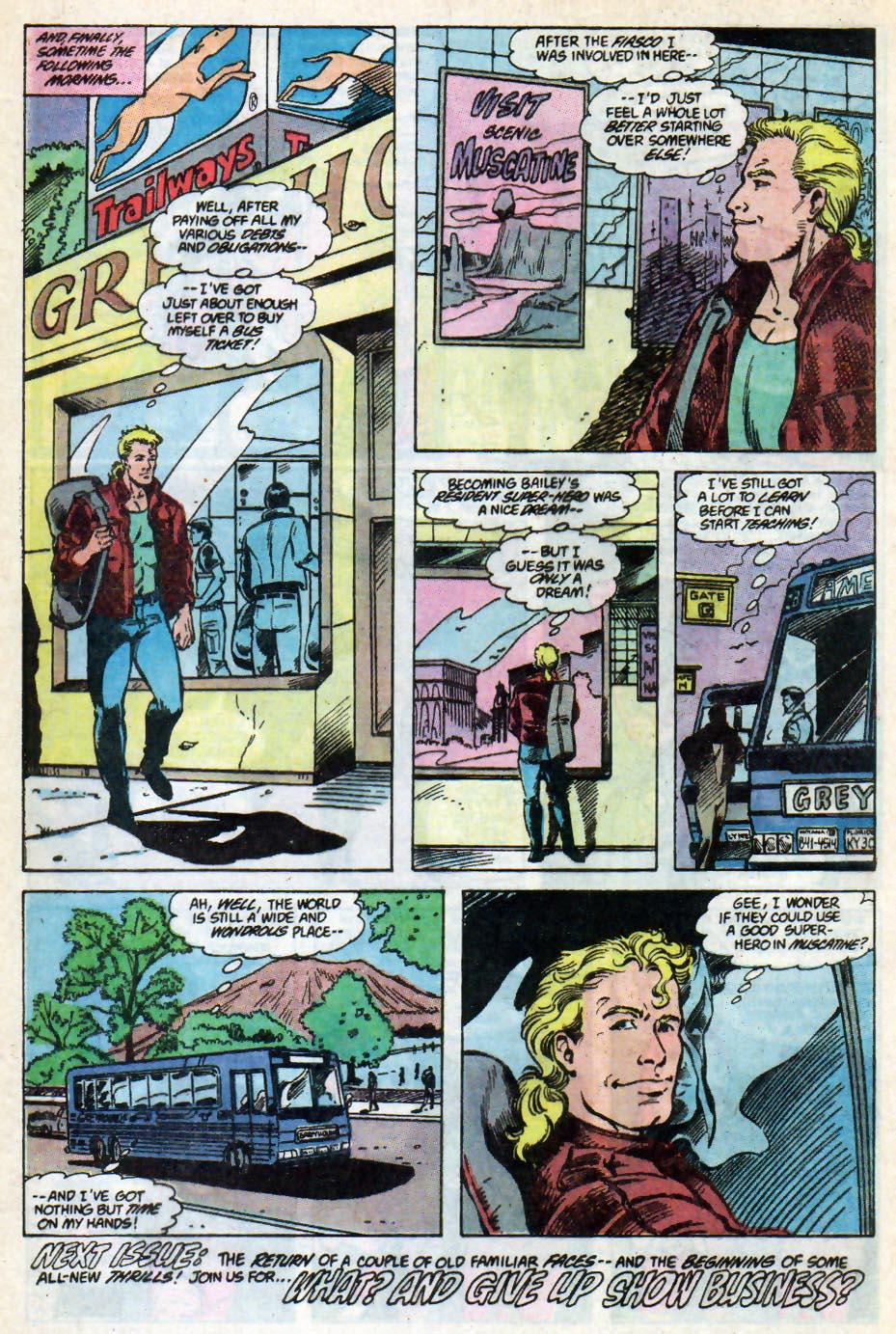
At the end of the arc, Maxi-Man hits on the obvious solution and keeps moving, confident there’s at least one town in America that doesn't already have a superhero in it.
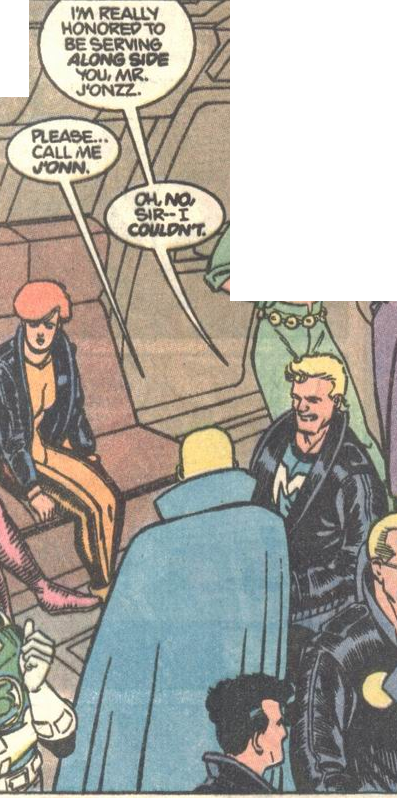
When we saw Henry on the Conglomerate, he retained the lessons in humility he'd learned, and he was committed to playing the role of the aw-shucks, corn-fed, innocent hero. Even when addressing the heroes who'd inspired his jealousy before, he was sweet as Kentucky Derby pie:
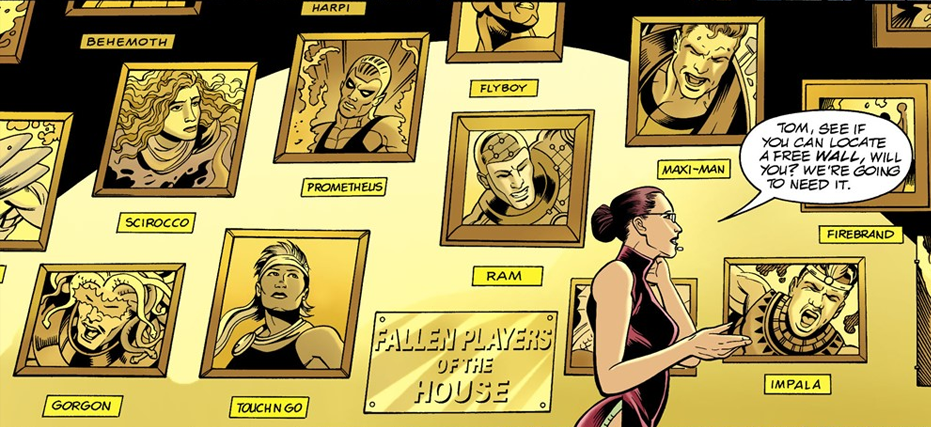
He then moved on (off-panel in issue #8) to get a Hollywood gig…as a stuntman. So things looked up for him for a little while. Then he dropped out of sight…only to return as a name on a wall of casualties in JSA #28, killed (again off-panel) in Roulette's drug-fueled gladiatorial games. (Sigh.)
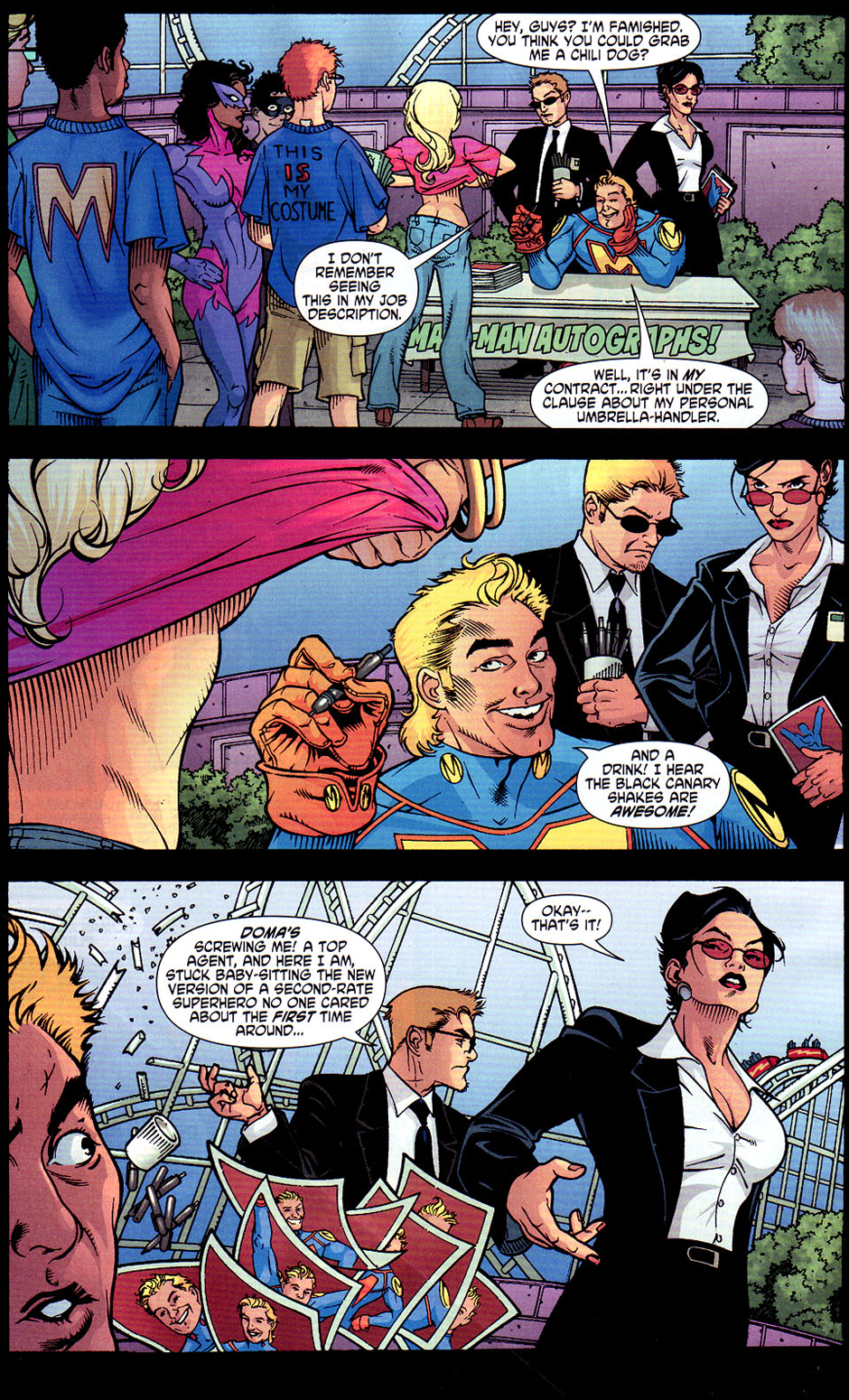
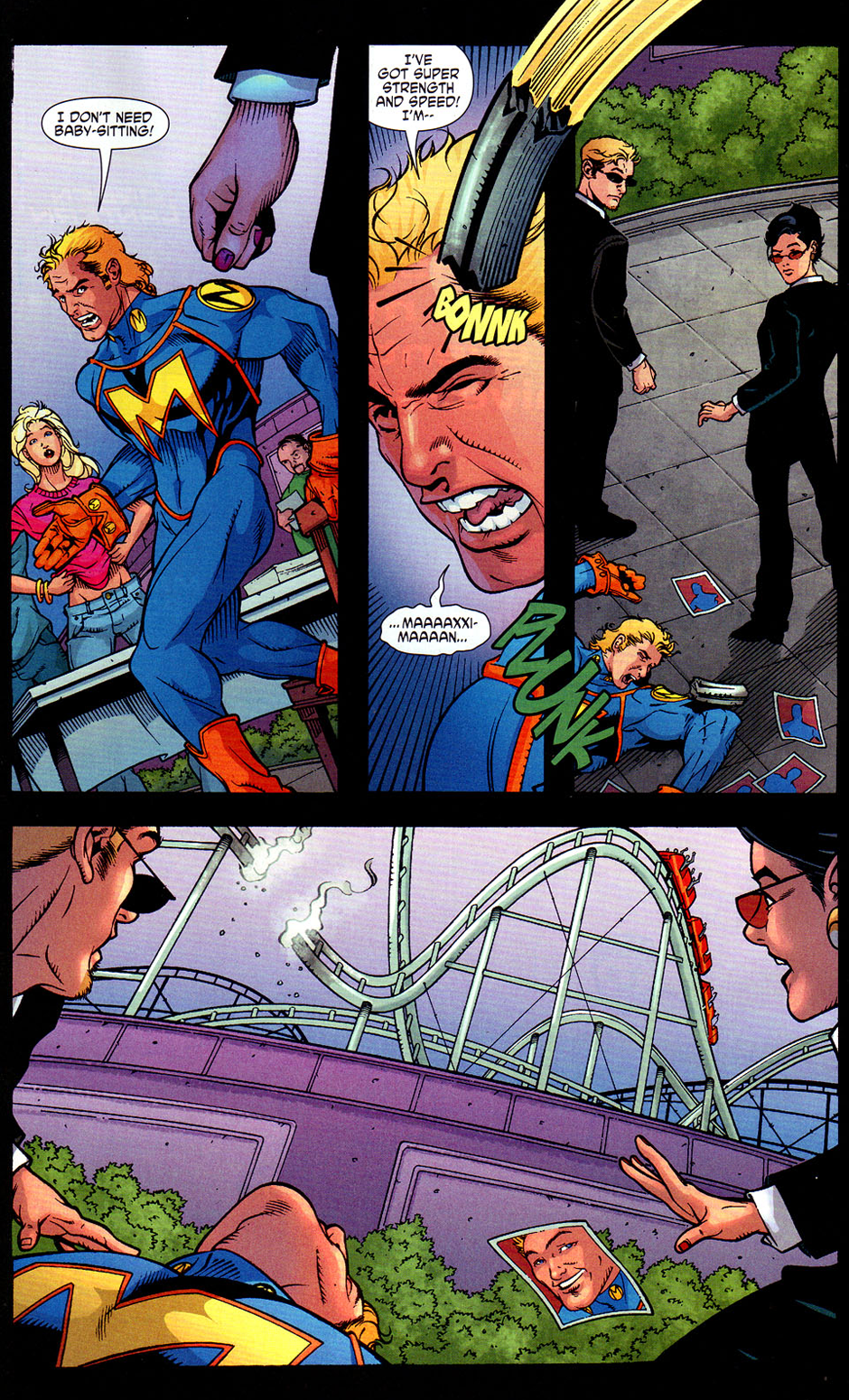
Another Maxi-Man appeared at the start of Wonder Woman v3 #6, a reality TV show winner and an utter disgrace, even compared to Henry's reckless days. Henry may have been dangerously untrained and seeking glory, but even at the beginning of his career, he was trying to do good. This new guy...
That just leaves Vapor and Echo, introduced in JLQ #1, whose original character notes seem to have been “Fire and Ice version 2, one’s aggro and one’s kinda shy, details to be added later.”
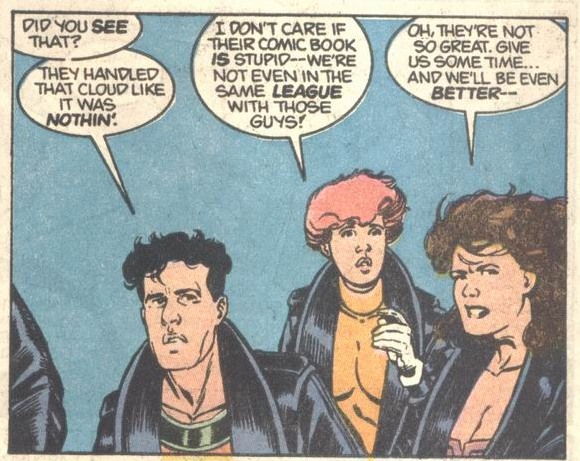
After her “Breakdowns” cameo appearance, Vapor got a gig off-panel as an environmental spokeswoman, and that was it for her. Echo was the other Conglomerate member to return in JLQ #12, and she did so with a considerably less shy personality…
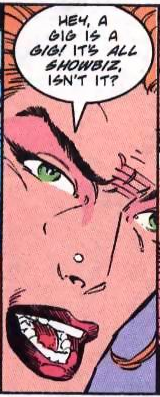
…and a less “shy” costume design. The Nineties, ladies and gentlemen and distinguished others. Super-tailors saved so much money on material.
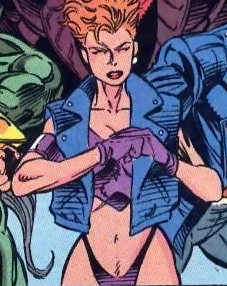
In the interim, Echo had become a professional singer...
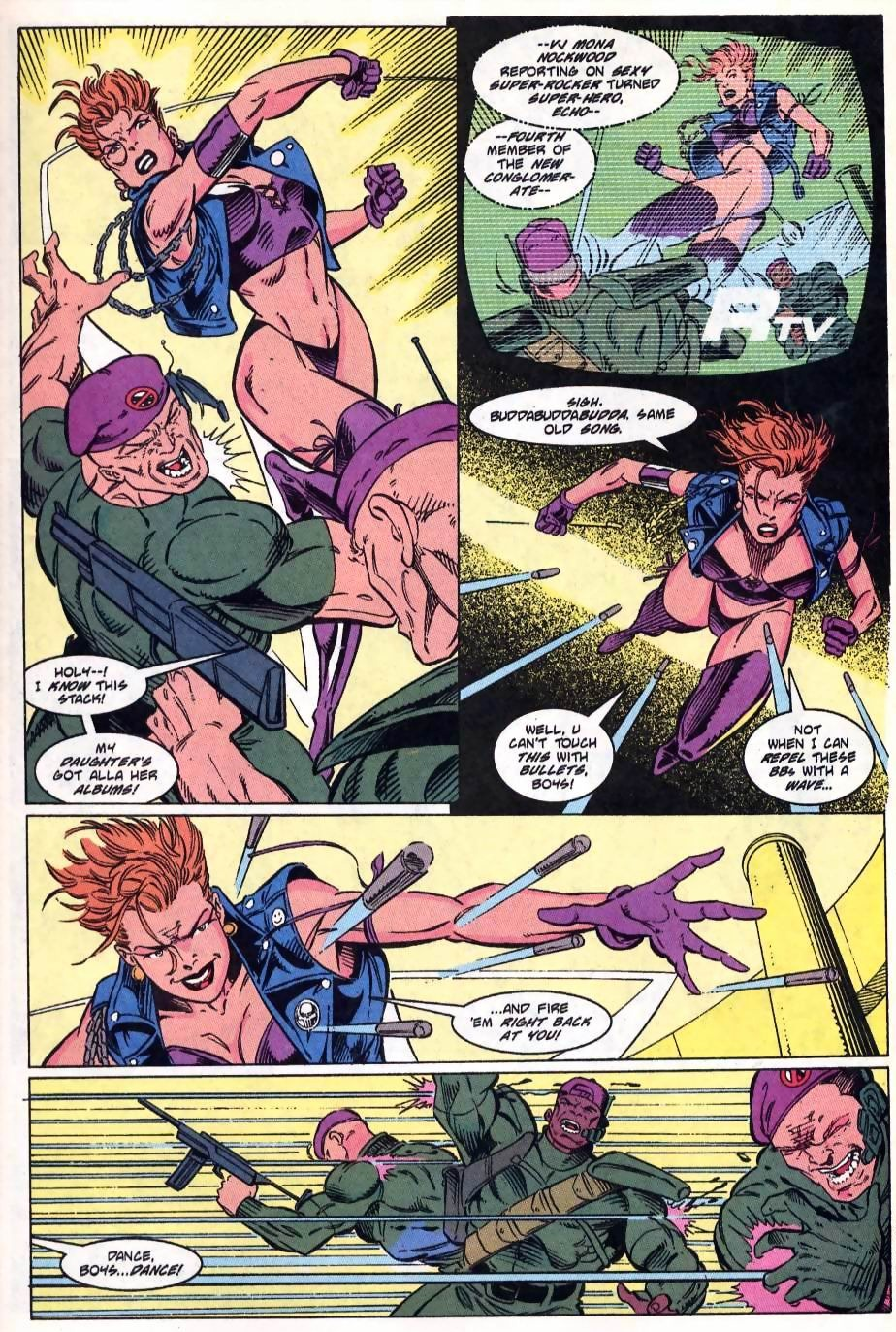
...and realized she hardly needed to be shy when her “I’m made of rubber, you’re made of glue” power allows her to handle Amazo without a scratch. Doing so also meant saving a group of concertgoers, AKA the people who made her what she is today. That experience shifted her attitude.
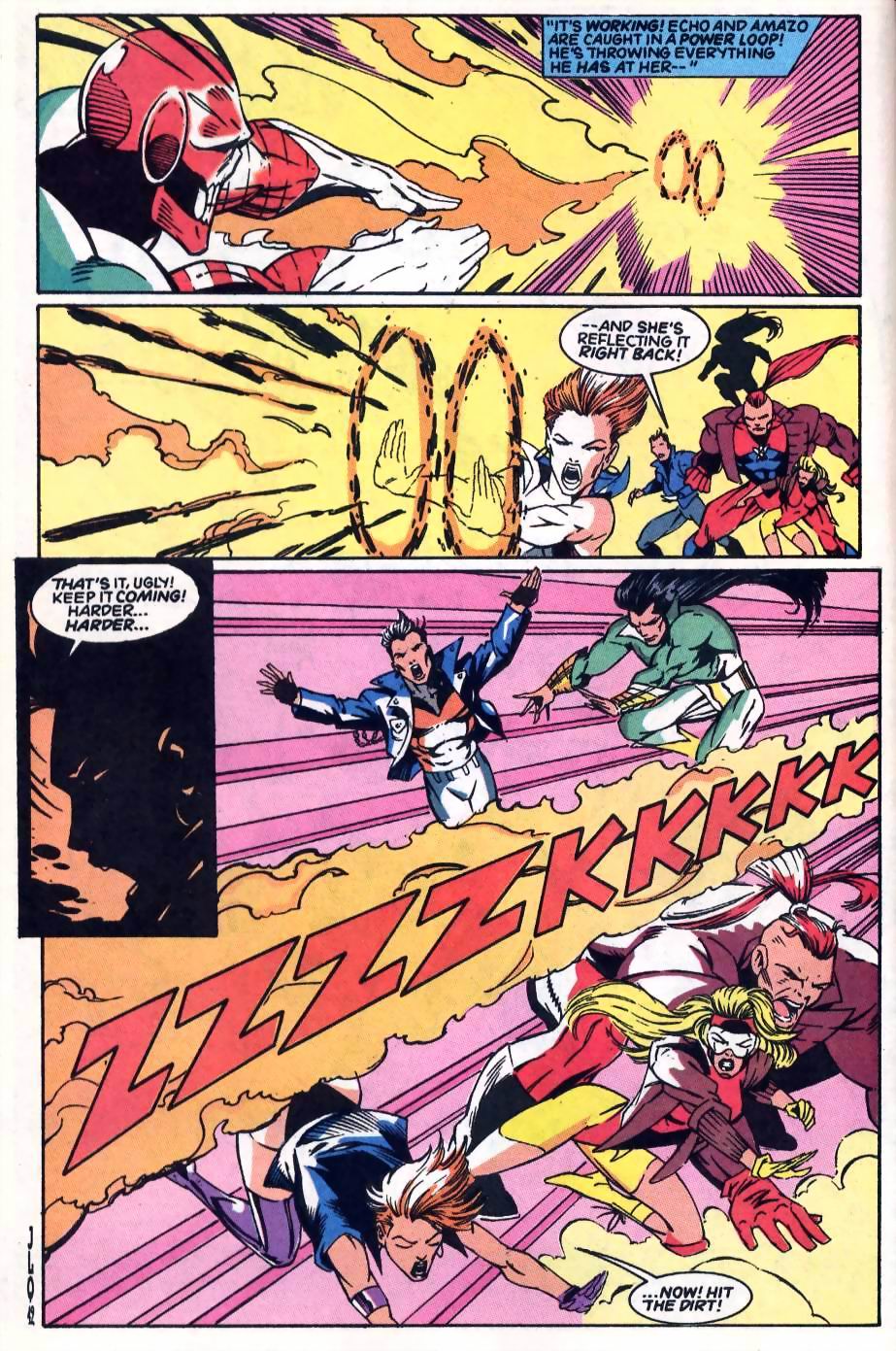
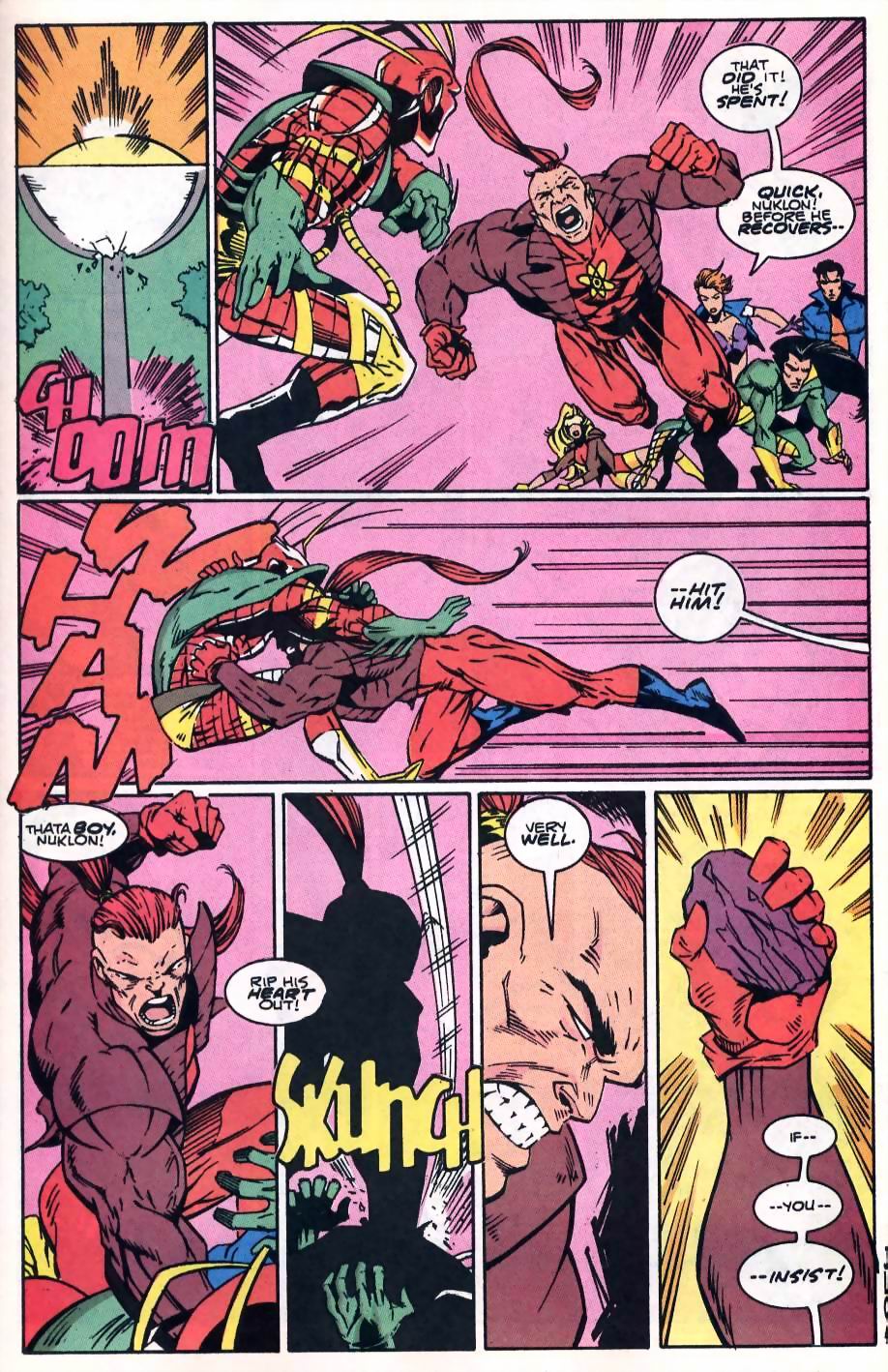
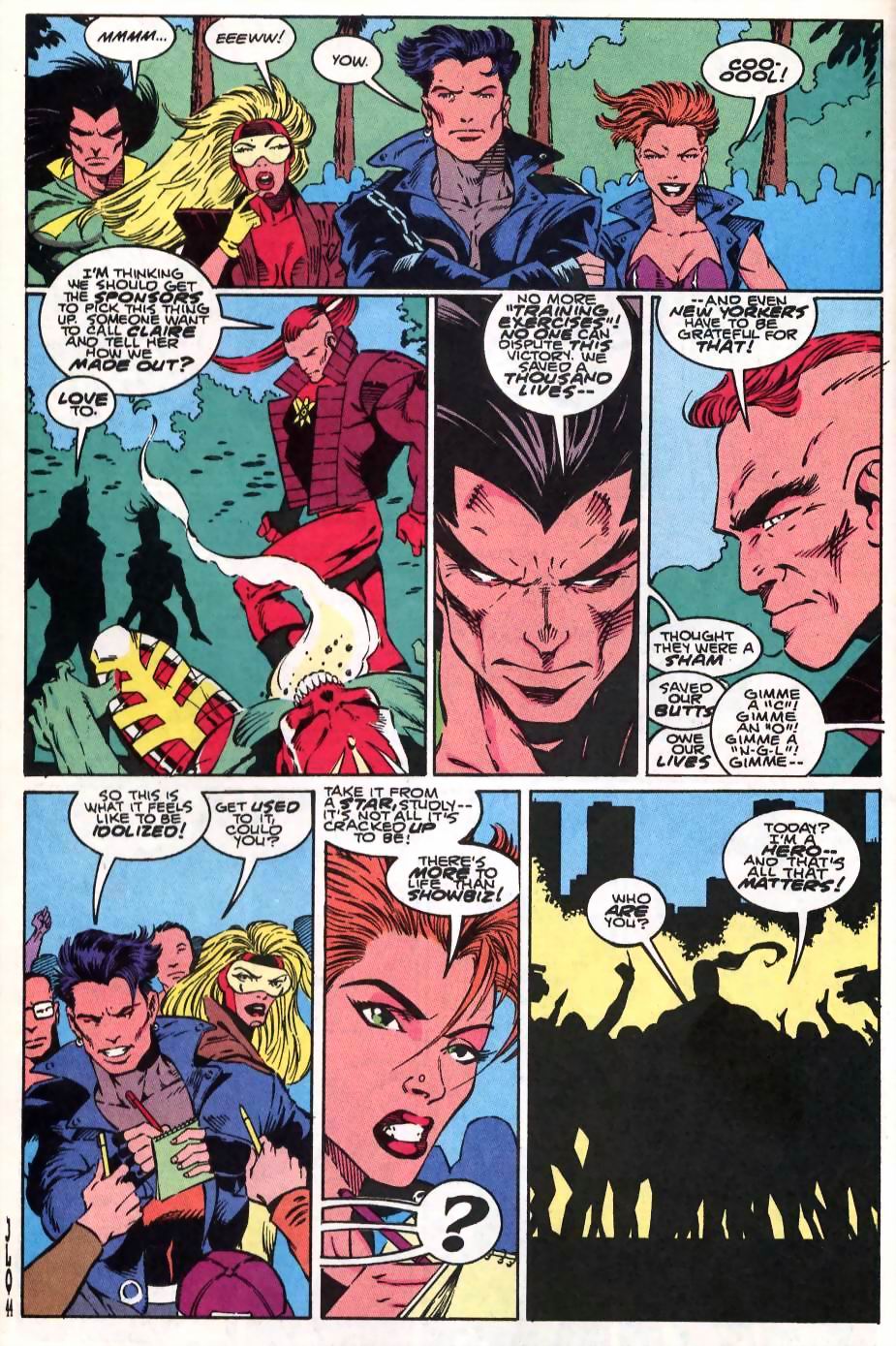
(The newer Conglomerators are Templar, a British telekinetic whose main character trait is "being mysterious," Nuklon from Infinity Inc., and Jesse Quick from Flash. Templar and Echo would cameo in Blood Pack, a 1995 series about an even less remembered group than the Conglomerate, before vanishing from DC editors' memory banks. Quick and Nuklon, after this issue, would be like, "Conglomerate? You must be mistaken, I've never heard of that.")
With its showbiz-capitalism-vs-heroism themes, this story might’ve served as Mark Waid’s answer to Rob Liefeld’s contemporary Youngblood. Dan Rodriguez and Tony Daniel’s art seems to lean that way, too. As do names like "Hardline" and "Templar." And in 1993, that wasn’t just an answer in search of a question. But it would be in a few more years, and when Youngblood faded from view, a superteam refashioned to spoof it didn't have much of a future.
Still, the JLQ #12 story had its fun moments...
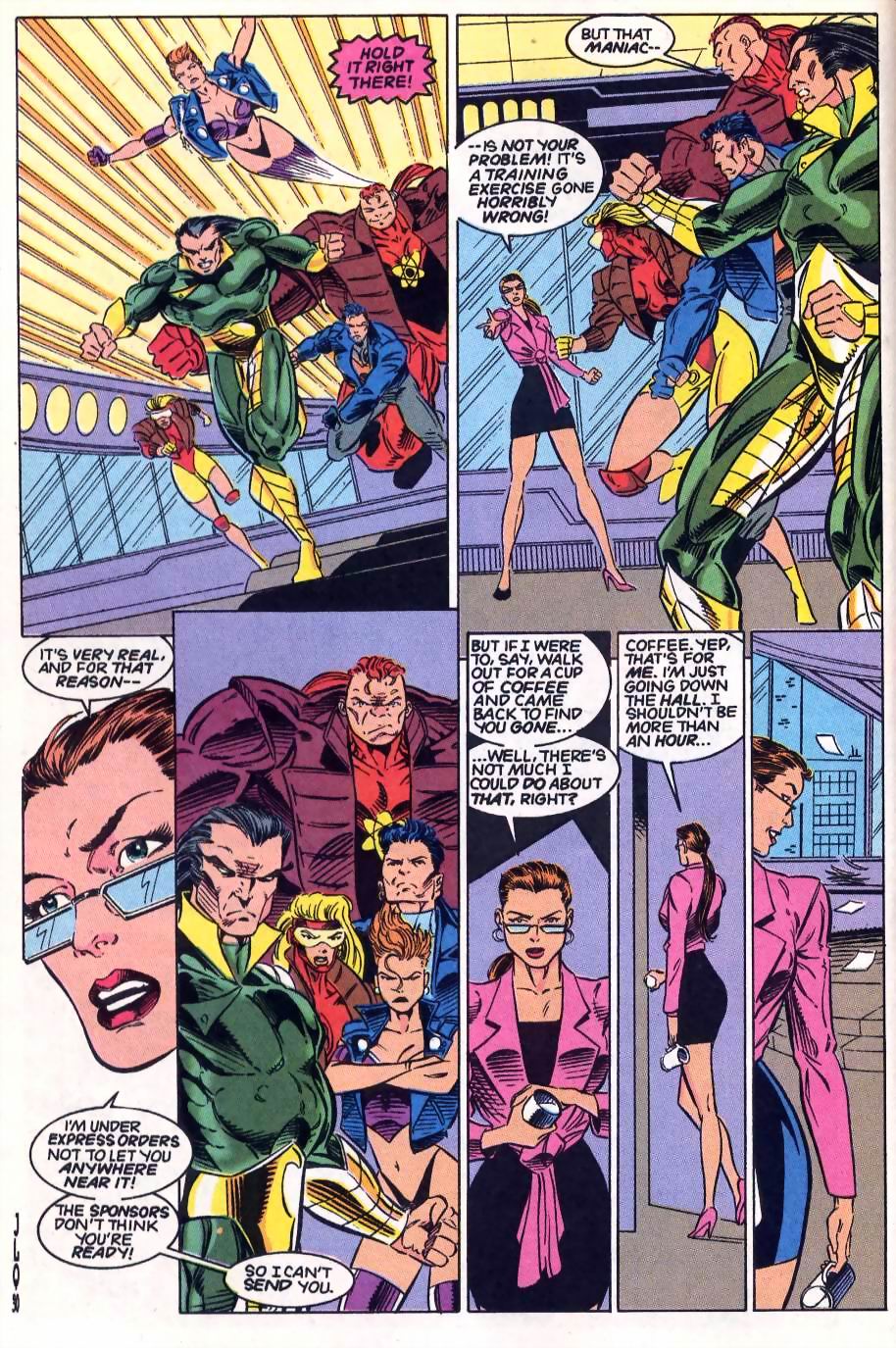
And it ends with Wally Tortolini down on his luck again after trying to skewer the Conglomerate, and Echo showing her re-expanded social consciousness.
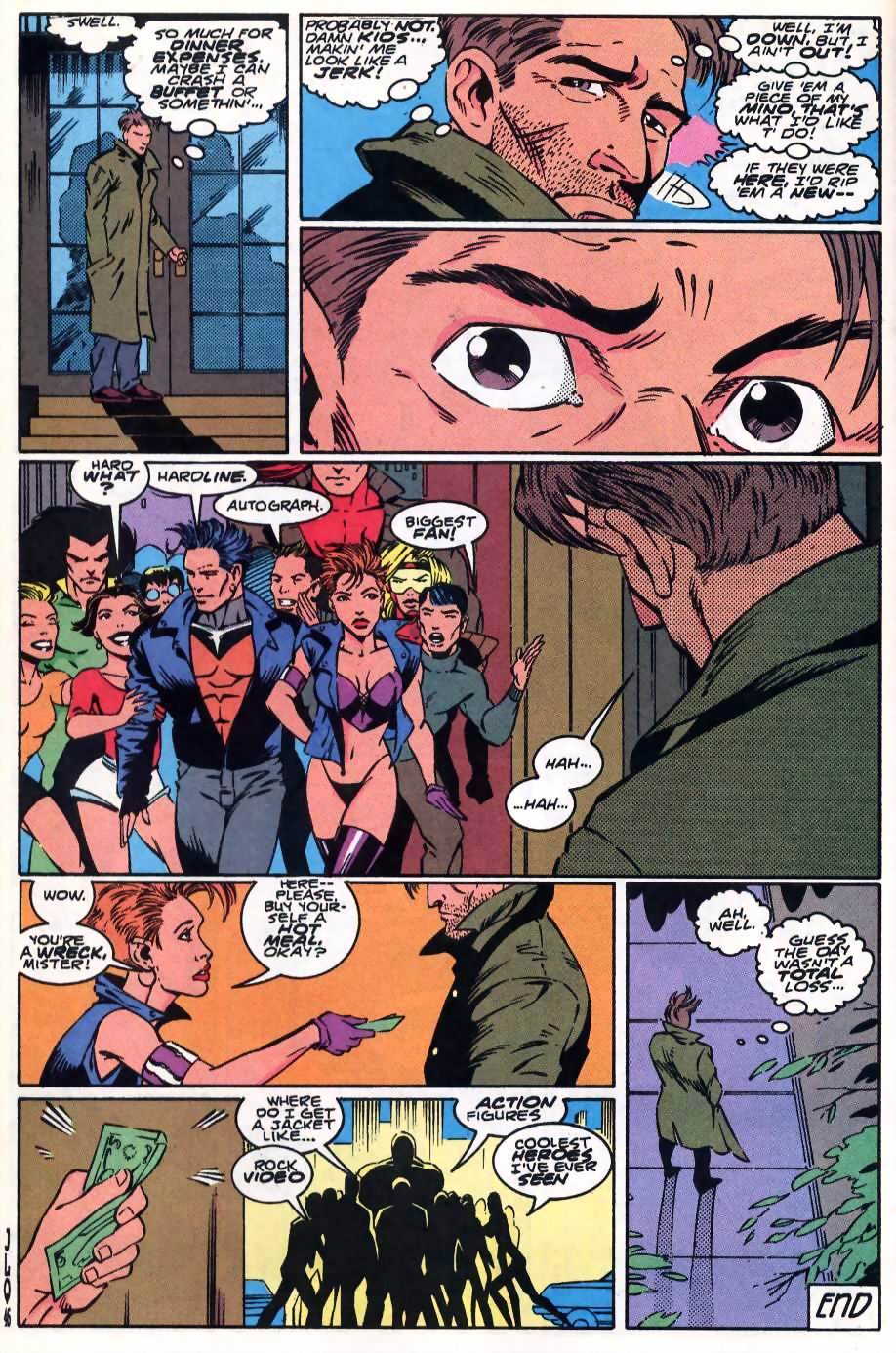
As final full pages go, a super-team…and a pair of short-lived characters…could do a lot worse than that.