![[personal profile]](https://www.dreamwidth.org/img/silk/identity/user.png) tcampbell1000 posting in
tcampbell1000 posting in ![[community profile]](https://www.dreamwidth.org/img/silk/identity/community.png) scans_daily
scans_daily
Just as Giffen, DeMatteis, and Maguire charged in and made established characters like Blue Beetle and Mister Miracle their own, their successors at DC Comics have picked up the JLI’s legacy and made it theirs. No one could duplicate Giffen and DeMatteis, just as no one could duplicate Jack Kirby, because their whole approach was about innovation. You follow them best by not following them exactly, by not “training yourself” too much on their “data.”
But before we get to that, a couple of Giffen-DeMatteis things I should have covered last time.
The Authority: The Lost Year is an intriguing mashup of big names: Grant Morrison and Keith Giffen, working together on the property that was originally Warren Ellis’ reinvention of the JLA. Overall it feels more “Warren Ellis” than Morrison or Giffen, as the Authority stumble through one alternate universe after another. Most are dystopias, where an unchecked Authority has done what unchecked authority usually does. This hall of funhouse mirrors leads them to question who they are and what they do.
One such universe, though, is not so much “horrifying” as “humiliating.” J.M. DeMatteis tags in for a two-issue interlude in which Apollo and Midnighter (“Polly” and “Middy”) are in denial about their mutual attraction. They also share some familiar behavior patterns with Blue Beetle and Booster Gold in the JLI days…which gives a certain weight to the insinuation that Beetle and Booster were (are?) “more than just friends.”

@mastermahan covered these two issues more thoroughly here than I can do without overloading this already long post, but I’ll share two more quick observations. Despite their bewildered contempt, some of the Authority members find the “sitcom Authority’s” universe almost refreshing…something of a palate-cleanser after the other dystopian worlds they’ve encountered (and before the last). Readers may’ve felt the same.
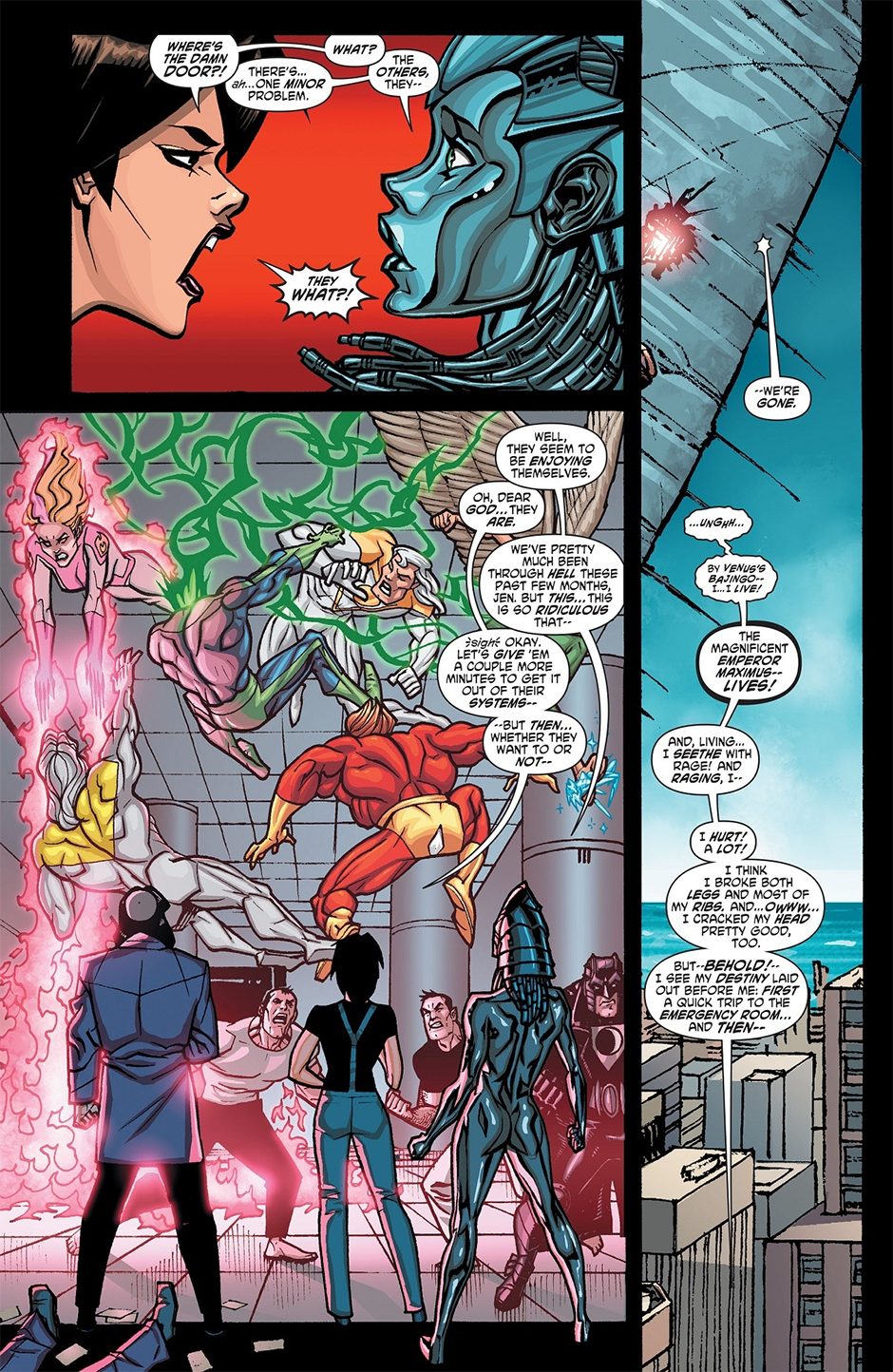
That said, the comedy universe is the exception that proves the rule. One could’ve wished for a universe where the Authority was actually better than Our Heroes, or a universe where the Authority was absent, both of which would’ve added a bit more variety and left the protagonists no less uncertain about their own standard operating procedures. Still, the series as a whole is an imaginative journey, and Giffen and DeMatteis work in and out of their comfort zone within it.
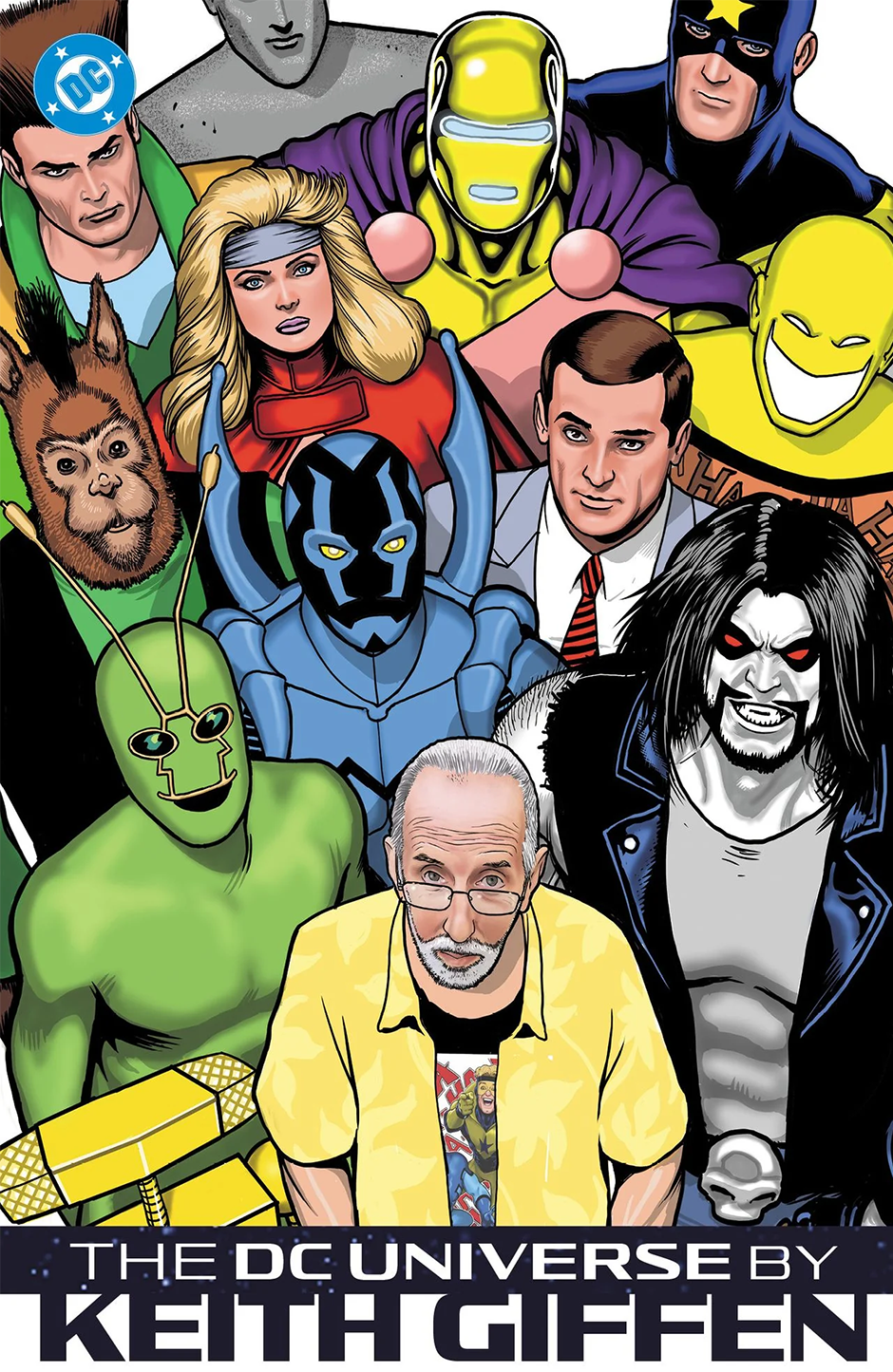
Also, DC will soon publish a special Keith Giffen collection, with a foreword by J.M. DeMatteis and a cover by Kevin Maguire you may have seen before. It’s due in August in some markets, September in others.
So what have the “Justice League cast” been up to in the last decade? Well, again, we have to define “Justice League cast.” Most characters once associated with the series have appeared since, but many are no longer primarily associated with it. When J’Onn J’Onzz, Black Canary, Captain Atom, Power Girl, Metamorpho, or even the Elongated Man show up today, nobody asks where the rest of the old JLI crowd are. (And nobody ever asked that about Flash or Batman.)
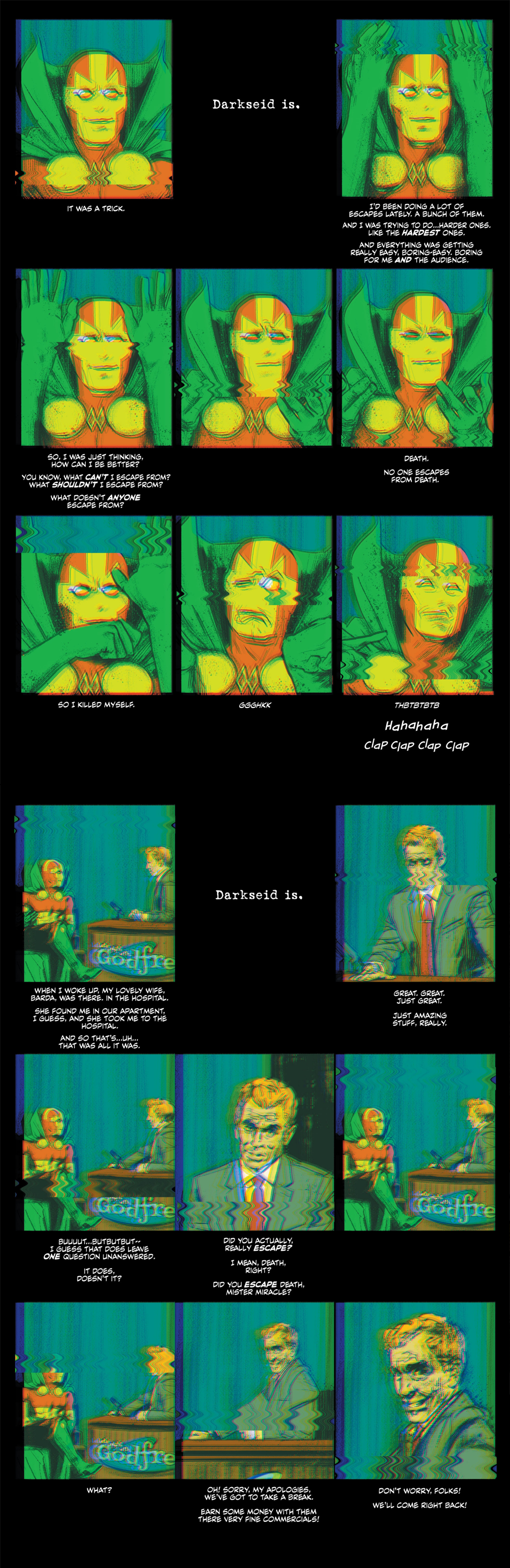
An edge case is Mister Miracle, which I’m including here because of its tension between the “JLI” and “Kirby” versions of Scott Free. “JLI Scott” is caught between showbiz and a “normal suburban life” with Barda and Oberon (…?); “Kirby Scott” is caught in a war with Darkseid’s forces. But that isn’t the only source of tension in this unsettling, existentially terrifying miniseries. Is it in the spirit of the JLI? Well, remember that JLI issue where Barda's mega-rod hollowed out a teenage boy's soul and then killed him?
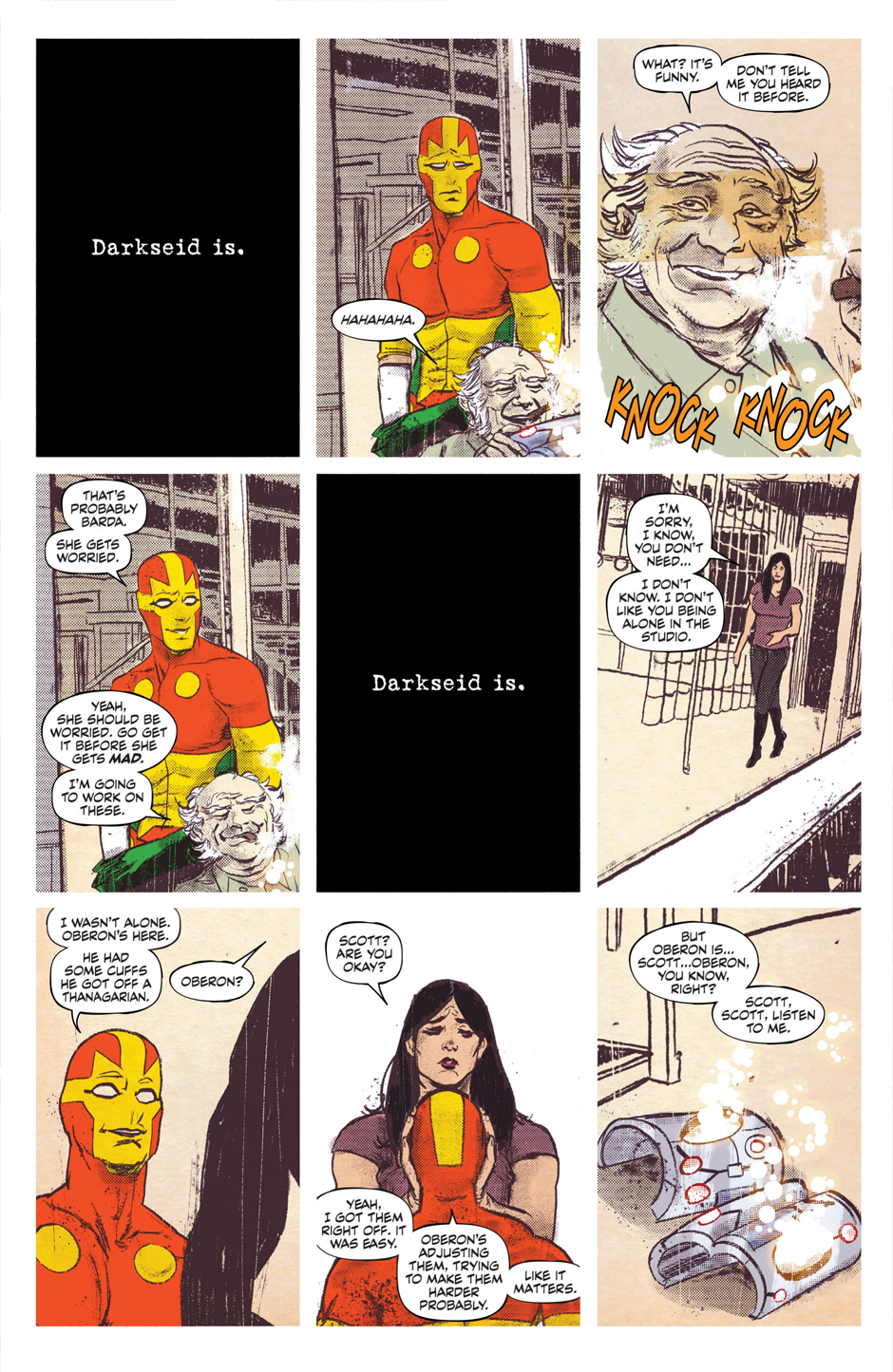
The series has inspired multiple interpretations, some optimistic, some pessimistic. Most readers seem to agree that there's some false-reality "trap" that's important to the story, but whether Scott escapes it or not...or even should...that might depend on how you look at it.
By contrast, Blue & Gold was a delightful surprise. I've been hard on Dan Jurgens’ follow-up to Giffen and DeMatteis’ JLI, and how it could…struggle with tone.

Jurgens retained an obvious fondness for Booster Gold, his most distinctive creation, and for Booster’s best buddy the Blue Beetle, but their hijinks during his time with the team were few and forced.

And I’ve mostly skipped his New-52 version of the Justice League International, which had none of the original’s quirky verve.

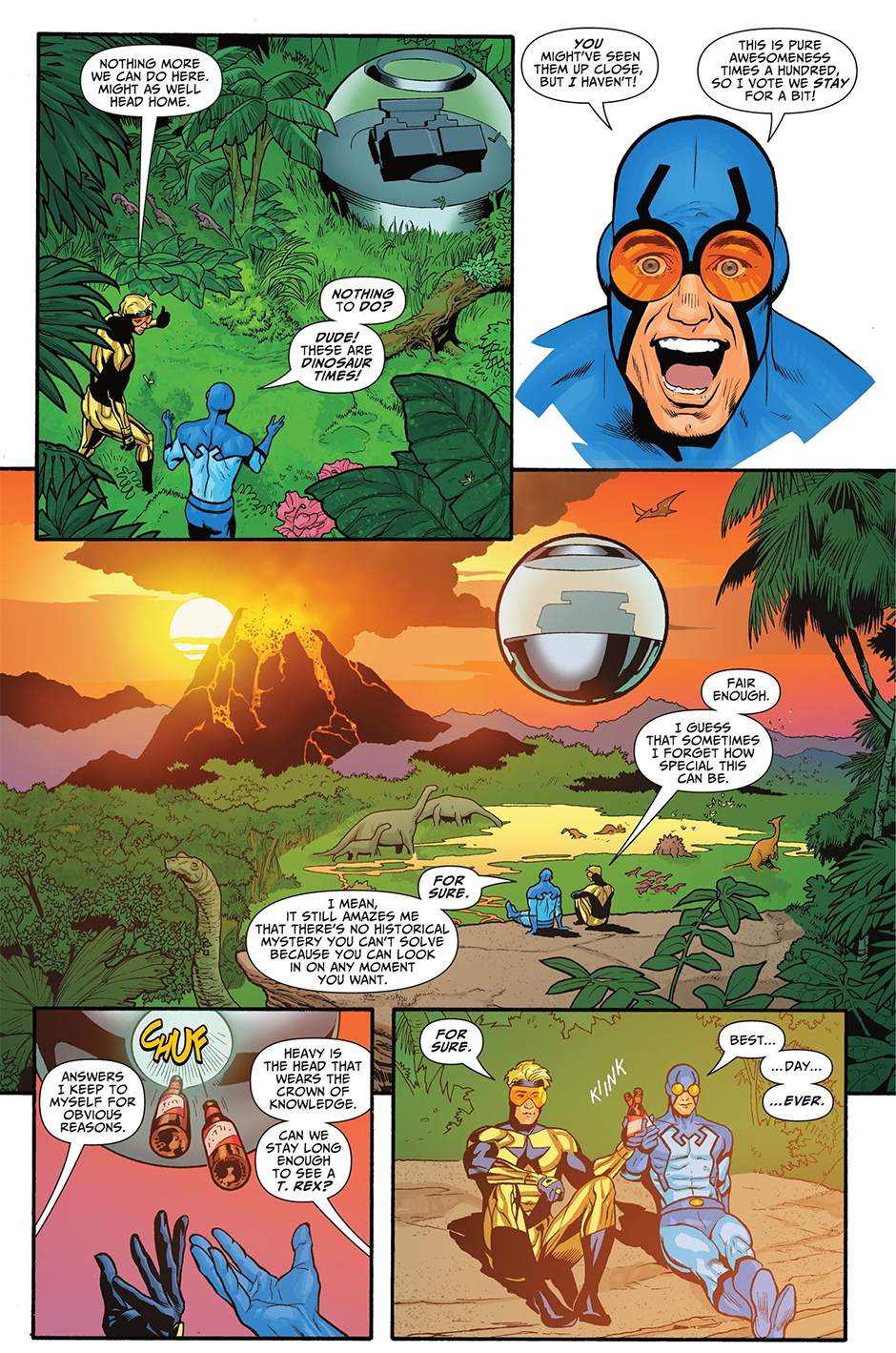
So when I saw his writer credit on the Blue & Gold series, I was braced for something too “respectful” of the characters to be lively. I’m pleased to report I couldn’t have been more wrong. Blue & Gold serves up delightful buddy comedy, insights into crowdfunding and livestreaming, and smart updates of Booster and Beetle’s character concepts. The first issue is an especially strong story that firms up their status as underdogs and shows us what Ted Kord is made of.

Jurgens follows up on the concept of the “Super Buddies,” asking if there aren’t better ways to help people than the model followed by most high-profile heroes…
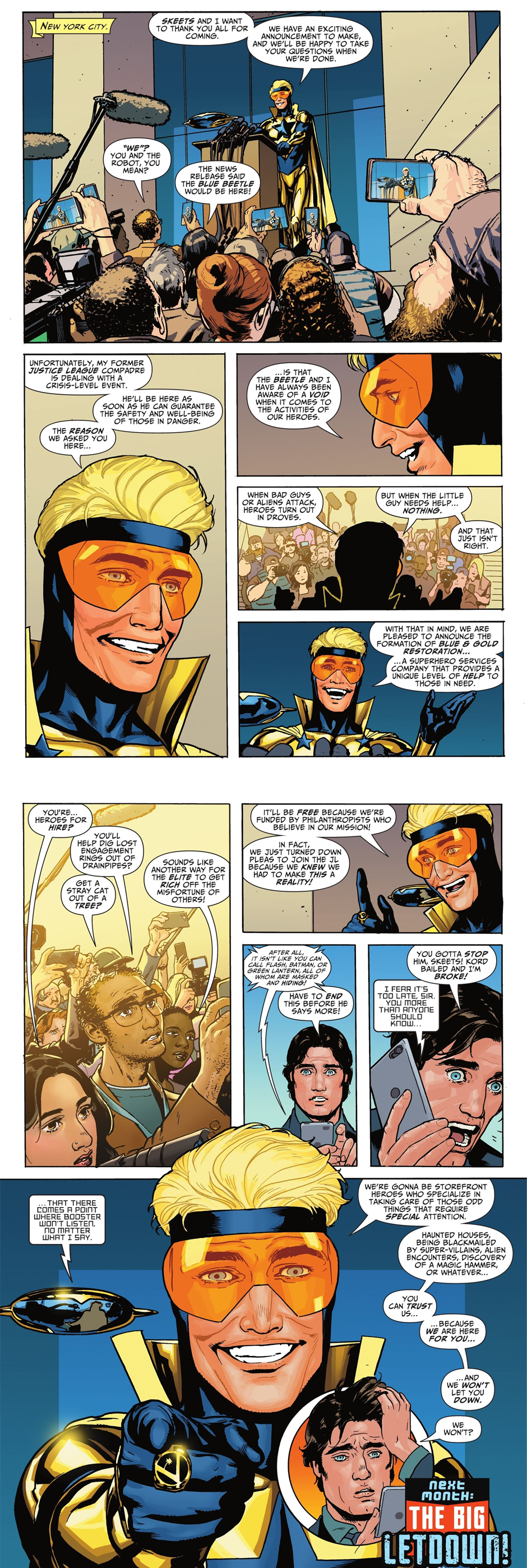
And the whole thing never forgets to have fun. Hats off to Jurgens here: third time was, indeed, the charm.
A similar buddy-comedy dynamic underscores the two Fire and Ice miniseries. In Fire and Ice: Welcome to Smallville, the eponymous heroines set up shop in Superman’s hometown. This is a…strong suggestion from Superman, after their chemistry with Guy nearly wrecks a port city. He’s condescending to them for sure, but it’s (1) a much NICER kind of condescension than in his days as a JLI member, and (2) it's more justified by everyone's actions (Power Girl Special #1, a lead-in to the miniseries).
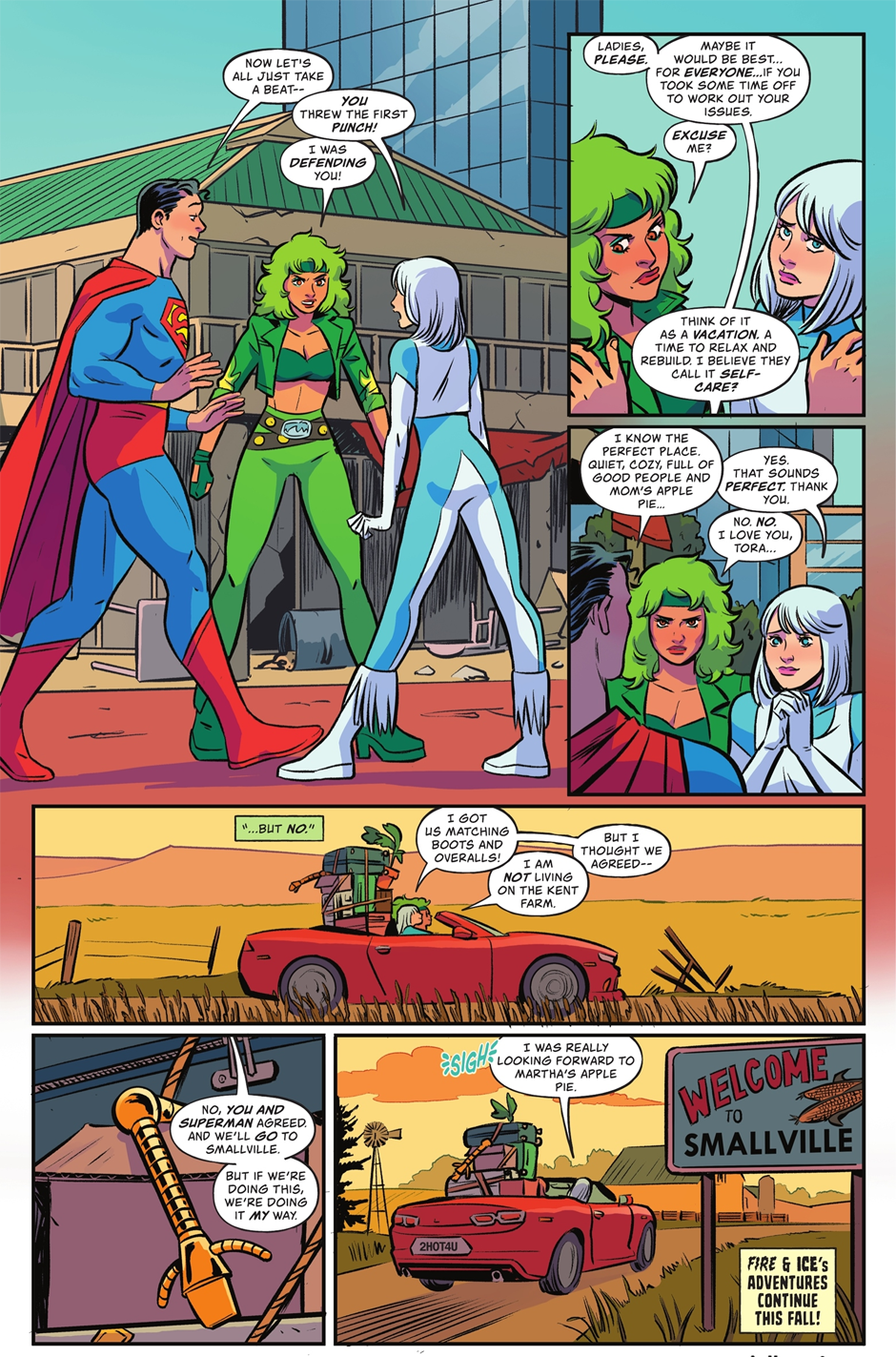
Like the Super Buddies and Blue and Gold, this mini explores a different model of being a hero. Bea is struggling with ego and self-aggrandizement the way Booster used to, but her central idea has merit. She wants to rehabilitate smaller-league supervillains (and “heroes” so chaotic they might as well be villains, like Ambush Bug and the Beefeater). Complications ensue, and a friendship that’s lasted all Ice’s adult life is sorely tested (Fire and Ice: Welcome to Smallville #4).

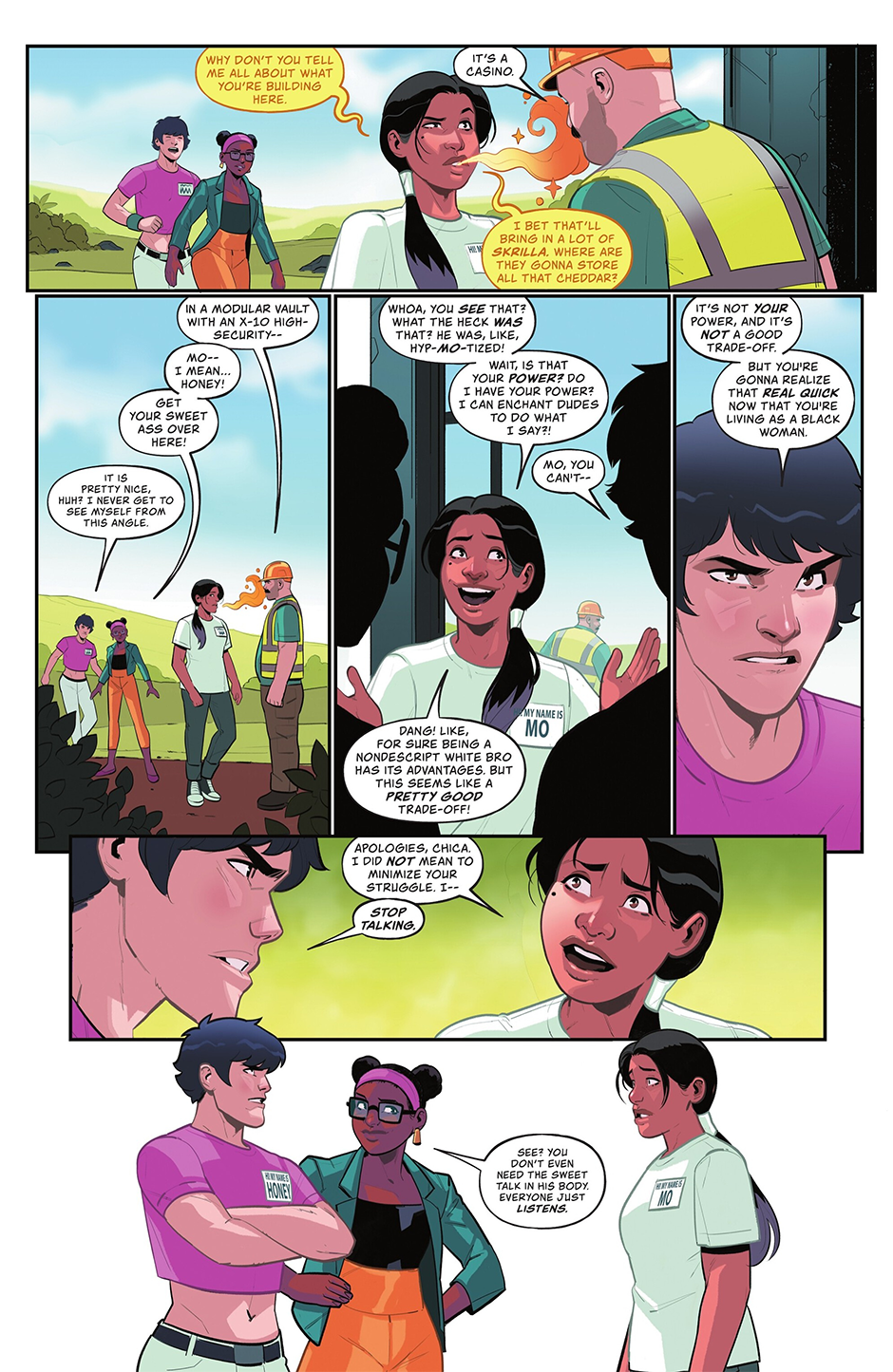
Fire and Ice: When Hell Freezes Over begins with the aftermath of a crossover event: Fire now has Ice’s powers and vice versa. Both put on a brave face, but both are desperate to get themselves back to normal (#1)…
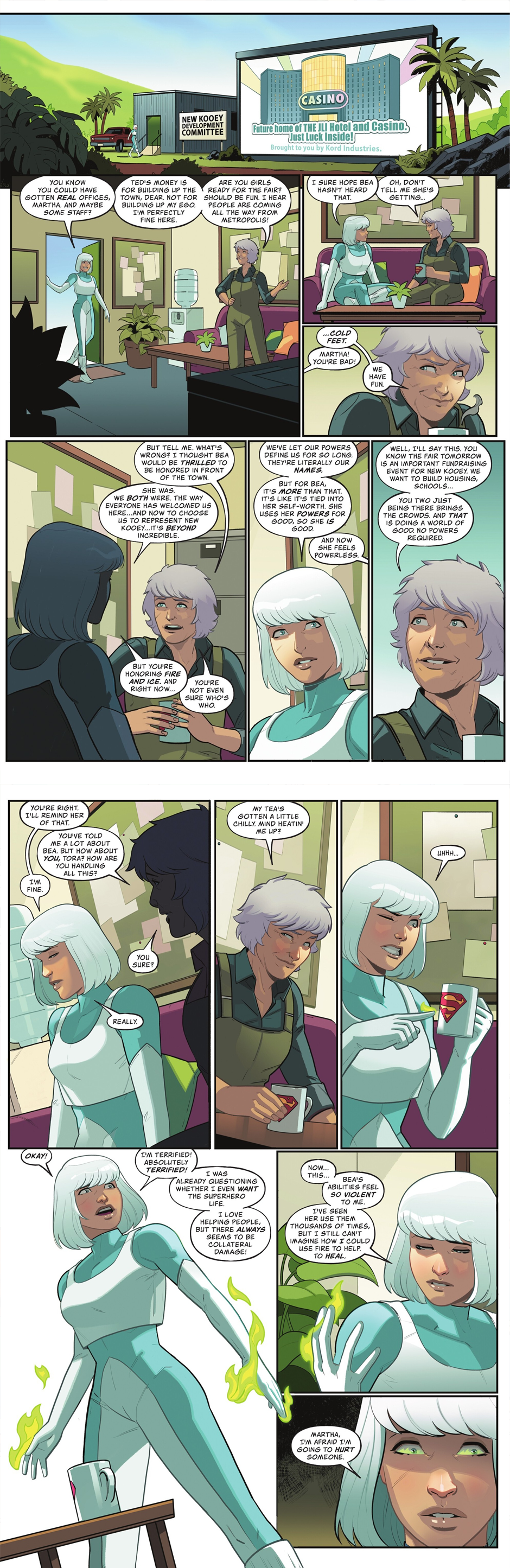
…which leads to multiple body-swaps and a return trip to Hell (#1-#3).

If you like the original JLI run but wish it reflected more contemporary social issues, these two miniseries are for you. Joanne Starer has things to say. To be fair, some of the social commentary's a little on the nose, but I'll take this over "edgy Guy Gardner" any day of the week (#3).
Tom King’s second miniseries to feature JLI characters was more controversial than his first, but I liked it at the time and think it looks even better in retrospect. The Human Target revolves around Tom Tresser, an old-school master of disguise who is now poisoned with twelve days to live, and the former members of the Justice League International, one of whom may be his killer. Tresser was impersonating Lex Luthor at the time of his poisoning, which would provide some motive (#1).
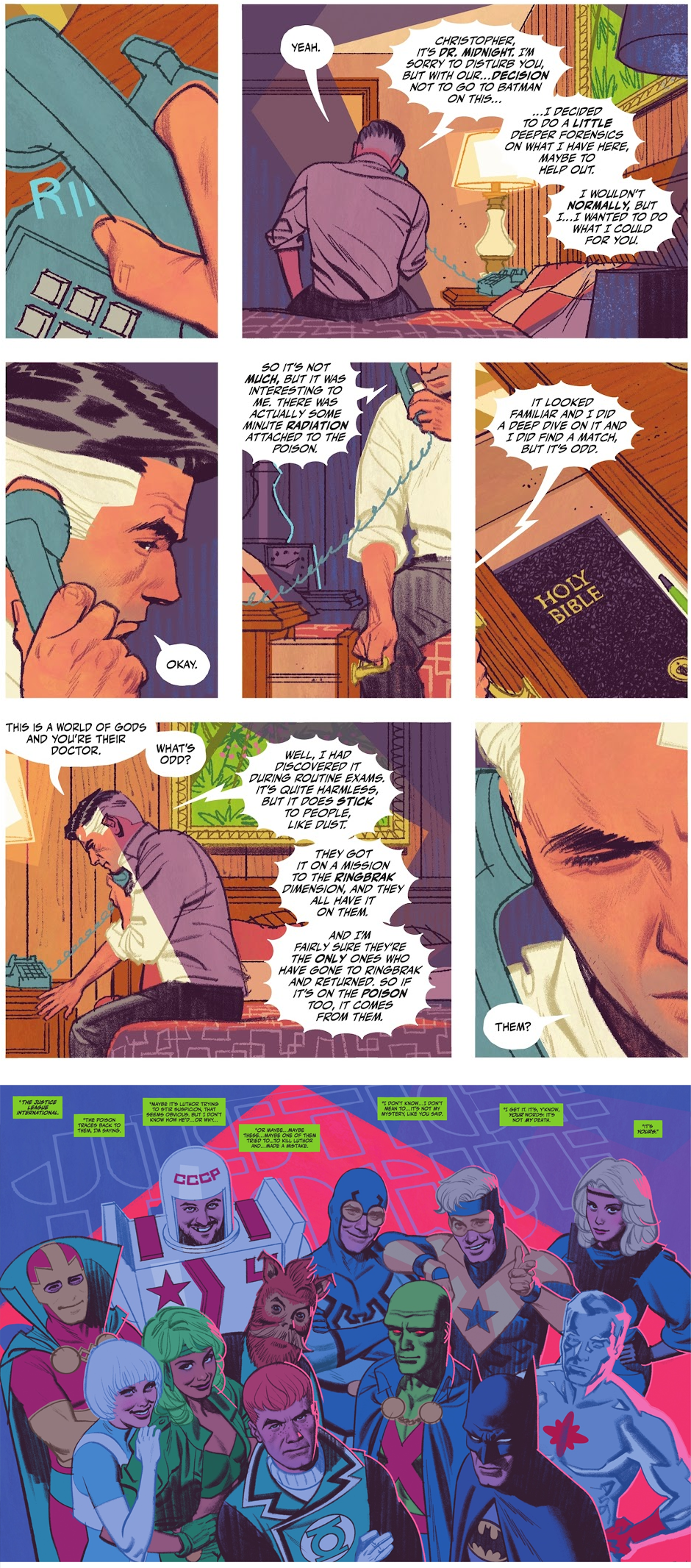
The obvious problem with a mystery like this is that none of the JLI members are killers, as we know them. But this isn’t quite the JLI as we know it. Fire and Ice are bolder and more noir-edged, J’Onn is messier, and Guy…no. No, surely even Guy wouldn’t do that, would he (#2, #5 #6)?
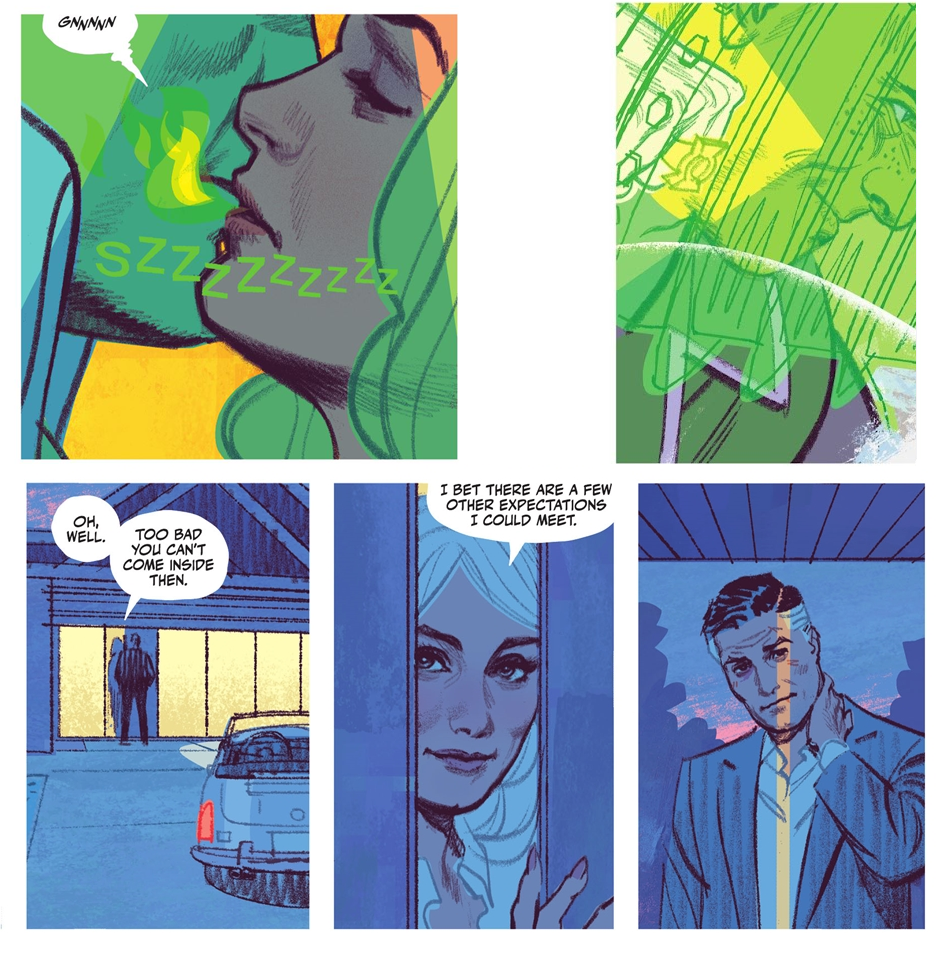
A couple of these moments, I found tough pills to swallow, but this isn’t a case of someone failing to do their research. King’s story is rich with details that show understanding and appreciation of the original JLI.
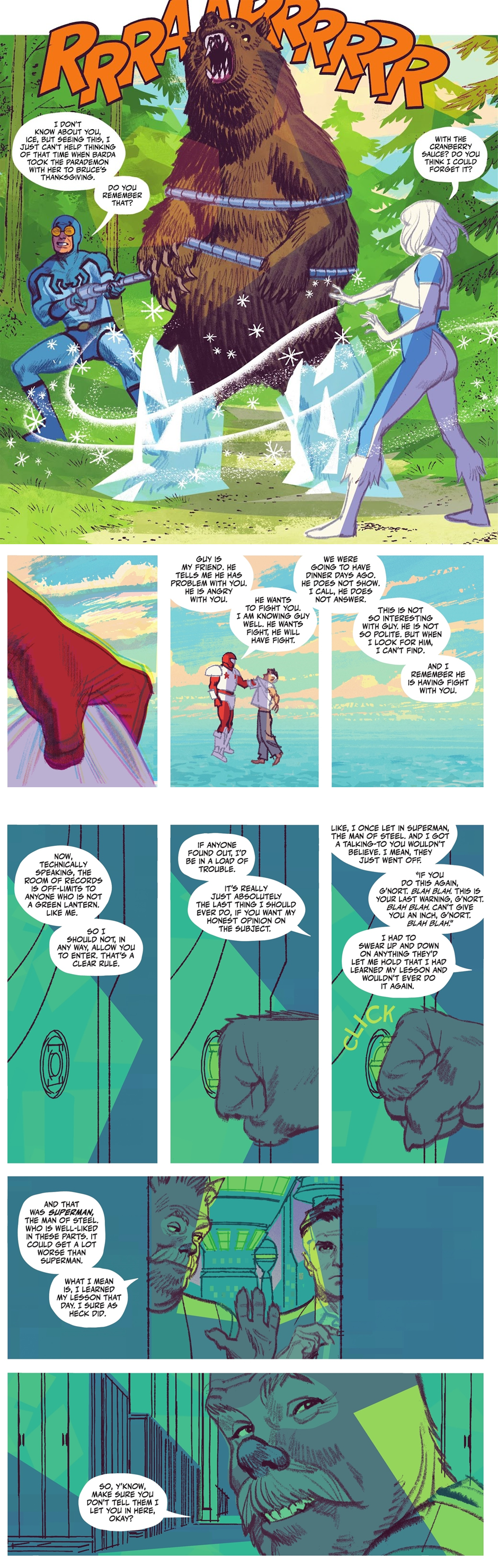
Best example: A special prequel, Tales of the Human Target, features three stories of Justice Leaguers running into Tresser before his demise. One of those, Booster Gold’s arc, includes some Kevin Maguireface that is not to be missed.
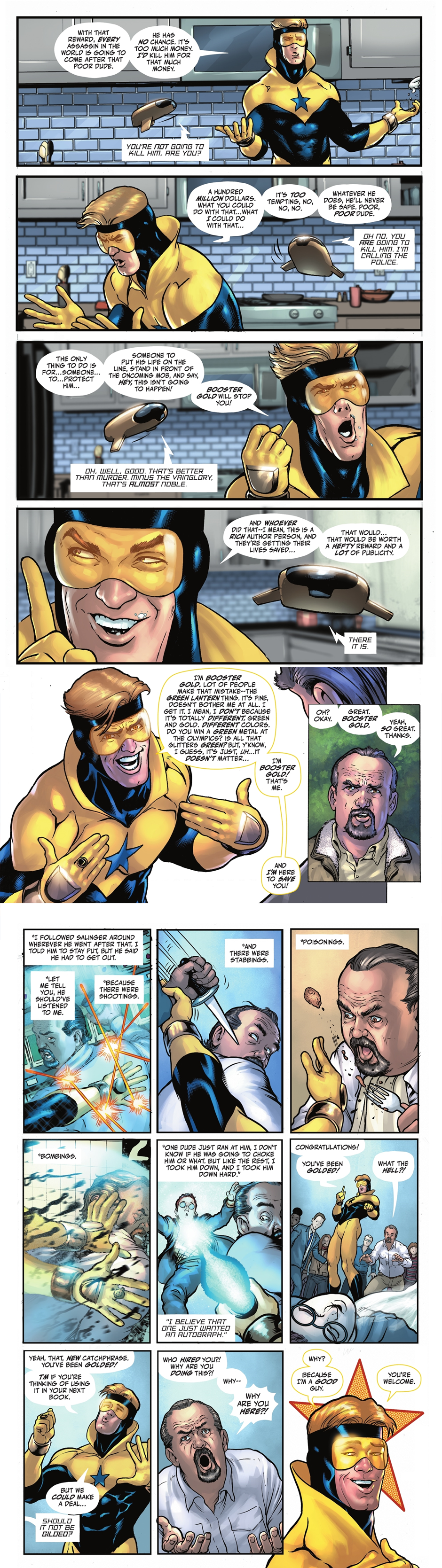
"IF I WAS GREEN LANTERN, THEN MY COSTUME WOULD BE GREEN, NOW, WOULDN'T IT?!"
In other words, King knows the old texts, he’s just taking them in a direction no one else would. Which, again, is a very “Giffen and DeMatteis” thing to do.
Tresser’s fate is shown to us in the first scene of the first issue. There won’t be any superhero-style death-reversal for him. The end of the miniseries will be the end of him: that’s plain.
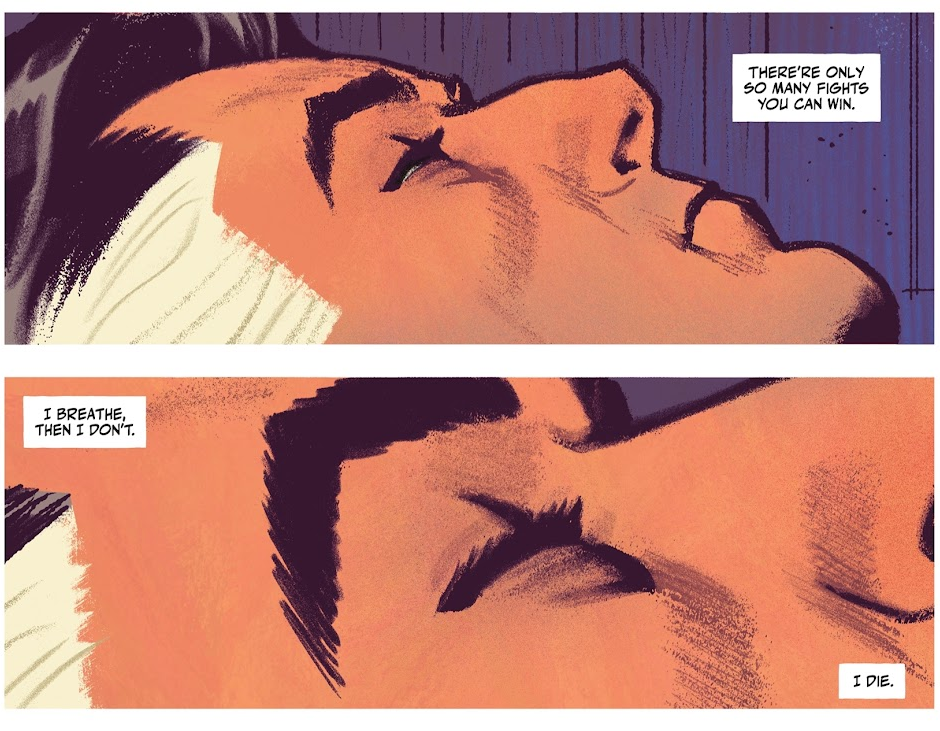
But he can decide what his death means. He can make it so that his last days help accomplish something in his world, something the characters in mainstream DC continuity never have accomplished and never will…ending the life of one of the evilest men in history (#12).
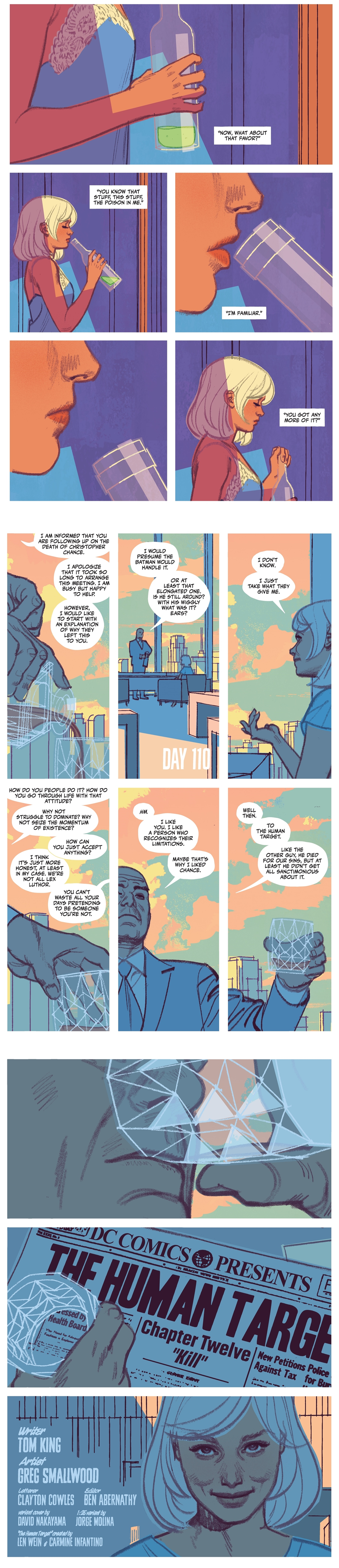
There are worse ways to go.
Right now, the “JLI character” showing up most often in contemporary comics is Guy Gardner, who’s now doing a stretch as the Green Lanterns’ “Pope.” (Forgive me if I doubt his tenure will be as lengthy as John Paul II’s.)
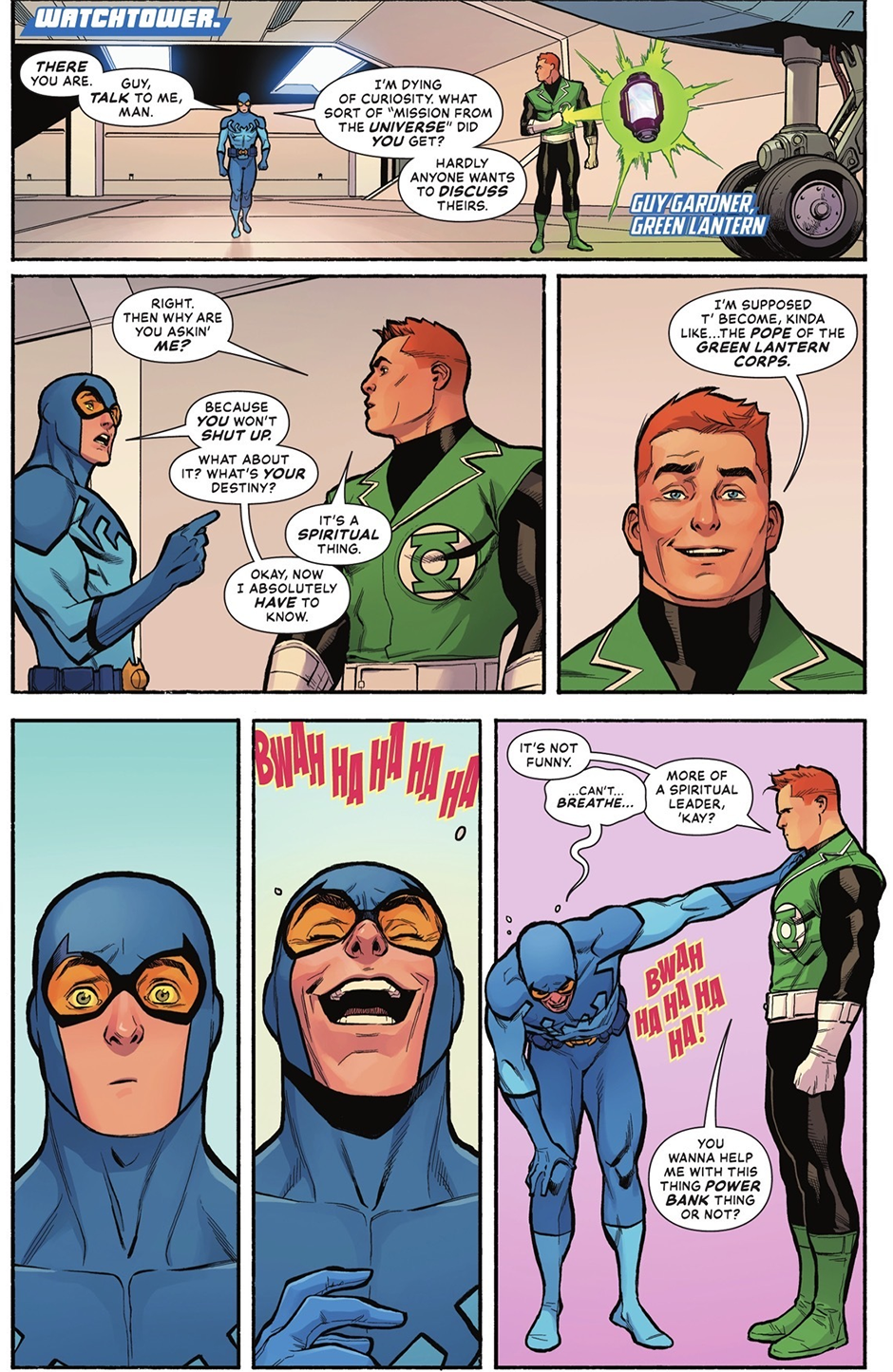
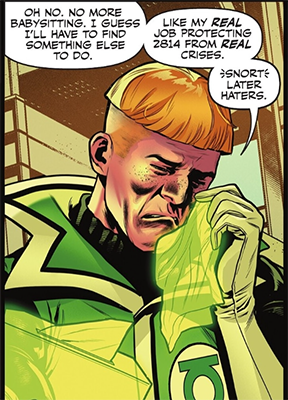
Guy’s a mainstay in Green Lantern Corps and got his own special not too far back. He is, in most respects, far mellower than the Guy of old, and modern stories tend to attribute his aggression to his family upbringing rather than intrinsic stupidity or head trauma. But he still spends a lot of his time fighting fights he shouldn’t be fighting (Green Lantern Corps v4 #19, Tales of the Green Lantern Corps: Guy Gardner)…
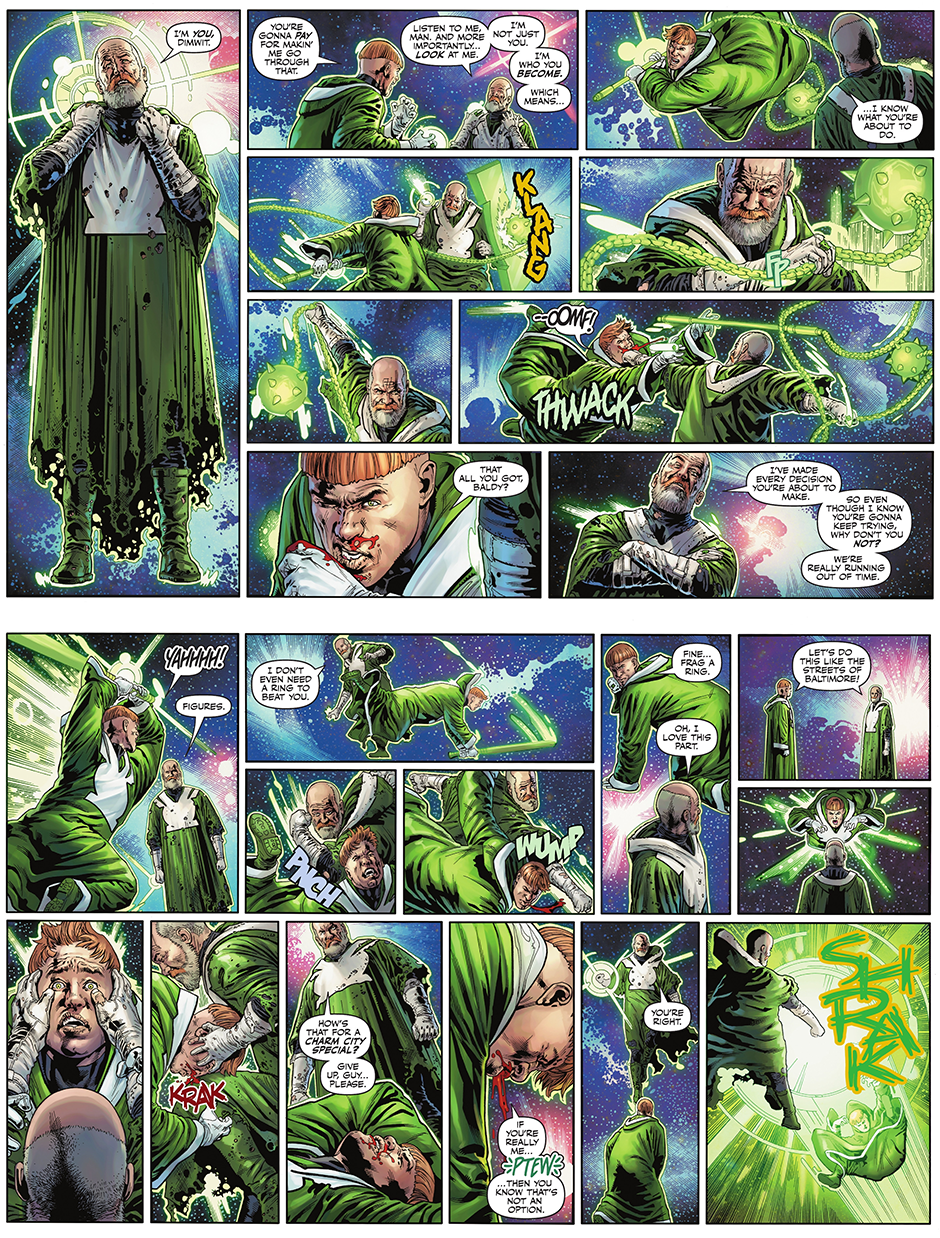

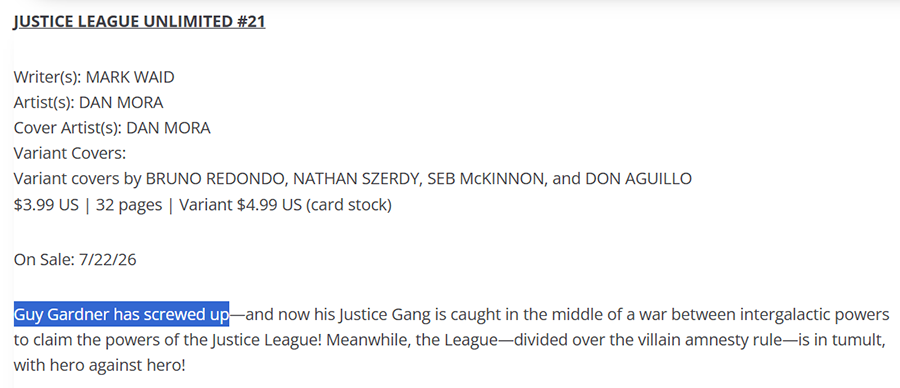
…and making flamboyant mistakes, sometimes in comics that aren’t even out yet.
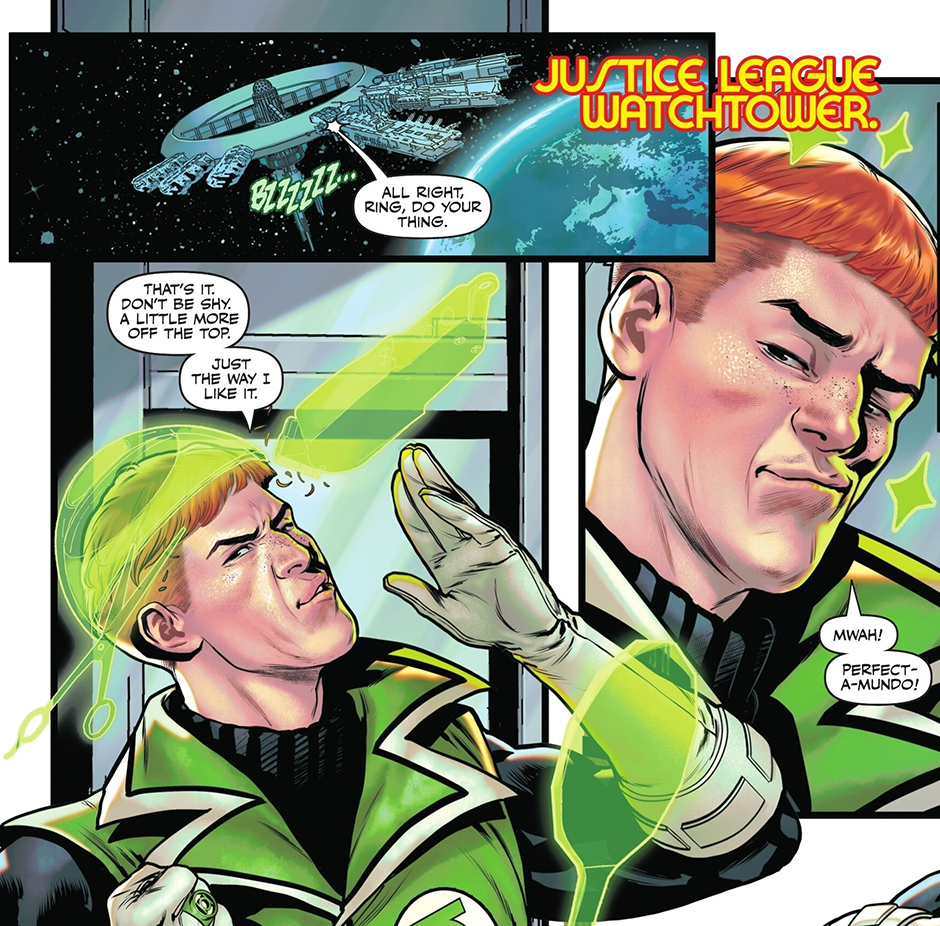
Would we recognize him if he didn’t? Well, I guess that’s what the haircut is for (Superman Unlimited #8).
And of course, Guy’s been prominent onscreen lately, too (Superman (2025), Peacemaker, Lanterns). The onscreen Guy’s “Justice Gang” has at least a little of the old JLI vibe, and we might see some more of it before we’re done.

The dry spell continues for G’Nort fans, though.
That’s all, folks. Thanks for giving me the excuse to take this trip down memory lane, and just remember…the real heroes in life are just like us. So there's no reason we can't be more like them. Have a great week!


no subject
Date: 2026-06-14 10:27 pm (UTC)no subject
Date: 2026-06-14 11:17 pm (UTC)no subject
Date: 2026-06-15 12:22 am (UTC)no subject
Date: 2026-06-15 01:09 am (UTC)no subject
Date: 2026-06-15 01:17 am (UTC)In the conclusion to Human Target you posted above, am I seeing things or did freaking ICE just murder Lex Luthor?! What--? How--? Look, I get that it's an AU of some sort, so anything goes re character death, but Ice. Does. Not. KILL. I've heard people grumble about Tom King before, and never gave it much weight, but did he really make one of the most saintly and lovable heroes who isn't Superman straight-up MURDER someone? I... I don't even. I wish I could unread that. 🤯